
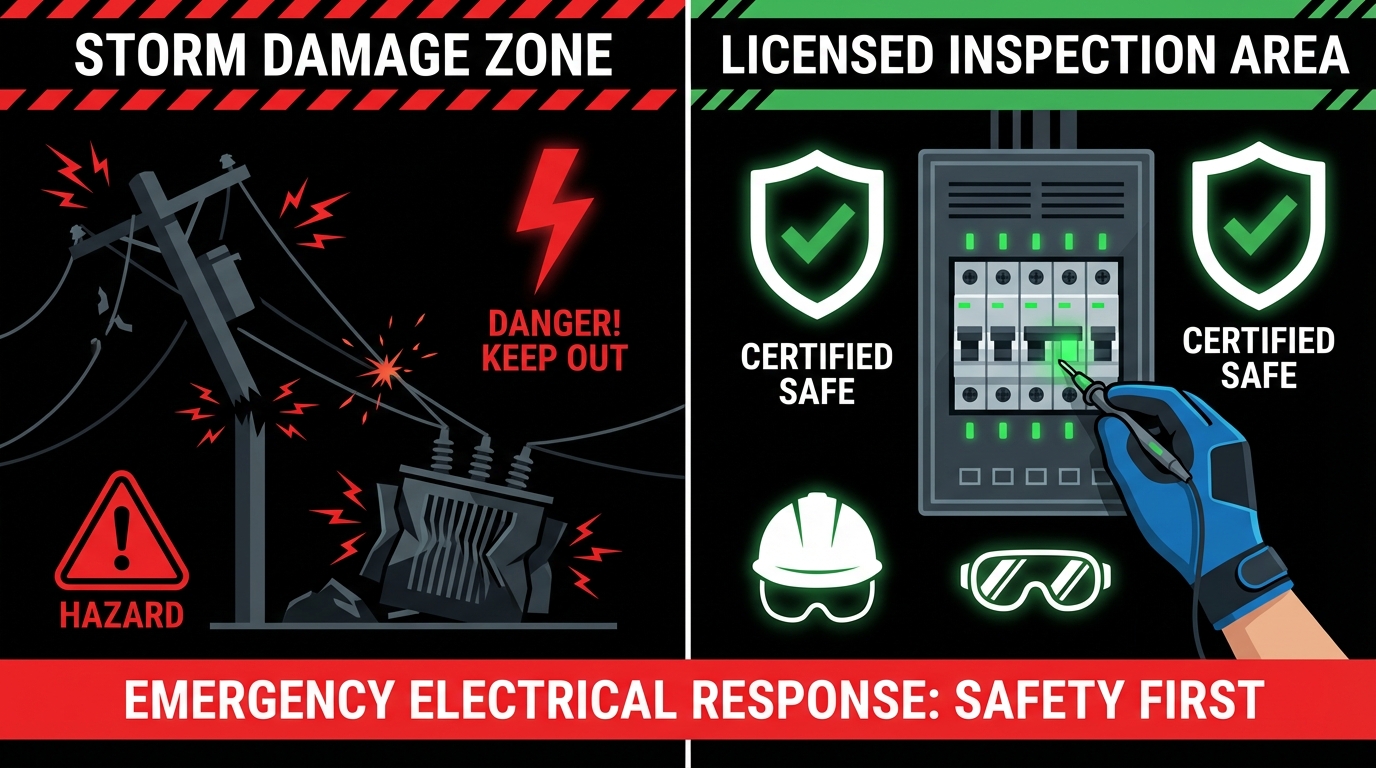
Outlet and Switch Installations
As Sydney enters peak storm season in January 2026, homeowners across the metropolitan area, Central Coast, and Newcastle face heightened risks from severe weather events. While summer storms bring welcome relief from scorching temperatures, they also create serious electrical hazards that can endanger lives, damage property, and leave homes without power for days.
The January 2025 storm events across NSW demonstrated just how vulnerable electrical systems are to extreme weather. Fallen power lines, water-damaged switchboards, and compromised wiring systems affected thousands of homes, with emergency electricians responding to call-outs around the clock. The unfortunate reality is that many storm-related electrical incidents are entirely preventable when homeowners understand proper safety protocols and know exactly when professional intervention is critical.
At AIM LOCAL, our licensed electricians have responded to hundreds of storm-related electrical emergencies throughout Sydney, the Central Coast, and Newcastle. We understand the confusion and fear that comes with electrical damage after severe weather. This comprehensive guide provides everything you need to know about electrical safety after storms Sydney residents face annually—from immediate safety steps during and after storms, to identifying electrical hazards, understanding when to call emergency electricians, and protecting your home from future storm damage.
Whether you’re dealing with immediate storm aftermath or preparing your home for the next weather event, this expert guide delivers actionable safety information that could save lives, prevent electrical fires, and protect your most valuable investment—your home.
Understanding Electrical Hazards During Sydney Storm Season
Sydney’s storm season, which peaks between January and March, creates unique electrical safety challenges that every homeowner must understand. Unlike gradual wear that gives warning signs, storm damage can compromise electrical systems instantly, creating life-threatening hazards with no visible warning.
The combination of intense rainfall, strong winds, lightning strikes, and falling debris creates a perfect storm—literally—for electrical system damage. Power lines can fall across properties, water can penetrate electrical enclosures, lightning can surge through wiring systems, and wind-driven debris can physically damage external electrical infrastructure.
NSW storms regularly deliver 50-100mm of rainfall within hours, overwhelming drainage systems and causing flash flooding that affects homes seemingly well above flood zones. When this water encounters electrical systems, the results can be catastrophic. Water conducts electricity, transforming normally safe surfaces into potentially lethal contact points.
Understanding these hazards helps you recognize danger signs early and take appropriate action. The Bureau of Meteorology forecasts that January 2026 will see above-average storm activity across the Sydney Basin, Central Coast, and Hunter regions—making electrical safety knowledge more critical than ever.
Immediate Safety Steps During a Storm Event
When severe weather strikes, your immediate actions determine both your safety and the extent of potential electrical damage. These critical safety steps should become automatic responses whenever severe storm warnings are issued.
Before the Storm Hits
Preparation makes all the difference. When the Bureau of Meteorology issues severe weather warnings for Sydney, Central Coast, or Newcastle areas:
- Turn off and unplug sensitive electronic equipment including computers, entertainment systems, and appliances
- Know the location of your main switchboard and how to turn off power if necessary
- Ensure mobile phones are fully charged in case of prolonged power outages
- Keep torch lights readily accessible (never use candles due to fire risk)
- Move vehicles away from trees and power lines
- Secure outdoor items that could become wind-borne projectiles
- Store emergency electrician contact details where you can access them without power
During the Storm
Once the storm begins, your focus shifts to immediate safety:
- Stay indoors and away from windows, doors, and electrical appliances
- Do not use landline phones—lightning can travel through phone lines
- Avoid contact with plumbing, sinks, baths, and taps—water pipes conduct electricity
- Stay away from concrete walls and floors that may contain metal reinforcing
- If power goes out, turn off all appliances and switches to prevent damage when power returns
- Never go outside to investigate electrical problems during active storms
- If you see sparks, smell burning, or notice smoke from electrical equipment, shut off power at the main switchboard immediately
Immediately After the Storm
Storm aftermath presents hidden dangers that persist long after weather clears:
- Assume all fallen or dangling wires are live and dangerous—stay at least 8 metres away
- Report fallen power lines to Ausgrid (13 13 88), Essential Energy (13 20 80), or emergency services (000) immediately
- Do not attempt to clear storm debris touching or near power lines
- Inspect your property for visible electrical damage from a safe distance
- If you smell gas or detect electrical burning odors, evacuate immediately and call 000
- Do not turn power back on if you experienced flooding or water entry
- Document all damage with photographs for insurance purposes
- Contact licensed emergency electricians for professional safety assessment
Critical Warning Signs: When to Call an Emergency Electrician
Not every storm requires emergency electrical services, but certain warning signs demand immediate professional intervention. Delaying professional inspection when these signs appear can result in electrical fires, electrocution, or extensive property damage.
Immediate Emergency Indicators (Call 24/7 Emergency Electrician NOW)
- Sparking outlets, switches, or electrical equipment
- Burning smell from electrical fixtures or switchboard
- Smoke visible from any electrical equipment
- Buzzing, crackling, or popping sounds from electrical systems
- Hot switch plates or outlet covers
- Lights that flicker severely or dim dramatically
- Frequent circuit breaker trips that won’t reset
- Any electrical equipment that received direct water exposure
- Visible scorch marks around outlets or switches
- Water pooling near electrical equipment or switchboard
- Electric shocks when touching appliances or switches
- Complete power loss to sections of your home that doesn’t resolve
These warning signs indicate active electrical hazards requiring immediate professional attention. At AIM LOCAL, our 24/7 emergency electricians respond to storm damage calls throughout Sydney, Central Coast, and Newcastle, arriving rapidly to assess and resolve dangerous situations.
Schedule Professional Inspection Within 24-48 Hours
- Any water entry into your home, even if electrical equipment appears dry
- Power restored after extended outage—switchboard inspection recommended
- Roof damage that potentially exposed attic electrical wiring
- Large branches or debris that made contact with electrical service lines
- Safety switches that tripped during the storm
- Outdoor electrical outlets or fixtures exposed to heavy rainfall
- Visible damage to external electrical meter box or conduit
- Inconsistent power—some circuits working while others don’t
- Previous minor electrical issues that worsened during the storm
- Insurance claims requiring professional electrical inspection reports
While not immediate emergencies, these situations warrant prompt professional inspection to identify hidden damage before it escalates into dangerous conditions or more expensive repairs.
Water Damage to Electrical Systems: Hidden Dangers
Water and electricity are a deadly combination. Even after water recedes and surfaces appear dry, electrical systems can remain compromised and dangerous for extended periods. Understanding how water damages electrical infrastructure helps you recognize when professional assessment is non-negotiable.
How Water Compromises Electrical Safety
Floodwater and storm water don’t just wet electrical components—they fundamentally change how electricity behaves in your home:
- Conductive pathways: Water creates unintended electrical paths, causing short circuits and shock hazards
- Corrosion acceleration: Water contact initiates rapid corrosion of connections, terminals, and wiring
- Insulation breakdown: Moisture penetration degrades wire insulation, creating fire and shock risks
- Contamination: Floodwater contains contaminants that increase conductivity and corrosion
- Concealed damage: Water can travel through wall cavities and conduit, affecting wiring far from visible water damage
- Delayed failure: Water-damaged electrical components may function initially but fail catastrophically days or weeks later
Specific Water-Damaged Components Requiring Professional Assessment
Licensed electricians must inspect these components after any water exposure:
- Switchboards and circuit breaker panels—even minor water entry requires complete inspection
- Safety switches (RCDs)—water exposure can compromise life-saving protection
- Wall outlets and power points—particularly those in affected rooms or below water lines
- Fixed appliances including ovens, hot water systems, and air conditioning units
- Ceiling lighting and fans if roof leaks or attic flooding occurred
- External electrical equipment including meters, outdoor outlets, and garden lighting
- Underground electrical services if excavation or significant ground saturation occurred
- Wiring within walls where water tracking is suspected
Why “It Looks Dry” Doesn’t Mean “It’s Safe”
This is the most dangerous assumption homeowners make after storms. Visual inspection cannot determine electrical safety after water exposure because:
- Moisture persists inside sealed electrical enclosures long after external surfaces dry
- Corrosion begins immediately upon water contact and continues even after drying
- Salt and contaminants from floodwater remain conductive even when dry
- Internal wire insulation breakdown isn’t visible until insulation fails catastrophically
- Moisture can be trapped in walls, ceiling spaces, and underground conduit
- Electrical testing equipment is required to verify safe operation—visual inspection is insufficient
Licensed electricians use specialized testing equipment including insulation resistance testing, earth continuity testing, and RCD functionality testing to verify electrical safety after water exposure. This professional assessment is the only way to confirm systems are safe to energize.
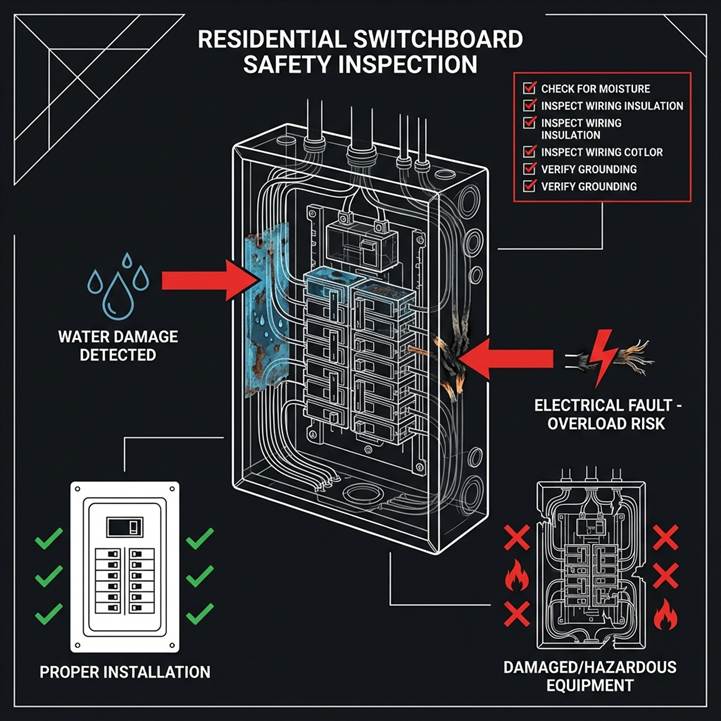
Electrical safety inspection switchboard showing storm damage hazards and safety switch testing
Safety Switches and Storm Protection: Your First Line of Defense
Safety switches, technically known as Residual Current Devices (RCDs), are mandatory in all NSW homes under AS/NZS 3000:2018 standards. These life-saving devices detect electrical leakage and disconnect power within milliseconds—fast enough to prevent fatal electric shock. During and after storms, safety switches become your primary protection against storm-related electrical hazards.
How Safety Switches Protect During Storms
Safety switches monitor electrical current flowing through circuits. When current “leaks” due to damaged insulation, water ingress, or equipment failure, the safety switch detects this imbalance and immediately disconnects power. This happens in less than 30 milliseconds—fast enough to prevent electrocution.
Common storm scenarios where safety switches save lives include:
- Water entering electrical outlets or appliances
- Damaged wiring with compromised insulation
- Lightning surge damage creating current leakage
- Wet outdoor electrical equipment
- Storm-damaged appliances developing electrical faults
- Tree branches or debris damaging external electrical wiring
What It Means When Safety Switches Trip During Storms
If your safety switches trip during or immediately after a storm, they’re doing their job—protecting you from an electrical fault. However, this requires immediate investigation:
- Do not simply reset the safety switch without identifying the cause
- Turn off and unplug all appliances on the affected circuit
- Check for visible signs of water entry or damage
- If the safety switch resets and holds with everything disconnected, gradually reconnect appliances one at a time
- If the safety switch trips again immediately, there’s a serious fault requiring emergency electrician services
- If you cannot identify the cause, or if multiple safety switches trip, call licensed electricians before restoring power
Post-Storm Safety Switch Testing
After any significant storm, test all safety switches using the “TEST” or “T” button on each device:
- Locate the TEST button on each safety switch in your switchboard
- Press the TEST button firmly—the switch should immediately trip to the OFF position
- If the switch trips, it’s functioning correctly—reset it to ON
- If the TEST button doesn’t trip the switch, the safety switch has failed and requires immediate replacement
- Failed safety switches provide no protection and must be replaced by licensed electricians immediately
This simple test takes 30 seconds but verifies your life-saving protection is functioning. If any safety switch fails this test after a storm, contact emergency electricians immediately—you’re operating without essential electrical protection.
Professional Electrical Inspection After Storms: What to Expect
Professional electrical inspection after storm damage provides comprehensive safety assessment that visual checks cannot replicate. Understanding what licensed electricians examine and test helps you appreciate the value of professional inspection and recognize when DIY assessment falls dangerously short.
Comprehensive Electrical Safety Assessment Process
Licensed electricians from AIM LOCAL follow systematic inspection protocols after storm events:
- Visual inspection of all electrical infrastructure including switchboard, wiring, outlets, and external services
- Safety switch functionality testing using specialized test equipment beyond simple TEST button verification
- Insulation resistance testing identifying compromised wire insulation invisible to visual inspection
- Earth continuity testing verifying proper grounding system operation
- Circuit integrity testing confirming all circuits operate safely under load
- Thermal imaging (when warranted) detecting hot spots indicating developing failures
- Moisture detection in electrical enclosures and behind walls using specialized meters
- Switchboard internal inspection for water entry, corrosion, or damage
- External electrical service inspection including meter box, service head, and connection points
- Documentation of all findings with repair recommendations and priority ratings
Inspection Duration and Costs
Professional storm damage electrical inspection for typical Sydney homes takes 60-90 minutes and costs between $180-$350 depending on property size and assessment scope. This investment provides:
- Verified electrical safety confirmation or identification of hazards requiring correction
- Written inspection report documenting electrical system condition
- Prioritized repair recommendations distinguishing urgent safety issues from preventive maintenance
- Insurance documentation if storm damage claims are necessary
- Peace of mind knowing your family’s safety is protected
- Prevention of expensive future repairs by identifying developing problems early
Compare this modest investment to the cost of house fires (averaging $100,000+ in damage), electrocution injuries, or insurance claim complications from undocumented electrical damage. Professional inspection delivers exceptional value relative to risks prevented.
Emergency vs. Standard Inspection Services
Understanding service differences helps you choose appropriate response:
Emergency Electrical Services (24/7 availability):
- Immediate response to active electrical hazards
- Safety assessment and hazard containment
- Essential repairs to restore safe power supply
- Premium rates apply (typically 1.5-2x standard rates)
- Available 24 hours daily including weekends and public holidays
Standard Electrical Inspection (scheduled service):
- Comprehensive assessment scheduled within 24-48 hours
- Detailed inspection with written reporting
- Non-emergency repairs and upgrades
- Standard rates apply
- Scheduled during business hours or by appointment
At AIM LOCAL, we help you determine which service level your situation requires, ensuring you receive appropriate response without unnecessary premium charges when standard service suffices.
Storm Preparation: Protecting Your Electrical System Before Weather Strikes
While emergency response is critical after storm damage occurs, proactive preparation dramatically reduces both risk and potential damage. Sydney homeowners who prepare electrical systems before storm season significantly decrease likelihood of electrical emergencies and costly repairs.
Pre-Storm Season Electrical Upgrades
Consider these electrical improvements before storm season intensifies:
- Surge protection systems: Whole-house surge protectors installed at your switchboard protect all electrical equipment from lightning-induced power surges that destroy electronics worth thousands
- Safety switch upgrades: Older homes may have inadequate RCD protection—upgrading to meet current standards provides enhanced safety
- Switchboard upgrades: Aging switchboards with ceramic fuses or obsolete circuit breakers should be replaced with modern safety-compliant boards
- Weatherproof external outlets: Properly rated outdoor power points with weather seals prevent water ingress during storms
- Underground service upgrades: Overhead power connections are vulnerable to storm damage—underground services offer superior storm resistance
- Emergency power systems: Backup generators or battery systems maintain essential power during extended outages
Seasonal Electrical Maintenance Checklist
Complete this electrical maintenance before storm season peaks (November-December):
- Test all safety switches using TEST buttons—verify they trip and reset properly
- Inspect external electrical fixtures for damage, corrosion, or water entry
- Clear vegetation away from overhead power lines and service connections
- Check outdoor power points and garden lighting for weatherproofing integrity
- Ensure switchboard location is protected from water entry (seal gaps, verify weather seals)
- Document electrical equipment serial numbers and photographs for insurance purposes
- Schedule professional electrical inspection if your home is over 20 years old
- Replace worn or damaged extension cords that may be needed during outages
- Verify you have emergency electrician contact information readily accessible
Creating a Storm Emergency Electrical Plan
Prepare your household with an electrical emergency action plan:
- Ensure all household members know switchboard location and how to shut off power in emergencies
- Post emergency contact numbers (Ausgrid, Essential Energy, AIM LOCAL emergency services) near switchboard
- Maintain charged torches and battery-powered lights—never use candles during power outages
- Identify which appliances must be unplugged before severe storms (electronics, appliances with microprocessors)
- Create a “power outage kit” with torches, batteries, mobile phone chargers, and emergency contact lists
- Designate one person responsible for checking safety switches after power restoration
- Plan for household members with medical equipment requiring electricity
- Document your electrical system (photograph switchboard, note circuit labels, record safety switch locations)
Frequently Asked Questions: Electrical Safety After Storms Sydney
Q: How long should I wait before turning power back on after a storm?
A: If your power went out during a storm, wait until you’ve inspected for visible damage before restoring power. If you experienced any flooding, water entry, or if you can see electrical damage, do not turn power back on—call licensed electricians for professional assessment first. Water-damaged electrical systems remain dangerous even after appearing dry. For storms without water entry or visible damage, wait at least 15 minutes after power restoration before reconnecting sensitive electronics to allow voltage to stabilize.
Q: Is it safe to use electrical appliances if they got wet during a storm?
A: No. Any electrical appliance that received water exposure during storms must be professionally inspected before use. Even if an appliance appears dry externally, internal components may have water damage creating shock and fire hazards. Do not attempt to test wet appliances by plugging them in—this can cause immediate electrical shock or start fires. Licensed electricians can assess whether appliances can be safely dried and tested or require replacement. For insurance purposes, document all water-exposed appliances with photographs before moving or disposal.
Q: What should I do if I see sparks from an electrical outlet after a storm?
A: Sparking outlets indicate serious electrical faults requiring immediate action. First, shut off power to that circuit at your switchboard if you can do so safely. If you cannot identify the correct circuit breaker or if sparking continues, shut off power at the main switch. Evacuate the area and never touch the sparking outlet or attempt repairs yourself. Contact 24/7 emergency electricians immediately—sparking indicates active electrical arcing that can ignite fires within minutes. At AIM LOCAL, we respond to these emergencies throughout Sydney, Central Coast, and Newcastle with rapid same-day service.
Q: How much does emergency electrical inspection cost after storm damage in Sydney?
A: Emergency electrical inspection services in Sydney typically cost $280-$450 for after-hours or weekend call-outs, while standard scheduled inspections range from $180-$350 for typical residential properties. This investment includes comprehensive safety assessment, testing with specialized equipment, written inspection reports, and repair recommendations. Costs vary based on property size, assessment scope, and whether emergency or standard service is required. Many insurance policies cover electrical inspection costs when storm damage claims are filed. At AIM LOCAL, we provide upfront pricing and help determine whether your situation requires emergency response or scheduled inspection.
Q: Are safety switches required in NSW homes, and do they protect against storm damage?
A: Yes, safety switches (RCDs) are mandatory in all NSW homes under AS/NZS 3000:2018 standards. They provide essential protection against electric shock by detecting current leakage and disconnecting power within milliseconds. During storms, safety switches protect against numerous electrical hazards including water-damaged wiring, lightning surge damage, and equipment faults. However, safety switches cannot prevent all electrical damage—they specifically protect against electric shock hazards but don’t prevent equipment damage from power surges or prevent electrical fires from all causes. Testing safety switches after storms using the TEST button verifies they’re functioning properly.
Q: Should I call an electrician if my power went out but came back on by itself?
A: If power restoration occurred via the electricity network (your street lost power), no immediate electrician call is necessary unless you notice electrical problems afterward. However, if power went out because circuit breakers or safety switches tripped during the storm, you should investigate why. Test safety switches, check for signs of water damage or electrical problems, and if you cannot identify the cause or if switches keep tripping, schedule professional inspection. Unexplained safety switch trips indicate electrical faults that may worsen without correction. This is particularly important if trips occurred during water entry or flooding.
Q: Can I do electrical repairs myself after storm damage to save money?
A: No. NSW law requires all electrical work beyond replacing light globes and similar basic maintenance must be performed by licensed electricians. DIY electrical repairs are illegal, void your insurance coverage, create serious safety hazards, and can result in fines up to $27,500 for individuals. Storm-damaged electrical systems present complex safety hazards that require professional assessment and repair using specialized testing equipment and expertise. The apparent cost savings of DIY repairs disappear when considering risks of electrical fires, electrocution, insurance claim denials, and requirement to repair non-compliant work properly. Always engage licensed electricians for electrical work.
Protect Your Home and Family: Take Action Now
Electrical safety after storms Sydney homeowners experience annually is not optional—it’s a life-and-death matter that demands both proactive preparation and appropriate emergency response. As January 2026 storm season intensifies across Sydney, Central Coast, and Newcastle, the electrical safety knowledge you’ve gained in this guide provides essential protection for your family and property.
Storm-related electrical hazards kill and injure Australians every year, destroy homes through electrical fires, and cause millions in property damage—yet most of these tragedies are entirely preventable. The difference between safety and catastrophe often comes down to three factors: recognizing electrical hazards, knowing when professional help is required, and acting decisively rather than taking dangerous “wait and see” approaches.
Remember the critical safety rules:
- Never assume electrical systems are safe after water exposure—professional inspection is required
- Stay at least 8 metres away from any fallen or damaged power lines
- Call emergency electricians immediately if you see sparks, smell burning, or experience electrical shocks
- Test safety switches after every storm and replace failed units immediately
- Do not attempt electrical repairs yourself—NSW law requires licensed electricians
- Document all storm damage with photographs before repairs for insurance purposes
- Prepare before storm season rather than reacting to emergencies
At AIM LOCAL, we’re committed to electrical safety across Sydney, Central Coast, and Newcastle communities. Our licensed electricians bring decades of combined experience responding to storm damage emergencies, conducting safety inspections, and helping homeowners protect their properties from electrical hazards. We understand the stress and confusion that follows severe weather, and we’re here to provide expert guidance, transparent service, and lasting solutions.
24/7 Emergency Electrical Services: We’re Ready When Storms Strike
Storms don’t respect business hours, and neither does our commitment to your safety. AIM LOCAL provides 24/7 emergency electrical services throughout Sydney, the Central Coast, and Newcastle—because electrical emergencies can’t wait until Monday morning.
Whether you’re facing immediate electrical hazards requiring emergency response, need professional storm damage inspection, or want to prepare your home before the next weather event, our licensed electricians deliver fast, reliable, and professional service with your safety as our top priority.
Contact AIM LOCAL today:
- Phone: 1800 187 168 (24/7 Emergency Line)
- Emergency electrical inspection and repair
- Storm damage electrical assessment
- Safety switch testing and replacement
- Switchboard inspection and upgrades
- Surge protection installation
- Pre-storm electrical safety inspections
- Insurance documentation and reporting
- Same-day service for emergencies
- Upfront pricing with no hidden costs
Don’t wait for electrical disasters to strike. Whether you need emergency response right now or want to schedule preventive inspection before the next storm, AIM LOCAL is ready to help. Our licensed electricians combine technical expertise with genuine customer care, ensuring your electrical systems are safe, compliant, and reliable.
Protect your family, your home and your property with professional electrical support after severe weather. Contact AIM LOCAL today for reliable storm-related electrical safety services across Sydney, helping you identify potential hazards and keep your electrical systems safe.