
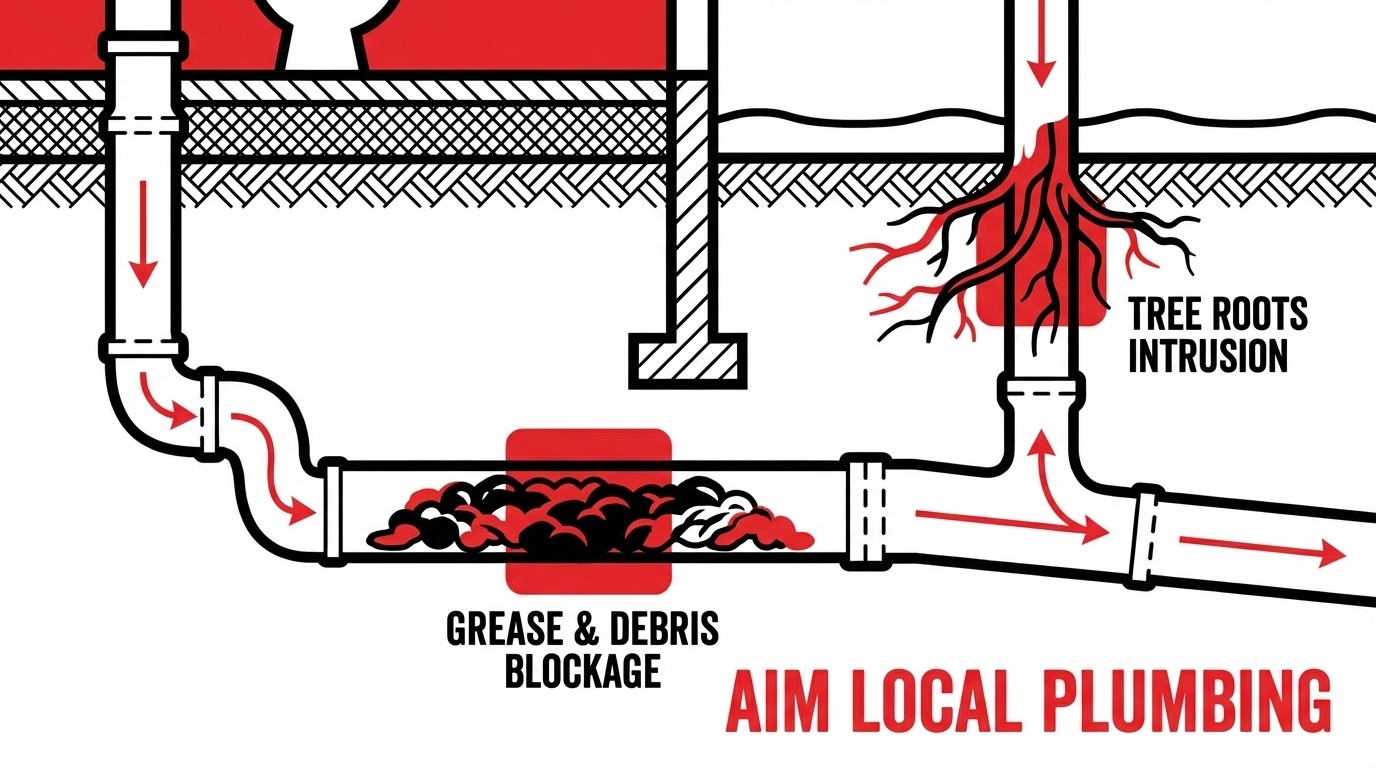
Blocked drains represent one of the most common and frustrating plumbing emergencies Sydney homeowners face, particularly as we transition from summer into autumn 2026. With February’s late summer storms depositing debris into drainage systems and increased rainfall putting pressure on aging infrastructure, understanding how to prevent, identify, and professionally resolve blocked drains can save you thousands in emergency repairs and property damage.
Whether it’s a slow-draining kitchen sink, an overflowing outdoor stormwater drain, or a complete sewer backup, blocked drains demand immediate attention to prevent water damage, health hazards, and costly structural issues. Sydney’s unique climate, aging drainage infrastructure, and urban tree canopy create perfect conditions for drain blockages that can escalate from minor inconvenience to major emergency within hours.
At AIM LOCAL, our licensed plumbers have cleared thousands of blocked drains across Sydney, the Central Coast, and Newcastle. We’ve seen every type of blockage imaginable—from grease buildup and foreign objects to tree root intrusion and collapsed pipes. This comprehensive 2026 guide reveals everything Sydney homeowners need to know about blocked drains: warning signs requiring immediate attention, common causes specific to Sydney properties, proven prevention strategies, DIY solutions versus professional intervention, and how to choose the right blocked drain plumber when emergencies strike.
Don’t wait until water backs up into your home or raw sewage floods your yard. Understanding blocked drains empowers you to take preventive action, recognize emergencies early, and make informed decisions that protect your property, your family’s health, and your budget.
Understanding Blocked Drains: Types and Drainage Systems
Before addressing blocked drains effectively, Sydney homeowners must understand their property’s drainage system comprises three distinct networks, each with unique blockage causes and solutions.
Indoor Drainage System: This network handles wastewater from sinks, showers, toilets, and appliances inside your home. These pipes typically range from 40mm (basin drains) to 100mm (toilet connections) and connect to your sewer line. Blockages here usually result from accumulated grease, soap scum, hair, foreign objects, and toilet paper buildup.
Common indoor blockage locations include:
- Kitchen sink drains (grease and food particles)
- Bathroom basin drains (hair and soap residue)
- Shower drains (hair, soap, and product buildup)
- Toilet drains (excessive paper, sanitary products, wipes)
- Laundry drains (lint, detergent residue, small items)
Outdoor Stormwater Drains: Sydney properties feature stormwater systems that channel rainwater from roofs, driveways, and paved surfaces away from buildings. These typically involve larger pipes (100mm-150mm) and include gully traps, inspection pits, and street connections. Stormwater blockages commonly occur from leaf litter, garden debris, silt buildup, and root intrusion—particularly relevant during February’s transitional weather when summer storms deposit significant organic matter.
Stormwater system vulnerable points:
- Gutter downpipes and pit connections
- Surface grates collecting leaves and debris
- Underground pipes with root intrusion
- Inspection pits accumulating silt
- Street connection points
Sewer Line: The main sewer line carries all wastewater from your property to Sydney Water’s infrastructure. This critical pipe (typically 100mm-150mm diameter) runs underground from your home to the street connection. Sewer blockages are the most serious drainage problems, potentially causing raw sewage backups with significant health hazards and property damage.
Sewer line blockage causes:
- Tree root intrusion through joints and cracks
- Collapsed or damaged pipes from ground movement
- Foreign objects flushed down toilets
- Accumulated grease hardening in pipes
- Incorrect pipe installation or inadequate fall
Understanding which drainage system is blocked determines the appropriate solution and urgency of professional intervention.
Common Causes of Blocked Drains in Sydney Properties
Sydney’s unique environmental conditions, housing stock characteristics, and lifestyle factors create specific blocked drain causes that local homeowners encounter repeatedly. Recognizing these common culprits helps you implement targeted prevention strategies.
1. Tree Root Intrusion (Leading Cause for Sydney Properties)
Sydney’s beautiful urban tree canopy comes with a hidden cost—aggressive root systems seeking moisture inside drainage pipes. Native Australian trees including eucalyptus, figs, and wattles develop extensive root networks that detect water vapor escaping from pipe joints. Once roots penetrate, they expand rapidly, creating severe blockages that require professional intervention.
Root intrusion typically affects:
- Properties with established gardens over 15 years old
- Older homes with clay or concrete pipes featuring joints
- Sewer lines running near large trees
- Drainage systems in suburbs with heritage trees
Prevention strategies: Regular CCTV drain inspections identify early root intrusion before severe blockages develop. Root barriers installed during landscaping protect vulnerable pipes. Chemical root treatments provide temporary relief but address symptoms rather than causes.
2. Grease and Fat Buildup
Despite constant warnings, grease, cooking oils, and fats remain the leading cause of kitchen drain blockages. When hot grease enters drains, it travels in liquid form before cooling and solidifying on pipe walls. Over time, this creates rock-hard deposits that narrow pipes progressively until complete blockage occurs.
High-risk situations:
• Households disposing of cooking oil down drains
• Properties with older cast iron pipes with rough internal surfaces
• Commercial kitchens without grease traps
• Homes using garbage disposals for greasy food scraps
The “hot water myth”: Running hot water while pouring grease down drains doesn’t prevent problems—it simply moves grease further into your drainage system before solidifying, potentially causing blockages in main sewer lines requiring expensive repairs.
3. Foreign Objects and “Flushable” Products
Modern toilets are designed to handle human waste and toilet paper—nothing else. Yet licensed plumbers regularly extract wet wipes, sanitary products, cotton buds, dental floss, condoms, and children’s toys from blocked drains. Products marketed as “flushable” wipes don’t break down like toilet paper and accumulate in pipes, catching other debris and creating progressive blockages.
Commonly flushed items causing blockages:
- Baby wipes and personal cleansing wipes
- Sanitary pads and tampons
- Cotton balls and makeup removal pads
- Dental floss and cotton buds
- Paper towels and tissues
- Cat litter and other absorbent materials
- Small toys and bathroom accessories
The “flushable wipes” problem: Despite manufacturer claims, Choice and Sydney Water confirm that “flushable” wipes don’t disintegrate sufficiently and contribute significantly to sewer blockages. The only items safe to flush are human waste and toilet paper.
4. Hair Accumulation
Bathroom drains, particularly showers and basins, battle constant hair accumulation. Individual hairs combine with soap residue to form dense masses that restrict water flow progressively. Long hair creates particularly problematic blockages that trap additional debris.
Prevention solutions:
- Install drain strainers/catchers on all bathroom drains
- Clean strainers weekly before hair enters pipes
- Periodic enzyme treatment breaks down organic buildup
- Professional drain cleaning every 12-18 months for long-haired households
5. Soap Scum and Product Buildup
Traditional bar soaps contain fats that combine with minerals in Sydney’s water to create soap scum—a waxy residue coating pipe interiors. When combined with hair, skin cells, and bathroom product residues, this creates sticky surfaces that trap debris and progressively narrow pipes.
Sydney’s water hardness varies by suburb, with Western Sydney areas experiencing harder water that exacerbates soap scum formation. Modern liquid soaps and body washes reduce but don’t eliminate this problem.
6. Leaf Litter and Garden Debris (Seasonal Issue)
February represents peak risk for stormwater drain blockages as late summer storms dislodge accumulated leaf litter from gutters and gardens. Sydney’s deciduous street trees drop leaves throughout autumn, while native eucalypts shed bark and seed pods year-round. This organic matter washes into stormwater systems, blocking grates, filling pits, and accumulating in underground pipes.
High-risk properties:
- Homes surrounded by deciduous trees
- Properties in established suburbs with mature street trees
- Houses with inadequate gutter guards
- Gardens with overhanging branches near drainage points
Seasonal prevention: Pre-autumn gutter cleaning and stormwater drain inspection prevent most seasonal blockages. Properties in high-risk areas benefit from installing leaf guards on surface grates.
7. Structural Issues and Aging Infrastructure
Sydney’s varied housing stock includes properties from every era, many with aging drainage systems experiencing structural failure. Pipes installed 30-50 years ago deteriorate through corrosion, ground movement, tree root damage, and poor initial installation.
Common structural problems:
- Collapsed clay or concrete pipes from ground subsidence
- Corroded cast iron pipes with holes and rough surfaces
- Incorrectly installed pipes lacking adequate fall (gradient)
- Bellied pipes creating low points where debris accumulates
- Separated pipe joints allowing soil infiltration
CCTV drain inspection identifies structural issues before catastrophic failures occur. Properties built before 1970 warrant proactive inspection given pipe age.
Warning Signs of Blocked Drains Requiring Immediate Attention
Recognizing blocked drain warning signs early prevents minor issues from escalating into plumbing emergencies. Some symptoms indicate minor blockages suitable for DIY intervention, while others demand immediate professional attention.
Red Flag Emergency Signs (Call Licensed Plumber Immediately):
1. Multiple Drains Backing Up Simultaneously
When toilets, showers, and sinks throughout your home experience drainage problems simultaneously, this indicates a main sewer line blockage—a serious plumbing emergency. Water backing up in multiple fixtures means the blockage affects your primary drainage system, potentially causing raw sewage backup into your home.
Emergency action: Stop using all water fixtures immediately. Contact a 24/7 emergency plumber for urgent service. AIM LOCAL provides rapid response for sewer emergencies across Sydney, Central Coast, and Newcastle.
2. Raw Sewage Odors Inside or Outside Your Home
Sewage smells indicate one of two serious problems: a complete drain blockage forcing sewage gases backward through fixtures, or a damaged sewer pipe allowing sewage escape. Both scenarios require immediate professional intervention due to health hazards and potential property contamination.
Health risks: Sewage contains dangerous bacteria, viruses, and pathogens including E. coli, Salmonella, and Hepatitis A. Exposure creates serious illness risks, particularly for children, elderly individuals, and those with compromised immune systems.
3. Gurgling Sounds from Drains or Toilets
Unusual gurgling or bubbling sounds when using water fixtures indicate air trapped in your drainage system by blockages. This symptom often precedes complete blockage and suggests significant drainage restriction requiring professional assessment.
4. Water Pooling Around Outdoor Drains or Gully Traps
Persistent water pooling around external drains, gully traps, or inspection pits indicates blockages preventing proper drainage. During February’s variable weather, occasional pooling after heavy rain may be normal, but standing water persisting hours after rainfall suggests serious blockages.
5. Toilet Water Level Fluctuations
If toilet bowl water levels rise abnormally after flushing or drop significantly when not in use, drainage system problems exist. Rising water suggests partial blockages, while dropping levels may indicate venting issues or sewer line problems.
Early Warning Signs (Address Promptly to Prevent Emergencies):
Slow Draining Fixtures: Water draining slower than normal—particularly if progressively worsening—indicates developing blockages. Kitchen sinks taking minutes to empty, showers pooling water around feet, or basins draining sluggishly warrant attention before complete blockages occur.
Recurring Blockages: If you’ve cleared a blockage using DIY methods but the problem returns within days or weeks, underlying issues exist requiring professional diagnosis. Recurring blockages often indicate structural problems, root intrusion, or inadequate pipe fall that DIY solutions cannot address.
Unpleasant Odors from Drains: While not as severe as raw sewage smells, persistent unpleasant odors from drains suggest organic matter accumulation and bacterial growth. This indicates partial blockages and inadequate drainage requiring professional cleaning.
Overflowing Gully Traps: Gully traps (external drainage access points) overflowing during normal household water use—not just during heavy rain—signal blockages in your sewer line requiring urgent professional attention.
Lush Garden Patches or Soft Ground: Unexpectedly lush, green patches in your lawn or soft, damp ground when it hasn’t rained suggest underground sewage leaks from damaged or blocked pipes. This requires immediate professional investigation to prevent environmental contamination and structural damage.
DIY Assessment Limitations:
While homeowners can identify these warning signs, determining blockage location, cause, and appropriate solution requires professional equipment and expertise. CCTV drain cameras allow licensed plumbers to inspect pipe interiors, identify blockage types and locations, assess pipe condition, and recommend appropriate solutions—capabilities unavailable to DIY approaches.
DIY Blocked Drain Solutions: What Works and What Does Not
For minor blockages in accessible locations, homeowners can attempt DIY solutions before calling professional plumbers. However, understanding what works, what doesn’t, and when DIY approaches risk worsening problems is essential.
Safe and Effective DIY Methods:
1. Plunger (Best First Response)
The humble plunger remains the most effective DIY blocked drain tool when used correctly. Plungers work by creating pressure changes that dislodge blockages, pushing them through or breaking them apart.
Proper plunging technique:
- Ensure sufficient water covers the plunger cup
- Create a seal around the drain opening
- Push down firmly, then pull up sharply (the pull motion is critical)
- Repeat 10-15 times with increasing force
- Cup plungers work best for flat drains (sinks, showers)
- Flange plungers design specifically for toilets
Important: Never plunge drains after using chemical drain cleaners—splashing caustic chemicals creates serious injury risks.
2. Boiling Water (For Grease Blockages Only)
Pouring boiling water down drains can dissolve grease and soap buildup causing minor blockages. This works only for grease-related issues and provides temporary relief rather than permanent solutions.
Correct method:
- Boil a full kettle of water
- Pour directly down drain in steady stream
- Wait 5-10 minutes
- Flush with hot tap water
- Repeat if necessary
Critical limitation: Only use boiling water on metal pipes. PVC and plastic pipes can warp or damage from boiling water, creating expensive repair requirements. If you’re uncertain about pipe materials, avoid this method.
3. Baking Soda and Vinegar (Mild Organic Cleaner)
The popular baking soda and vinegar method provides gentle cleaning for minor organic buildup but lacks power for significant blockages. This combination creates carbon dioxide bubbles that may dislodge loose debris.
Application process:
- Pour ½ cup baking soda down drain
- Follow with 1 cup white vinegar
- Cover drain with plug or wet cloth
- Wait 30 minutes
- Flush with hot water
Realistic expectations: This method works preventatively for maintaining clear drains but cannot clear significant blockages. It’s completely safe for all pipe types and environmentally friendly—advantages over chemical cleaners.
4. Drain Snake/Auger (For Accessible Blockages)
Manual drain snakes (also called plumber’s snakes or augers) physically break through blockages using a flexible metal cable with a corkscrew tip. Hardware stores sell simple versions ($15-$50) suitable for accessible drains like bathroom basins and showers.
Using a drain snake:
- Insert cable into drain opening
- Rotate handle clockwise while pushing forward
- When you feel resistance, continue rotating to break through blockage
- Slowly retract cable while continuing rotation
- Flush drain with hot water to clear debris
- Clean snake thoroughly after use
DIY snake limitations: Consumer drain snakes typically extend only 3-6 meters—sufficient for nearby blockages but inadequate for main sewer lines or distant blockages. Professional power augers extend 30+ meters and provide significantly more cutting power.
DIY Methods to AVOID:
1. Chemical Drain Cleaners (Dangerous and Ineffective)
Despite supermarket shelves stocked with chemical drain cleaners, licensed plumbers universally recommend avoiding these products. They create more problems than they solve.
Why chemical cleaners fail:
- Caustic chemicals damage pipes, particularly older pipes and certain plastics
- Products generate heat that can melt PVC pipes or damage seals
- Chemicals rarely reach blockages in main lines, pooling ineffectively
- Repeated use causes cumulative pipe damage
- Products create hazardous conditions for plumbers if professional help becomes necessary
- Environmental damage when flushed into water systems
Safety hazards: Chemical cleaners cause serious burns if splashed on skin or in eyes. Mixing different products or using cleaners before plunging risks dangerous chemical reactions. The temporary “fix” isn’t worth the risks.
2. Wire Coat Hangers (Damage Risk)
While internet advice suggests straightening wire coat hangers to clear drains, this amateur approach risks scratching and damaging pipe interiors—particularly modern PVC pipes. Damaged pipe surfaces create rough areas where future blockages form more readily.
3. High-Pressure Garden Hose (Dangerous and Ineffective)
Attempting to blast blockages using garden hoses forced into drains rarely clears blockages and risks forcing water backward into your home. Professional hydro jetting equipment operates at 3,000-4,000 PSI—dramatically more powerful than residential water pressure—and requires training to use safely.
4. Improvised Tools and Sharp Objects
Never insert screwdrivers, knitting needles, curtain rods, or similar improvised tools into drains. These can perforate pipes, become lodged requiring professional extraction, or push blockages deeper into systems.
When to Stop DIY and Call Professionals:
Attempt DIY solutions only for:
- Single drains with minor, recent blockages
- Accessible blockages within 1-2 meters of drain opening
- Situations without sewage odors or multiple fixture problems
- Blockages in indoor fixtures, not main sewer lines
Call licensed plumbers immediately when:
- DIY attempts fail after 2-3 reasonable efforts
- Multiple drains experience problems simultaneously
- Sewage odors present
- Water backs up into other fixtures
- Outdoor drains or main lines appear blocked
- You’re uncertain about pipe materials or system configuration
- Recurring blockages keep returning
AIM LOCAL’s licensed plumbers bring professional equipment including power augers extending 30+ meters, CCTV drain cameras for accurate diagnosis, and hydro jetting equipment that clears even severe blockages—capabilities far exceeding DIY approaches. More importantly, professional diagnosis identifies whether blockages indicate underlying structural problems requiring repair, preventing future emergencies.
Professional Blocked Drain Solutions: Modern Technology and Methods
When DIY approaches fail or serious blockages occur, professional plumbers deploy advanced technology and proven techniques that resolve blockages completely while identifying underlying causes preventing recurrence.
CCTV Drain Camera Inspection (Essential Diagnostic Tool)
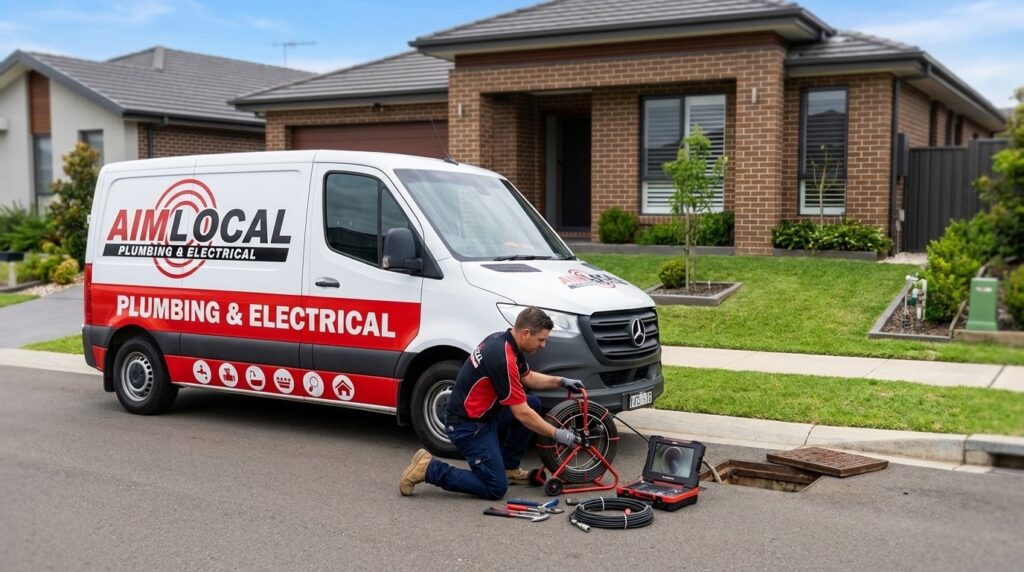
Modern blocked drain service begins with accurate diagnosis, not guesswork. CCTV drain cameras—waterproof cameras mounted on flexible cables—allow plumbers to inspect pipe interiors visually, identifying blockage types, locations, and pipe conditions.
What CCTV inspection reveals:
- Exact blockage location and composition (roots, grease, foreign objects)
- Pipe material, diameter, and condition
- Structural damage including cracks, collapses, or corrosion
- Root intrusion extent and entry points
- Incorrect pipe installation or inadequate fall
- Scale buildup or corrosion patterns
This visual evidence eliminates guesswork, ensures appropriate treatment selection, provides documentation for insurance claims, and establishes baseline condition for future reference.
CCTV inspection costs: $200-$400 for residential properties—a worthwhile investment preventing expensive trial-and-error approaches and identifying problems before catastrophic failures.
Hydro Jetting (Most Effective Blockage Removal)
Professional hydro jetting equipment propels water at 3,000-4,000 PSI through specialized nozzles, completely clearing blockages and cleaning pipe interiors. This powerful method removes tree roots, grease deposits, scale buildup, and compacted debris that other methods cannot address.
Hydro jetting advantages:
- Clears 100% of blockages including severe root intrusions
- Cleans entire pipe circumference, not just creating holes through blockages
- Environmentally friendly using only water pressure
- Prevents rapid re-blocking by thoroughly cleaning pipe surfaces
- Safe for most pipe types when performed by trained professionals
- Long-lasting results compared to basic augering
Hydro jetting costs: $350-$800 depending on blockage severity and access requirements—typically one-time investment providing years of trouble-free drainage.
Power Augering (Mechanical Blockage Removal)
Professional power augers (drain snakes) extend 30-50 meters with significantly more cutting power than consumer versions. Various cutting heads address different blockage types: standard spiral blades for general blockages, root-cutting blades for tree intrusions, and specialized heads for specific materials.
When augering is appropriate:
- Blockages too severe for DIY snakes but not requiring hydro jetting
- Situations where pipe condition prevents high-pressure water methods
- Cost-effective solution for straightforward blockages
- Emergency clearing before comprehensive hydro jetting
- Removing solid foreign objects
Augering costs: $200-$450 for standard service—effective for many common blockages.
Pipe Relining (Trenchless Pipe Repair)
When CCTV inspection identifies damaged, cracked, or root-infiltrated pipes, pipe relining provides permanent solutions without excavation. This trenchless technology installs new pipe liners inside existing pipes, creating seamless, root-proof barriers.
Pipe relining process:
• CCTV inspection confirms damage and pipe dimensions
• Thorough cleaning prepares pipe interior
• Flexible epoxy-saturated liner inserted and positioned
• Liner inflated to conform to pipe interior
• Curing process (chemical or UV light) hardens liner
• New pipe-within-a-pipe formed lasting 50+ years
Relining advantages over traditional excavation:
• No property excavation or landscape destruction
• Completed in hours rather than days
• Typically 30-50% cheaper than dig-and-replace
• Root-proof joints prevent future intrusions
• Minimal property disruption
• Permanent solution with extended warranties
Pipe relining costs: $300-$500 per meter depending on pipe diameter and complexity—significant savings versus excavation costs of $5,000-$15,000 for traditional repairs.
High-Pressure Water Blasting (Severe Root Removal)
For extreme root intrusions, specialized high-pressure root-cutting nozzles combined with chemical root treatments provide effective solutions. After mechanical removal, root treatment products prevent regrowth for 12-24 months while property owners address source trees.
Preventive Maintenance Programs
Following major blockage clearing, many Sydney homeowners implement preventive maintenance programs preventing recurrence:
- Annual CCTV inspections (for root-prone properties): $200-$300 annually identifies developing problems early.
- Scheduled hydro jetting (every 2-3 years): $400-$600 maintains clear drainage and prevents accumulation.
- Root treatment programs: $250-$400 annually for properties with unavoidable tree-root challenges.
These proactive investments cost significantly less than emergency repairs and provide peace of mind.
Blocked Drain Prevention: Proactive Strategies for Sydney Homeowners
Prevention dramatically reduces blocked drain frequency, saves thousands in emergency repairs, and maintains property value. These proven strategies address Sydney’s specific blocked drain challenges.
Kitchen Drain Protection:
- Never pour grease, cooking oils, or fats down drains—dispose in sealed containers with household waste.
- Scrape plates thoroughly into bins before rinsing—even small food particles contribute to blockages.
- Install sink strainers catching food debris before entering drains.
- Run hot water after each use to flush away residues.
- Monthly enzyme treatments break down organic buildup—safer and more effective than chemical cleaners.
- Consider installing garbage disposal units correctly if permitted in your area—but never dispose of grease, oils, or fibrous vegetables through disposals.
Bathroom Drain Protection:
- Install hair catchers on all shower, bath, and basin drains.
- Clean catchers weekly before hair accumulates in pipes.
- Never flush anything except human waste and toilet paper—dispose of all other items in bins.
- Educate household members, particularly children, about appropriate toilet use.
- Avoid excessive toilet paper use and never flush “flushable” wipes despite marketing claims.
- Run hot water regularly through less-used drains preventing trap seal evaporation and buildup.
- Consider switching to liquid soaps reducing soap scum formation.
Outdoor Stormwater Protection:
- Clean gutters and downpipes twice annually (pre-summer and pre-winter) preventing leaf accumulation.
- Install gutter guards on properties surrounded by trees—particularly deciduous species.
- Clear surface drain grates regularly during autumn leaf-fall season.
- Trim overhanging branches near drainage access points.
- Schedule pre-autumn stormwater system inspection clearing accumulated debris before heavy rainfall.
- Consider installing leaf guards on surface grates in high-risk areas.
- Ensure garden bed levels don’t direct soil into drainage systems.
General Preventive Measures:
- Annual professional CCTV drain inspection for properties over 15 years old identifies developing problems before emergencies.
- Biennial hydro jetting for root-prone properties maintains clear pipes and removes early-stage root intrusions.
- Strategic landscaping keeps large trees away from sewer lines—minimum 3-meter clearance for most species.
- Root barrier installation during landscaping protects vulnerable pipes.
- Address slow drains immediately rather than waiting for complete blockages.
- Maintain records of your drainage system layout including inspection pit locations and main line routes—valuable information during emergencies.
- Educate all household members about drain-safe practices.
Seasonal Maintenance Schedule:
- February-March (Now – Pre-Autumn): Clean gutters and stormwater systems before autumn leaves fall. Inspect and clear all outdoor drains. Schedule professional inspection if not done in past year.
- April-May (Autumn): Monitor stormwater drains during increased rainfall. Clear surface grates of fallen leaves weekly. Address any slow drainage before winter.
- June-August (Winter): Monitor for any drainage issues with increased water use for heating and longer showers. Address problems promptly before cold weather complicates repairs.
- September-November (Spring): Clean gutters and drainage systems before summer storm season. Inspect for winter damage. Consider preventive hydro jetting for aging systems.
- December-January (Summer): Monitor systems during storm season. Clear debris after significant weather events. Prepare for late-summer maintenance cycle.
This proactive approach reduces emergency blocked drain incidents by 80-90% according to industry data—minimal investment for significant protection.
Blocked Drain Costs Sydney: Complete Price Guide 2026
Understanding blocked drain service costs helps Sydney homeowners budget appropriately and recognize fair pricing. Costs vary based on blockage severity, location, time of service, and required solutions.
Emergency vs. Standard Service Rates:
Standard Business Hours (Monday-Friday, 8am-5pm):
• Service call/diagnostic fee: $100-$180
• Basic drain clearing (accessible): $180-$350
• CCTV drain inspection: $200-$400
• Hydro jetting service: $350-$800
• Power augering: $200-$450
Emergency After-Hours Service (Evenings, Weekends, Public Holidays):
• Emergency callout fee: $200-$350
• Hourly rates: $150-$250 per hour
• Emergency blockage clearing: $350-$800
• Total emergency service: $400-$1,200+
Pro tip: If blockages aren’t causing immediate property damage or health hazards, waiting for standard business hours saves 30-50% versus emergency rates.
Service Type and Pricing Breakdown:
Basic Drain Clearing (Minor Kitchen/Bathroom Blockages):
$180-$350 including service call. Suitable for straightforward blockages in accessible locations responding to standard augering or plunging. Typically completed in 1-2 hours.
CCTV Drain Camera Inspection:
$200-$400 for comprehensive inspection up to 30 meters. Includes video recording, report, and blockage/damage identification. Some companies waive inspection fees if proceeding with recommended repairs.
Professional Hydro Jetting:
$350-$800 depending on:
• Blockage severity and extent
• Access point difficulty
• Pipe length requiring clearing
• Root intrusion severity
• Multiple blockage locations
Main Sewer Line Clearing:
$400-$1,200 for clearing main sewer lines—more extensive work requiring specialized equipment and typically longer service time.
Tree Root Removal:
$500-$1,500 depending on intrusion severity. Includes root cutting, removal, and often pipe cleaning. May require multiple visits for severe cases.
Pipe Relining (Trenchless Repair):
$300-$500 per meter depending on:
• Pipe diameter (larger pipes cost more)
• Access difficulty
• Damage extent
• Number of damaged sections
• Preparation requirements
Typical residential relining: $2,000-$6,000 for common repair lengths (5-12 meters)—significantly cheaper than excavation alternatives.
Traditional Pipe Replacement (Excavation):
$5,000-$15,000+ for dig-and-replace depending on:
• Excavation depth and difficulty
• Property access
• Pipe length
• Landscape restoration
• Structural obstacles
• Council permit requirements
Factors Affecting Costs:
- Location and Access: Difficult-to-access blockages (under concrete, inside walls, deep underground) increase costs due to additional labor and specialized equipment requirements.
- Blockage Severity: Minor soap buildup clears quickly and inexpensively. Severe root masses compacted over years require extensive work and higher costs.
- Time of Service: Emergency after-hours service carries premium rates. Planning non-emergency work during standard hours provides significant savings.
- Property Age: Older properties often feature multiple issues discovered during initial inspections, potentially increasing total costs beyond initial blockage clearing.
- Underlying Problems: If CCTV inspection reveals damaged pipes requiring repair, costs exceed simple blockage clearing. However, addressing underlying problems prevents recurring blockages and potential catastrophic failures.
Getting Value for Money:
- Request itemized quotes detailing service call fees, hourly rates, equipment charges, and material costs.
- Ask what’s included: Does quoted price include CCTV inspection? How many meters of pipe clearing? What warranty or guarantee?
- Verify licensing and insurance: Licensed plumbers carry professional indemnity and public liability insurance protecting you—unlicensed “cheap” options risk expensive problems.
- Compare like services: Lowest quote isn’t always best value. Compare qualifications, equipment, warranties, and reputations.
- Consider preventive value: Investing in CCTV inspection and comprehensive hydro jetting provides longer-lasting results than minimal augering that leaves buildup creating rapid re-blocking.
AIM LOCAL provides transparent, upfront pricing with no hidden costs—ensuring you understand exactly what you’re paying for before work begins.
Choosing a Blocked Drain Plumber in Sydney: Essential Criteria
Selecting the right blocked drain plumber determines whether you receive quality service solving problems permanently or face recurring issues, excessive costs, and potential property damage. These criteria help identify reputable professionals.
Essential Qualifications and Credentials:
Valid NSW Plumbing License: All plumbing work in NSW requires licensed tradespeople. Verify license status through NSW Fair Trading website before engaging services. Licensed plumbers demonstrate:
• Completed formal training and apprenticeships
• Passed competency assessments
• Maintain continuing professional education
• Carry required insurance coverage
• Accountable to regulatory oversight
Request license numbers and verify independently—reputable plumbers readily provide verification.
Comprehensive Insurance Coverage:
• Public liability insurance ($20 million minimum) covers property damage from their work
• Professional indemnity insurance protects against errors and omissions
• Workers compensation insurance (if employing others)
Specialized Blocked Drain Equipment:
Quality blocked drain service requires professional equipment that DIY approaches and basic plumbers may lack:
• CCTV drain inspection cameras
• Professional hydro jetting equipment (3,000+ PSI)
• Power augers extending 30+ meters
• Pipe locating equipment
• Root-cutting specialized tools
• Relining equipment and materials
Ask what equipment they’ll use for your specific situation. Plumbers lacking appropriate equipment cannot deliver comprehensive solutions.
Service Quality Indicators:
- 24/7 Emergency Availability: Drainage emergencies don’t respect business hours. Choose plumbers offering genuine 24/7 emergency response—not just answering services that schedule next-day appointments.
- Response Time Commitments: Reputable emergency plumbers provide timeframe commitments (typically 1-2 hours for genuine emergencies in metropolitan areas).
- Upfront Pricing: Quality plumbers provide clear quotes before starting work, explaining costs, what’s included, and additional charges that might apply. Avoid services refusing quotes until after work completion.
- Warranty and Guarantees: Professional work includes warranties (typically 12 months minimum for blockage clearing, extended warranties for relining). Warranties demonstrate confidence in workmanship.
- Detailed Reporting: CCTV inspection services should provide comprehensive reports with video footage, identified problems, recommended solutions, and cost estimates. This documentation proves valuable for insurance claims and property records.
Questions to Ask Before Hiring:
1. What’s your NSW plumbing license number? (Verify independently)
2. Do you carry comprehensive insurance? (Request certificates of currency)
3. What specific equipment will you use for this blockage?
4. Can you provide upfront pricing or detailed quotes?
5. What warranty or guarantee covers your work?
6. Will you provide CCTV inspection footage and reports?
7. How quickly can you respond to my situation?
8. Do you offer emergency after-hours service?
9. What are your emergency service rates compared to standard rates?
10. Can you provide references from similar jobs?
Red Flags to Avoid:
- Cannot provide valid license number or verification
- Refuses to provide insurance certificates
- Significantly cheaper than competitors without explanation
- Pressure tactics demanding immediate decisions
- Cash-only payment requirements avoiding paper trails
- Reluctance to provide written quotes or contracts
- No established business presence or verifiable reputation
- Cannot explain their diagnostic process or proposed solutions
- Refuse to provide CCTV inspection despite suspected serious blockages
Local Reputation and Reviews:
- Check Google Reviews, ProductReview.com.au, and local community groups for genuine customer feedback.
- Look for consistent positive reviews mentioning professionalism, punctuality, effective solutions, and fair pricing.
- Be cautious of businesses with only generic 5-star reviews lacking specific details—may indicate fake reviews.
- Established local businesses with years of service history provide greater accountability than new or transient operators.
Why Choose AIM LOCAL for Blocked Drains:
AIM LOCAL brings comprehensive blocked drain expertise throughout Sydney, Central Coast, and Newcastle with:
✓ Fully licensed, experienced plumbers with specialized drain clearing training
✓ Professional equipment including CCTV cameras, hydro jetting, and pipe relining capability
✓ 24/7 genuine emergency response with rapid arrival commitments
✓ Transparent upfront pricing with no hidden costs
✓ Comprehensive warranties on all work
✓ Detailed CCTV inspection reports with video evidence
✓ Multi-service capability addressing underlying causes, not just symptoms
✓ Established reputation with thousands of satisfied Sydney customers
✓ Prompt, professional communication throughout service delivery
We don’t just clear blockages—we identify why they occurred and provide lasting solutions preventing recurrence.
Conclusion: Take Control of Blocked Drains Before Emergencies Strike
Blocked drains represent one of Sydney homeowners’ most common plumbing challenges, but understanding causes, recognizing warning signs early, implementing preventive strategies, and knowing when to call licensed professionals transforms this frustrating problem into a manageable aspect of property maintenance.
As February 2026 brings late summer storms and the transition toward autumn’s increased rainfall, now is the perfect time to assess your property’s drainage systems, clear accumulated debris, address slow drains before they become complete blockages, and schedule professional inspections if your system hasn’t been evaluated recently.
The key takeaways from this comprehensive guide:
🔴 Recognize emergency warning signs requiring immediate professional attention—multiple drain backups, sewage odors, and main sewer line symptoms demand urgent response preventing property damage and health hazards.
🔴 Implement proven prevention strategies specific to Sydney conditions—proper waste disposal, regular gutter and drain maintenance, strategic landscaping, and seasonal inspection dramatically reduce blockage frequency.
🔴 Attempt DIY solutions only for minor, accessible blockages in single fixtures—but know when to stop and call professionals before worsening problems or risking personal injury.
🔴 Choose licensed plumbers with proper equipment, transparent pricing, and comprehensive warranties—the right professional solves problems permanently rather than providing temporary fixes leading to recurring issues.
🔴 Consider proactive maintenance including annual CCTV inspections and periodic hydro jetting for aging systems or root-prone properties—prevention costs dramatically less than emergency repairs.
Don’t wait for complete blockages, sewage backups, or property damage before addressing drainage problems. Early intervention saves money, prevents emergencies, and maintains your property’s value and your family’s health and comfort.
Contact AIM LOCAL Today for Professional Blocked Drain Solutions
AIM LOCAL provides comprehensive blocked drain services throughout Sydney, Central Coast, and Newcastle with 24/7 emergency availability and the professional expertise Sydney homeowners trust.
Our Services Include:
✓ 24/7 Emergency blocked drain response
✓ CCTV drain camera inspection and reporting
✓ Professional hydro jetting and root removal
✓ Power augering for all blockage types
✓ Trenchless pipe relining (permanent repairs without excavation)
✓ Stormwater drain clearing and maintenance
✓ Preventive maintenance programs
✓ Upfront transparent pricing
✓ Comprehensive warranties on all work
📞 Call AIM LOCAL: 1800 187 168 (24/7 Emergency Line)
Don’t let blocked drains disrupt your life or damage your property. Whether you’re dealing with slow drains requiring preventive attention, complete blockages demanding emergency response, or recurring problems suggesting underlying issues, AIM LOCAL’s licensed plumbers deliver fast, effective, and lasting solutions.
Available 24/7 across Sydney, Central Coast & Newcastle—because drainage emergencies don’t wait for business hours, and neither do we.
Take action today. Your drains—and your peace of mind—will thank you.
❓ Frequently Asked Questions: Blocked Drains Sydney
Q: How much does it cost to clear a blocked drain in Sydney?
A: Blocked drain clearing costs vary by severity and timing. Standard business hours service ranges from $180-$350 for basic blockages, $350-$800 for hydro jetting, and $400-$1,200 for main sewer line clearing. Emergency after-hours service costs 30-50% more. CCTV inspection costs $200-$400. Professional assessment determines the most cost-effective solution for your specific blockage. AIM LOCAL provides transparent upfront pricing before commencing work.
Q: Can I clear a blocked drain myself or do I need a plumber?
A: Minor single-drain blockages in accessible locations (kitchen sinks, bathroom basins) may respond to DIY methods including plungers, drain snakes, or baking soda/vinegar treatments. However, call licensed plumbers immediately for: multiple drain backups, sewage odors, main sewer line blockages, recurring problems, DIY failure after 2-3 attempts, or any situation involving outdoor drains. Professional equipment (CCTV cameras, hydro jetters, power augers extending 30+ meters) resolves issues DIY methods cannot address while identifying underlying causes preventing recurrence.
Q: What causes blocked drains in Sydney homes?
A: Sydney’s most common blocked drain causes include: tree root intrusion (leading cause for properties with established gardens), grease and fat buildup in kitchen drains, foreign objects and ‘flushable’ wipes in toilets, hair accumulation in bathroom drains, soap scum and product buildup, seasonal leaf litter blocking stormwater systems, and structural issues in aging pipes. Sydney’s urban tree canopy and aging housing stock create unique drainage challenges requiring targeted prevention strategies and professional solutions.
Q: Are chemical drain cleaners safe and effective?
A: No. Licensed plumbers universally recommend avoiding chemical drain cleaners despite their supermarket availability. These products: damage pipes (particularly PVC and older materials), generate dangerous heat, rarely reach main line blockages, create hazardous conditions requiring emergency plumber safety measures, cause serious burns if splashed, and harm the environment. Chemical cleaners provide temporary relief at best while causing cumulative pipe damage. Professional mechanical clearing (hydro jetting, augering) solves blockages completely and safely without chemical risks.
Q: How do I prevent blocked drains in my Sydney property?
A: Implement these proven prevention strategies: never pour grease or fats down drains, install hair catchers on all bathroom drains, flush only human waste and toilet paper (never wipes or sanitary products), clean gutters twice annually, clear stormwater grates regularly during autumn, schedule annual CCTV inspection for properties over 15 years old, consider biennial hydro jetting for root-prone systems, maintain strategic landscaping keeping large trees away from sewer lines, and address slow drains immediately before complete blockages develop. Prevention reduces emergency blocked drain incidents by 80-90%.
Q: When should I call an emergency plumber for blocked drains?
A: Call emergency plumbers immediately for: multiple drains backing up simultaneously (indicates main sewer line blockage), raw sewage odors inside or outside your home, sewage backup into toilets or drains, complete drainage failure, water pooling around outdoor drains persisting after rain, or gurgling sounds preceding complete blockages. These symptoms indicate serious drainage system problems requiring urgent professional intervention preventing property damage and health hazards. AIM LOCAL provides 24/7 emergency response throughout Sydney, Central Coast, and Newcastle.
Q: What is CCTV drain inspection and do I need it?
A: CCTV drain inspection uses waterproof cameras on flexible cables to visually inspect pipe interiors, identifying blockage locations and types, pipe condition, structural damage, root intrusion extent, and incorrect installations. This technology eliminates guesswork, ensures appropriate treatment, and identifies problems before catastrophic failures. CCTV inspection costs $200-$400 and is recommended for: recurring blockages, suspected root problems, properties over 15 years old, slow drains without obvious causes, pre-purchase property assessments, and situations where multiple treatment attempts have failed. Visual evidence proves invaluable for insurance claims and future planning.
Q: How long does professional blocked drain clearing take?
A: Service duration varies by blockage severity: basic accessible blockages clear in 1-2 hours, main sewer line clearing requires 2-4 hours, comprehensive CCTV inspection and hydro jetting takes 2-3 hours, and severe root removal or relining extends to half-day or full-day appointments. Emergency services prioritize rapid response (typically 1-2 hours arrival for metropolitan Sydney) with immediate assessment and clearing of urgent blockages. Licensed plumbers provide realistic timeframe estimates after initial inspection. Most standard blockages resolve within a single service appointment.