
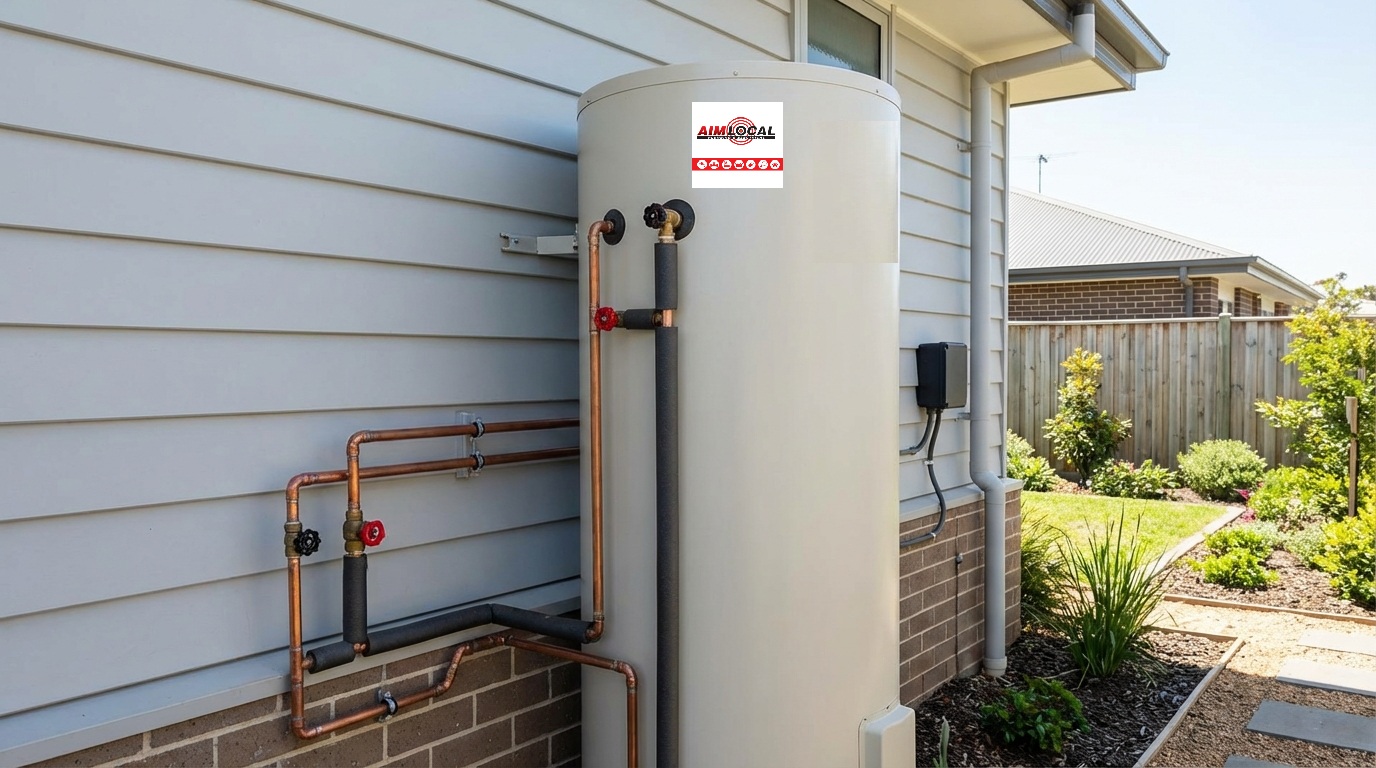
As Sydney transitions into autumn 2026, dropping temperatures signal the perfect time for homeowners to assess their hot water systems before winter’s peak demand arrives. March through May represents the critical maintenance window when proactive Sydney homeowners schedule hot water system inspections, preventing emergency breakdowns during June’s coldest mornings when reliable hot water becomes non-negotiable.
Your hot water system works harder during autumn and winter—longer, hotter showers, increased laundry loads, and general household heating demands place unprecedented stress on aging equipment. Yet most Sydney homeowners overlook hot water maintenance until disaster strikes: icy morning showers, leaking tanks flooding laundry rooms, or complete system failures requiring emergency plumber callouts at premium rates.
At AIM LOCAL, our licensed plumbers service hot water systems across Sydney, Central Coast, and Newcastle year-round, but autumn represents our busiest season for preventive maintenance—smart homeowners who understand that a $200 autumn service inspection prevents $2,000+ emergency repairs and replacement costs during winter’s peak.
This comprehensive 2026 guide reveals everything Sydney homeowners need to know about hot water system autumn maintenance: warning signs demanding immediate attention, essential maintenance tasks, choosing between repair and replacement, comparing system types for Sydney’s climate, and understanding when DIY troubleshooting ends and licensed plumber expertise begins. Whether your system is 2 years or 12 years old, this guide ensures your family enjoys reliable hot water throughout autumn, winter, and beyond.
Why Autumn is Critical for Hot Water System Maintenance in Sydney
Sydney’s autumn season creates unique conditions that simultaneously test hot water systems while providing optimal timing for maintenance and upgrades. Understanding why March through May represents your maintenance window prevents costly winter emergencies.
Temperature Fluctuations Stress Hot Water Components
Autumn’s variable temperatures—warm afternoons transitioning to cool evenings—force hot water systems to work harder. Thermostats cycle more frequently, heating elements experience increased activation, and expansion/contraction from temperature changes stress tank materials, connections, and seals. These stresses expose weaknesses that summer’s consistent heat masked.
For gas hot water systems, autumn’s cooler temperatures require longer burn times to achieve desired water temperatures, increasing wear on burners, igniters, and heat exchangers. Electric systems draw more power as inlet water temperatures drop, stressing heating elements and potentially revealing electrical issues before winter’s peak demand overwhelms them completely.
Increased Hot Water Demand Begins
As Sydney temperatures cool, household hot water consumption increases 20-30% compared to summer months. Longer showers, more frequent bathing, increased laundry from heavier clothing, and general comfort-seeking behaviors place unprecedented demand on systems that coasted through summer on minimal effort.
This demand increase reveals capacity issues, recovery rate problems, and efficiency losses that weren’t apparent when 5-minute lukewarm showers satisfied summer needs. Autumn usage patterns mirror winter demands, providing early warning of systems struggling to meet household requirements before winter’s absolute peak.
Optimal Timing Before Winter Emergency Season
Winter represents emergency plumber peak season—frozen pipes, burst hot water tanks, complete system failures requiring same-day replacement. Service availability becomes scarce, premium emergency rates apply, and homeowners face days without hot water while waiting for repairs or replacement equipment delivery.
Autumn maintenance avoids this crisis. Licensed plumbers have greater availability for scheduled service, standard rates apply rather than emergency premiums, and if replacement proves necessary, orderly planning replaces panic-driven decisions. Parts and equipment remain readily available without winter supply chain pressures.
Pre-Winter System Optimization
Autumn maintenance optimizes system performance before winter’s peak. Flushing sediment buildup, testing temperature and pressure relief valves, checking anode rods, inspecting gas connections, verifying thermostat accuracy, and ensuring proper insulation prepares systems for months of hard work ahead.
Systems serviced in autumn operate more efficiently throughout winter, reducing energy bills while providing reliable performance. This efficiency gain often pays for the maintenance service through reduced utility costs alone, making autumn inspections investment rather than expense.
Warning Signs Your Hot Water System Needs Immediate Attention
Recognizing hot water system warning signs early prevents minor issues from escalating into emergency failures requiring expensive repairs or complete replacement. These symptoms demand licensed plumber assessment—never ignore them hoping problems resolve themselves.
Temperature Inconsistency or Inadequate Hot Water
If your hot water temperature fluctuates unpredictably, runs cold unexpectedly, or fails to meet household demands that previously presented no problems, your system requires professional diagnosis.
Common causes include:
- Failed or failing heating elements (electric systems)
- Thermostat malfunction or miscalibration
- Sediment buildup reducing tank capacity
- Dip tube deterioration allowing cold water mixing
- Undersized system for increased autumn demand
- Gas supply issues or burner problems (gas systems)
Licensed plumbers diagnose root causes through systematic testing—guessing wastes money on unnecessary parts while real problems persist.
Unusual Noises from the Hot Water System
Hot water systems should operate relatively quietly. Loud banging, popping, rumbling, or hissing sounds indicate problems requiring attention:
- Popping/crackling: Sediment buildup boiling at tank bottom
- Rumbling: Severe sediment accumulation causing inefficient heating
- Hissing: Temperature/pressure relief valve activating (potential danger)
- Banging: Thermal expansion or water hammer issues
- Whistling: Scale buildup restricting water flow
Sediment-related noises reduce efficiency and accelerate tank corrosion, shortening system lifespan. Pressure-related sounds indicate safety concerns requiring immediate professional assessment.
Visible Leaks, Moisture, or Water Pooling
Any moisture around your hot water system demands investigation. Even small leaks worsen rapidly, and undetected leaks waste thousands of liters and dollars annually while potentially causing structural damage.
Leak locations indicate specific problems:
- Tank base pooling: Tank corrosion requiring replacement
- Connections/fittings: Loose fittings or failed seals (often repairable)
- Pressure relief valve: Excess pressure or failed valve
- Pipe connections: Thermal expansion or vibration loosening
- Condensation: May be normal for certain systems, but verify
Never ignore leaks assuming they’re minor—small drips become catastrophic failures without warning. Sydney’s water damage insurance claims frequently trace to ignored hot water system leaks.
Discolored or Rusty Water
Brown, rusty, or discolored hot water indicates serious internal corrosion requiring immediate attention. While cold water discoloration suggests main supply issues, hot water-specific discoloration points to your system.
Rust-colored water signals:
- Tank interior corrosion (replacement likely needed)
- Failed anode rod allowing tank corrosion
- Corroded pipes or connections
- Sediment contamination from tank deterioration
Address discolored water immediately—drinking or bathing in contaminated water poses health risks, and continuing system operation accelerates damage.
Age-Related Concerns
Hot water system age dictates maintenance urgency:
- 0-5 years: Minimal concerns, routine maintenance sufficient
- 6-10 years: Increased monitoring, proactive part replacement
- 10+ years: Replacement planning recommended, frequent inspection critical
- 12-15 years: Expect failure imminently, budget replacement
Sydney’s hard water accelerates wear—systems may reach end-of-life sooner than manufacturer specifications suggest. Autumn inspections for aging systems prevent winter emergency replacements.
Increased Energy Bills Without Usage Changes
If utility bills rise significantly without corresponding usage increases, your hot water system likely operates inefficiently:
- Sediment buildup insulating heating elements
- Failed thermostats causing overheating
- Deteriorated tank insulation losing heat
- Gas burner inefficiency or air mixture problems
- Leaks wasting heated water continuously
Efficiency losses compound monthly—addressing them immediately stops money literally flowing down the drain.
Essential Autumn Hot Water System Maintenance Tasks Sydney Homeowners Should Complete
Proper autumn hot water system maintenance extends equipment lifespan, maintains efficiency, prevents emergencies, and ensures reliable winter performance. Some tasks suit DIY-capable homeowners, while others require licensed plumbers for safety and warranty compliance.
Professional Annual Service Inspection (Licensed Plumber Required)
Annual professional hot water system inspection represents the single most important maintenance investment Sydney homeowners make. Licensed plumbers perform comprehensive assessments identifying current problems and predicting future issues before they cause failures.
Professional inspection includes:
- Temperature and pressure relief valve testing and verification
- Anode rod inspection and replacement (if needed)
- Thermostat accuracy testing and calibration
- Heating element testing (electric systems)
- Gas burner and pilot light inspection (gas systems)
- Tank interior inspection via drain valve
- Connection tightness and leak detection
- Insulation condition assessment
- Electrical connection safety verification
- System compliance with current standards
- Efficiency testing and optimization recommendations
Cost: $150-$300 for standard systems
Frequency: Annually, preferably autumn
ROI: Prevents 80-90% of emergency failures
Sediment Flushing (DIY Possible, Professional Recommended)
Sydney’s hard water deposits mineral sediment at tank bottoms, reducing capacity, efficiency, and accelerating corrosion. Annual sediment flushing removes this buildup, extending system life and improving performance.
DIY Flushing Process:
- Turn off power/gas supply to hot water system
- Turn off cold water inlet valve
- Connect garden hose to drain valve
- Open hot water tap inside to allow air entry
- Open drain valve, allowing water to flush into suitable drainage
- Continue until water runs clear (may take 10-20 minutes)
- Close drain valve, remove hose
- Open inlet valve, allow tank refill
- Restore power/gas supply
Warning: If drain valve hasn’t been operated in years, forcing it may cause breakage requiring professional repair. Consider professional flushing for systems over 5 years old.
Temperature Setting Verification and Adjustment
Autumn represents ideal timing for hot water temperature verification, ensuring your system delivers adequate heat for cooler weather without energy waste or scalding risks.
Optimal Settings:
- Storage systems: 60°C (prevents Legionella bacteria growth)
- Instantaneous systems: 50°C at outlet (anti-scald protection)
- Homes with young children: Tempering valves set to 50°C maximum
Test temperature at tap furthest from hot water system after running water 2-3 minutes—this reveals actual delivered temperature rather than tank setting. Licensed plumbers accurately test and adjust thermostats preventing dangerous temperature extremes.
Pressure Relief Valve Testing
Temperature and pressure relief valves prevent dangerous pressure buildup that can cause explosive tank failures. These critical safety devices require six-monthly testing, with autumn being essential timing.
Testing Procedure:
- Locate T&P valve (usually top or side of tank)
- Place bucket under discharge pipe
- Lift valve lever slowly
- Water should discharge freely
- Release lever—discharge should stop immediately
- If valve drips continuously after testing, replacement required
Failed T&P valves risk catastrophic tank rupture—if valve won’t open or won’t close properly, contact licensed plumbers immediately for replacement.
Anode Rod Inspection and Replacement
Anode rods protect tank interiors from corrosion by attracting corrosive elements through electrolysis—essentially sacrificing themselves to save your tank. Once depleted, tank corrosion accelerates dramatically, causing premature failure.
Inspection requires:
- Removing top panel or access port
- Extracting anode rod (often requires significant force)
- Assessing rod condition—if diameter reduced by 50% or core wire exposed, replacement needed
Anode Rod Lifespan:
- Sydney water (moderate hardness): 4-6 years typical
- Hard water areas: 3-4 years
- Softened water: 6-8 years
Most homeowners should engage licensed plumbers for anode inspection/replacement given specialized tools and access requirements.
Insulation and Heat Loss Prevention
Tank and pipe insulation dramatically reduces standby heat loss, particularly important as autumn temperatures cool. Poorly insulated systems waste energy continuously maintaining temperature.
Insulation Improvements:
- Tank blankets (older systems without integral insulation)
- Hot water pipe insulation (first 2-3 meters from tank)
- Cold water inlet pipe insulation (prevents condensation, reduces heating demand)
- Relief valve discharge pipe insulation
Caution: Never insulate gas hot water system tops or covers—combustion air requirements and safety clearances must be maintained. Licensed plumbers recommend appropriate insulation for your specific system type.
Gas Hot Water System Specific Maintenance
Gas systems require additional autumn maintenance ensuring safe, efficient operation:
- Burner and pilot light inspection for proper blue flame (yellow indicates combustion problems)
- Gas line leak testing using soap solution
- Flue inspection ensuring proper draft and clearance
- Ventilation verification preventing carbon monoxide accumulation
- Gas pressure testing ensuring adequate supply
Gas hot water system maintenance requires licensed gas fitters—never attempt DIY gas work. All gas work in NSW must be performed by licensed gas fitters for legal and safety compliance.
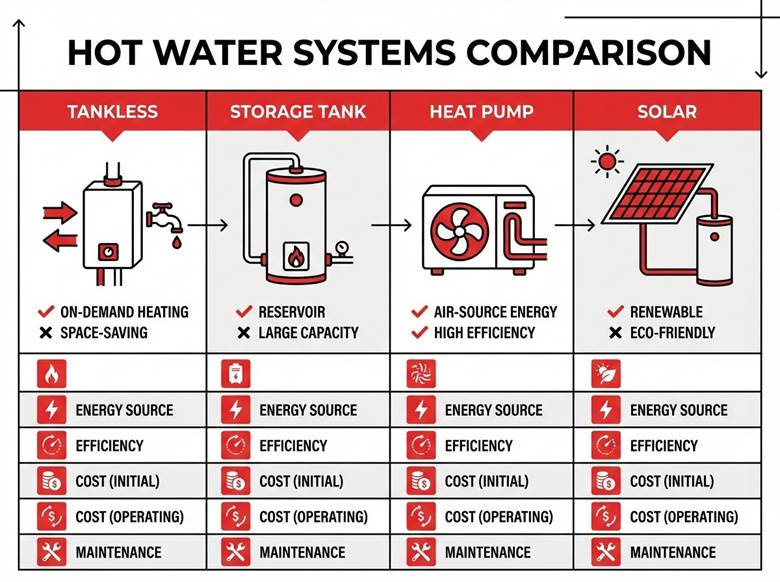
Choosing the Right Hot Water System Type for Sydney’s Autumn and Winter Climate
When replacement becomes necessary, selecting the appropriate hot water system for Sydney’s specific climate conditions optimizes performance, efficiency, and long-term value. Understanding the pros and cons of each system type prevents expensive mismatches between equipment and household needs.
Storage Tank Hot Water Systems (Traditional)
Storage tanks remain Sydney’s most common hot water solution, maintaining heated water reserves in insulated tanks ranging from 25 to 400 liters.
Advantages:
- Lower upfront cost ($800-$2,500 installed)
- Proven reliability and simple operation
- Readily available replacement parts
- Suitable for most household sizes
- Can supply multiple simultaneous outlets
- Familiar to all plumbers and service providers
Disadvantages:
- Standby heat loss wastes energy continuously
- Limited capacity—once depleted, recovery time required
- Larger physical footprint requiring dedicated space
- 10-15 year typical lifespan
- Higher long-term operating costs than alternatives
Best For: Budget-conscious homeowners, smaller households (1-3 people), properties with space for tank installation, those prioritizing low upfront costs.
Tankless/Instantaneous Hot Water Systems
Continuous flow systems heat water on-demand as it passes through the unit, eliminating storage requirements and standby losses.
Advantages:
- Unlimited hot water supply (within flow rate capacity)
- No standby energy losses—only operates when needed
- Compact wall-mounted design saves space
- 15-20+ year lifespan (longer than storage tanks)
- Lower long-term operating costs
- Ideal for renovations with limited space
Disadvantages:
- Higher upfront cost ($2,000-$4,500 installed)
- Limited flow rate may struggle with simultaneous demands
- Requires adequate gas supply or electrical capacity
- More complex installation and service requirements
- Temperature consistency can vary with flow rate changes
Best For: Large households with continuous hot water demand, space-constrained properties, energy-conscious homeowners prioritizing efficiency over upfront cost, modern renovations.
Heat Pump Hot Water Systems
Heat pumps extract warmth from ambient air to heat water, using 60-75% less energy than conventional electric systems while maintaining storage capacity benefits.
Advantages:
- Exceptional energy efficiency (up to 75% savings vs electric)
- Government rebates available (up to $1,000 NSW)
- Lower operating costs than gas or electric alternatives
- Suitable for most household sizes
- Environmentally friendly with low emissions
- Storage capacity ensures supply during peak demand
Disadvantages:
- Higher upfront cost ($2,500-$5,000 installed)
- Reduced efficiency in very cold weather
- Outdoor unit creates minor noise
- Requires adequate outdoor installation space
- Longer heat-up times than conventional electric
- More complex system with additional service requirements
Best For: Energy-conscious homeowners, properties seeking to reduce electricity bills significantly, those eligible for government rebates, medium to large households (2-5+ people), environmentally focused decisions.
Solar Hot Water Systems
Solar collectors absorb sunlight to heat water, with electric or gas boost for cloudy periods—highest energy efficiency but weather-dependent performance.
Advantages:
- Maximum energy savings (60-90% vs conventional)
- Government rebates and incentives available
- Extremely low operating costs after installation
- Environmentally sustainable option
- Excellent for Sydney’s sunny climate
- Increases property value
Disadvantages:
- Highest upfront cost ($3,500-$7,000 installed)
- Requires suitable roof orientation and space
- Weather-dependent efficiency
- More complex installation and maintenance
- Boost system required for reliability
- Can be impractical for shaded properties
Best For: Long-term property owners prioritizing maximum efficiency, properties with ideal north-facing roof space, environmentally focused homeowners, those seeking lowest possible operating costs regardless of upfront investment.
Sydney Climate Considerations
Sydney’s temperate climate with distinct seasons influences hot water system selection:
Autumn/Winter Performance Requirements:
- Systems must cope with inlet water temperatures 5-10°C cooler than summer
- Increased demand from longer showers and heating requirements
- Gas systems perform consistently regardless of ambient temperature
- Heat pumps may show efficiency reduction in coldest months
- Solar systems require reliable boost during extended cloudy periods
Summer Performance Optimization:
- Storage tanks benefit from Sydney’s warm ambient temperatures reducing standby losses
- Heat pumps operate at peak efficiency in warm weather
- Solar systems excel during Sydney’s extensive sunshine hours
- Tankless systems handle variable summer demand efficiently
Sizing Recommendations for Sydney Households:
- 1-2 people: 50-80L storage, 16L/min instantaneous, 150-180L heat pump
- 2-3 people: 80-125L storage, 20L/min instantaneous, 200-250L heat pump
- 3-4 people: 125-160L storage, 24L/min instantaneous, 250-315L heat pump
- 4-5+ people: 160L+ storage, 28L/min+ instantaneous, 315L+ heat pump
Licensed plumbers assess your specific household patterns, peak demand periods, and property characteristics to recommend appropriately sized systems preventing under-capacity frustration or over-sized waste.
Hot Water System Repair vs Replacement: Making the Right Decision This Autumn
Determining whether to repair or replace your hot water system requires balancing repair costs, system age, efficiency considerations, and expected remaining lifespan. This decision framework helps Sydney homeowners make economically sound choices.
The 50% Rule for Repair vs Replacement
Professional plumbers use a simple guideline: if repair costs exceed 50% of new system replacement cost, replacement typically proves more economical considering ongoing reliability and efficiency benefits.
Example Scenario:
- 12-year-old storage system requiring $800 heating element and thermostat replacement
- Similar new system costs $1,600 installed
- Repair represents 50% of replacement cost
- System age (12 years) approaches typical 10-15 year lifespan
- Recommendation: Replace rather than repair
Age-Based Repair vs Replacement Guidelines
System age significantly influences repair wisdom:
0-5 Years (Under Warranty)
- Always repair unless catastrophic failure
- Most repairs covered under manufacturer warranty
- System has significant remaining lifespan
- Efficiency still excellent
- Action: Repair with confidence
6-10 Years (Mid-Life
- Evaluate repair costs carefully
- Minor repairs (<$300) worthwhile
- Major repairs (>$500) require cost-benefit analysis
- Consider efficiency of aged system vs modern replacements
- Action: Repair for minor issues, evaluate major repairs case-by-case
10-12 Years (Approaching End-of-Life)
- Replacement planning recommended
- Only minor repairs economically justified
- System likely showing efficiency degradation
- Expect additional failures within 1-3 years
- Action: Budget replacement, only repair if minor and urgent
12-15+ Years (Beyond Normal Lifespan)
- Replacement strongly recommended regardless of repair cost
- Operating on borrowed time—expect imminent failure
- Efficiency significantly reduced vs modern systems
- Repair parts may become scarce
- Action: Replace proactively rather than waiting for emergency failure
Specific Failure Types and Repair Justification
Different failures warrant different approaches:
Generally Worth Repairing (If System Under 10 Years):
- Temperature/pressure relief valve replacement: $150-$300
- Thermostat replacement: $200-$400
- Heating element replacement (electric): $250-$500
- Pilot light/igniter replacement (gas): $200-$400
- Minor leak at connection/fitting: $150-$350
- Pressure regulator replacement: $200-$400
Consider Replacement Instead (Especially If System Over 10 Years):
- Tank corrosion/major leak: $0 (not repairable—replace required)
- Multiple simultaneous failures: $500-$1,000+
- Heat exchanger failure (gas): $600-$1,200
- Complete electrical system failure: $400-$800
- Recurring problems after previous repairs: Varies
- Severe sediment damage: $0 (prevention failure—replace)
Energy Efficiency Considerations
Modern hot water systems operate 15-30% more efficiently than 10-year-old models. This efficiency gain generates ongoing savings partially offsetting replacement costs:
Annual Savings from Modern Replacement:
- Electric storage to heat pump: $400-$600/year
- Old electric to modern electric: $100-$200/year
- Old gas to modern gas: $80-$150/year
- Any system to solar: $500-$800/year
Calculate simple payback: (Replacement Cost – Repair Cost) ÷ Annual Energy Savings = Payback Period
If payback period is under 3-4 years and system age justifies replacement regardless, choosing replacement makes financial sense even when repairs are technically possible.
Emergency Replacement vs Planned Replacement
Emergency winter replacement disadvantages:
- Premium rates apply (after-hours, urgent service)
- Limited choice—install whatever’s immediately available
- Rushed decisions without proper research
- Potential days without hot water
- Higher stress and pressure
- Premium pricing on equipment and installation
Planned autumn replacement advantages:
- Standard rates, no emergency premiums
- Full choice of systems and suppliers
- Time for research and quote comparison
- Scheduled installation at your convenience
- Lower stress, informed decision-making
- Ability to maximize government rebates and incentives
The cost difference between emergency and planned replacement often exceeds $500-$1,000, providing strong financial incentive for proactive replacement during autumn rather than waiting for winter failures.
Hot Water System Installation and Repair Costs Sydney 2026
Understanding hot water system costs helps Sydney homeowners budget appropriately for maintenance, repairs, or replacement. Prices vary based on system type, size, installation complexity, and service timing.
New Hot Water System Installation Costs (Supply + Installation)
Electric Storage Systems:
- 50L: $900-$1,400
- 125L: $1,200-$1,800
- 160L: $1,400-$2,100
- 250L: $1,600-$2,500
- 315L: $1,800-$2,800
Gas Storage Systems:
- 135L: $1,500-$2,300
- 170L: $1,700-$2,600
- 250L: $1,900-$2,900
- 315L: $2,200-$3,400
Instantaneous/Tankless Systems:
- Gas 16L/min: $2,000-$3,200
- Gas 20L/min: $2,300-$3,600
- Gas 24L/min: $2,500-$4,000
- Electric 18-27kW: $2,400-$4,500
Heat Pump Systems:
- 160-200L: $2,500-$3,800
- 250-270L: $3,000-$4,500
- 315L: $3,500-$5,200
- (Less NSW rebates up to $1,000)
Solar Hot Water Systems:
- 180L flat plate: $3,500-$5,200
- 270L evacuated tubes: $4,200-$6,200
- 315L premium systems: $5,000-$7,500
- (Less federal STCs $500-$1,500)
Common Repair Costs
Minor Repairs:
- T&P valve replacement: $150-$300
- Thermostat replacement: $200-$400
- Element replacement (electric): $250-$500
- Pilot light/igniter (gas): $200-$400
- Small leak repair: $150-$350
- Pressure regulator: $200-$400
Major Repairs:
- Multiple element replacement: $400-$700
- Complete electrical system: $400-$800
- Gas burner assembly: $500-$900
- Heat exchanger (gas): $600-$1,200
- Complete thermostat system: $350-$600
Service and Maintenance:
- Annual professional service: $150-$300
- Sediment flush: $120-$250
- Anode rod replacement: $200-$400
- Gas safety inspection: $180-$320
- System efficiency assessment: $150-$280
Emergency Service Rates
After-hours, weekend, and holiday service typically adds:
- Emergency callout fee: $150-$300
- Premium hourly rates: 1.5x-2x standard rates
- Limited equipment availability may increase costs
- Faster service justifies premium for genuine emergencies
Cost Factors Affecting Installation
Several variables influence final installation costs:
- Existing system type vs new type (like-for-like cheaper)
- Location and access difficulty
- Plumbing modifications required
- Electrical upgrades needed
- Gas line installation or modification
- Disposal of old system
- Compliance upgrades for older properties
- Council permit requirements (if applicable)
Government Rebates and Incentives (NSW 2026)
NSW Energy Savings Scheme:
- Electric to heat pump replacement: Up to $1,000
- Eligibility varies by household income and system type
- Apply through participating retailers and installers
Federal Small-Scale Technology Certificates (STCs):
- Solar hot water systems: $500-$1,500 depending on size/location
- Heat pump systems: $400-$1,000 depending on size/location
- Typically claimed by installer, reducing upfront cost
Low-Interest Green Loans:
- Some councils and lenders offer low-interest loans for energy-efficient hot water upgrades
- Terms vary significantly—investigate local options
Insurance Considerations:
- Hot water system failures sometimes covered by home insurance
- Storm or emergency damage may qualify for claims
- Check policy excess vs repair costs
- Document damage thoroughly for claims
- Licensed plumber invoices required for insurance claims
Licensed plumbers provide accurate quotes after assessing your specific property, existing installation, and household requirements—avoiding surprise costs and ensuring appropriate system selection.
When to Call a Licensed Plumber vs DIY Hot Water Maintenance
Understanding which hot water tasks suit DIY capability versus requiring licensed plumbers protects safety, ensures compliance, maintains warranties, and prevents expensive mistakes.
Always Require Licensed Plumbers (Legally Mandated)
NSW plumbing regulations mandate licensed professionals for:
- Any gas hot water system work (gas fitting license required)
- New hot water system installation
- Hot water system replacement
- Modifications to plumbing connections
- Work affecting water supply or sewerage
- Electrical connections for hot water systems
- Temperature/pressure relief valve installation
- Repairs requiring plumbing code compliance
- Work where building permits or approvals required
Attempting unlicensed work risks:
- Fines up to $55,000 for individuals
- Voided manufacturer warranties
- Insurance claim denials
- Forced removal and compliant reinstallation
- Property sale complications
- Personal injury or property damage liability
DIY-Appropriate Hot Water Maintenance (With Caution)
Homeowners with basic capability can safely perform:
- Visual inspections for leaks, corrosion, damage
- Temperature testing at taps
- Testing T&P valve using lever (not installing/replacing)
- Basic sediment flushing through drain valve (if valve operational)
- Cleaning around hot water system area
- Recording system age and maintenance history
- Monitoring utility bill changes indicating efficiency issues
- Temperature setting adjustment (external controls only)
Important Limitations:
- Stop immediately if unexpected problems arise
- Never force stuck valves or fittings—call plumbers
- Don’t proceed if you’re uncertain about any step
- Gas systems require licensed gas fitters—no DIY gas work
- If work requires tools beyond basic adjustable wrench, call professionals
When DIY Becomes Dangerous or Illegal
Stop DIY and call licensed plumbers when:
- Work involves gas connections or appliances
- Electrical connections need modification or replacement
- Plumbing modifications required beyond simple drain valve operation
- Safety concerns arise during attempted maintenance
- Stuck or seized components won’t operate with reasonable force
- Unexpected water discharge or leaks occur
- System behavior doesn’t match expected operation
- Manufacturer documentation recommends professional service
- Warranty coverage depends on professional servicing
The Professional Service Advantage
Licensed plumbers provide value beyond simple task completion:
Safety Assurance:
• Proper gas pressure testing and leak detection
• Electrical safety verification
• Carbon monoxide risk assessment (gas systems)
• Pressure testing preventing scalding or tank rupture
Warranty Protection:
• Manufacturer warranties often require professional installation and service
• Licensed plumber work maintains warranty coverage
• Documentation for future warranty claims
Compliance Guarantee:
• Work meets Australian Standards and building codes
• Required permits and approvals obtained
• Compliance certificates issued where required
• Insurance coverage protected
Expert Diagnosis:
• Accurate problem identification preventing unnecessary parts replacement
• Recognition of symptoms indicating serious issues
• Recommendation of cost-effective solutions vs band-aid repairs
• Forward planning for system reaching end-of-life
Appropriate Tools and Equipment:
• Specialized testing equipment unavailable to homeowners
• Correct tools preventing damage during service
• Safety equipment for hot water and gas work
• Parts supply and equipment access
Time and Stress Savings:
• Experienced professionals complete work efficiently
• No learning curve or trial-and-error experimentation
• Guaranteed work completion without abandoning half-finished projects
• Emergency backup if problems arise during service
AIM LOCAL’s Licensed Hot Water Specialists
AIM LOCAL’s licensed plumbers and gas fitters bring extensive hot water system expertise to Sydney, Central Coast, and Newcastle. Our team handles all hot water brands, models, and configurations with comprehensive service including:
- 24/7 emergency hot water repairs
- Scheduled maintenance and servicing
- New installation and system replacement
- Expert advice on system selection
- Warranty-compliant service
- Transparent fixed-price quotes
- Same-day service availability
- All work fully licensed and insured
Don’t risk safety, warranties, or insurance coverage with DIY hot water work beyond simple maintenance—call AIM LOCAL’s licensed professionals for reliable, compliant, guaranteed service.
Frequently Asked Questions About Hot Water System Maintenance
Q1: How often should I service my hot water system in Sydney?
A: Annual professional service is recommended for all hot water systems, with autumn being ideal timing. Storage tank systems benefit from sediment flushing annually, while gas systems require safety inspections every 12 months. Heat pump and solar systems may need more frequent service given their complexity. Older systems (8+ years) warrant twice-yearly professional checks. Licensed plumbers provide system-specific service schedules based on your equipment age, type, and household usage patterns.
Q2: What are the signs my hot water system needs replacing rather than repairing?
A: Replace rather than repair if your system: exceeds 12-15 years age, shows tank corrosion or major leaks, requires repairs exceeding 50% of replacement cost, experiences multiple recurring failures, produces rusty or discolored water, shows significant efficiency decline, or fails completely during winter peak demand. Additionally, if annual operating costs significantly exceed modern efficient alternatives, replacement often proves economically superior despite functional operation. Licensed plumbers assess your specific situation and provide honest repair-vs-replace recommendations.
Q3: How much does hot water system installation cost in Sydney?
A: Sydney hot water system installation costs vary significantly by type and size: electric storage $900-$2,800, gas storage $1,500-$3,400, instantaneous $2,000-$4,500, heat pump $2,500-$5,200 (less rebates), and solar $3,500-$7,500 (less rebates). Installation complexity, location, and existing infrastructure affect final pricing. Licensed plumbers provide accurate quotes after assessing your property, requirements, and any necessary modifications. Government rebates (up to $1,000 NSW) significantly reduce heat pump and solar system costs.
Q4: Can I flush sediment from my hot water tank myself?
A: Basic sediment flushing is DIY-appropriate for capable homeowners if the drain valve operates smoothly. Process involves: turning off power/gas, closing inlet valve, connecting garden hose to drain valve, opening hot tap for air intake, and flushing until water runs clear. However, if your drain valve hasn’t been operated in years, forcing it may cause breakage requiring expensive repairs. For systems over 5 years without previous flushing, engage licensed plumbers to safely perform this maintenance avoiding potential drain valve failure.
Q5: Why is my hot water not hot enough during autumn?
A: Reduced autumn hot water temperature stems from several causes: thermostat setting too low for cooler inlet water, failed or failing heating elements, sediment buildup insulating heating elements reducing efficiency, thermostat malfunction, dip tube failure allowing cold water mixing, or undersized system for increased autumn demand. Gas systems may have burner or gas pressure issues. Licensed plumbers diagnose exact causes through systematic testing, preventing unnecessary part replacement while addressing actual problems. Simple thermostat adjustment sometimes resolves concerns, but persistent inadequate temperature requires professional assessment.
Q6: What maintenance does a gas hot water system require?
A: Gas hot water systems require specialized annual maintenance by licensed gas fitters including: burner and pilot light inspection ensuring proper blue flame, gas line leak testing using approved methods, flue inspection verifying proper draft and clearances, ventilation assessment preventing carbon monoxide accumulation, gas pressure testing ensuring adequate supply, thermostat testing and calibration, and general tank/connection inspection. Storage gas systems also need sediment flushing, anode rod inspection, and T&P valve testing. Never attempt DIY gas work—all gas fitting must be performed by licensed professionals for legal and safety compliance.
Q7: Should I upgrade to a heat pump or solar hot water system?
A: Heat pump and solar hot water systems deliver substantial long-term savings but require higher upfront investment. Consider upgrading if: your current system needs replacement, you prioritize energy efficiency and environmental impact, you’re eligible for government rebates (up to $1,000 NSW), you have adequate outdoor space for installation, and you’ll own the property long enough for payback (typically 4-6 years). Heat pumps suit most Sydney homes, while solar requires suitable north-facing roof space. Licensed plumbers assess your property suitability, calculate expected savings, and explain available rebates helping you make informed decisions.
Q8: How long do different hot water systems last in Sydney?
A: Expected hot water system lifespan in Sydney: electric storage 10-15 years, gas storage 8-12 years, instantaneous/tankless 15-20 years, heat pump 10-15 years, and solar 15-20 years (collectors may last 20+ years). Sydney’s hard water accelerates wear, potentially reducing these estimates. Lifespan depends heavily on maintenance—professionally serviced systems last significantly longer. Systems approaching upper lifespan limits warrant replacement planning regardless of current function, as efficiency degrades and emergency failure risk increases. Autumn replacement planning prevents stressful winter emergency situations.
Conclusion: Take Action This Autumn for Reliable Winter Hot Water
Sydney’s autumn season provides the perfect maintenance window for hot water systems—after summer’s lighter demands and before winter’s peak usage arrives. Proactive homeowners who schedule hot water system service during March through May prevent emergency breakdowns, optimize system efficiency, and ensure reliable hot water throughout the coldest months.
Whether your system requires routine annual maintenance, shows warning signs demanding professional attention, or approaches replacement age, autumn action delivers maximum value. Standard service rates apply, licensed plumber availability remains excellent, and if replacement proves necessary, orderly planning replaces panic-driven emergency decisions.
The comprehensive maintenance tasks, warning sign recognition, and repair-vs-replacement guidance in this article empower Sydney homeowners to make informed decisions protecting their investment, comfort, and family convenience. From understanding system types best suited to Sydney’s climate to recognizing when professional expertise becomes non-negotiable, this knowledge prevents costly mistakes while maximizing hot water system lifespan and performance.
Don’t wait until winter’s first cold shower or complete system failure to address hot water concerns. Schedule your autumn hot water system service today, giving your equipment the professional attention it needs before peak demand season arrives. The modest investment in autumn maintenance prevents thousands in emergency repairs, replacement costs, and the significant inconvenience of winter hot water failures.
Your Hot Water System Action Plan:
Immediate Actions (This Week):
• Visually inspect hot water system for leaks, corrosion, or damage
• Test temperature adequacy during cooler mornings
• Listen for unusual noises during operation
• Check utility bills for unexplained increases
• Record system age and last service date
Schedule Professional Service (This Month):
• Book annual hot water system inspection with licensed plumber
• Request comprehensive assessment including all maintenance tasks
• Discuss system age and replacement timing if approaching end-of-life
• Obtain quotes for any recommended repairs or improvements
• Verify eligibility for government rebates if replacement considered
Plan for Future (Next 1-3 Months):
• Budget for replacement if system age indicates imminent need
• Research system types suited to your household and Sydney climate
• Investigate government rebates and financing options
• Plan installation timing to avoid winter emergency scenarios
• Maintain service records for warranty and property value
AIM LOCAL: Your Sydney Hot Water System Specialists
AIM LOCAL delivers expert hot water system service throughout Sydney, Central Coast, and Newcastle with comprehensive solutions for every hot water need:
24/7 Emergency Hot Water Service
• Rapid response to hot water failures
• Same-day service availability
• Emergency repairs and replacement
• No-surprise fixed pricing
• Available every day including weekends and holidays
Scheduled Maintenance and Service
• Comprehensive annual inspections
• Sediment flushing and efficiency optimization
• Anode rod inspection and replacement
• Temperature and pressure testing
• Gas safety inspection (licensed gas fitters)
• Detailed service reports and recommendations
New Installation and Replacement
• Expert system selection advice
• All types: storage, instantaneous, heat pump, solar
• Competitive pricing on equipment and installation
• Government rebate assistance
• Professional installation with compliance guarantee
• Warranty-backed workmanship
Why Choose AIM LOCAL for Hot Water Service:
✓ Fully Licensed: Qualified plumbers and gas fitters
✓ Comprehensive Insurance: $20 million public liability
✓ Local Expertise: Sydney, Central Coast, Newcastle specialists
✓ Transparent Pricing: Fixed-price quotes, no hidden costs
✓ Quality Equipment: Premium brands and systems
✓ Fast Response: Same-day service available
✓ Warranty Protected: Manufacturer and workmanship warranties
✓ Customer Focused: Thousands of satisfied Sydney homeowners
Don’t Risk Winter Without Reliable Hot Water
The worst time to discover hot water problems is during winter’s peak demand when emergency services command premium rates and equipment availability becomes scarce. Take control this autumn—schedule your professional hot water system service with AIM LOCAL today.
Phone: 1800 187 168 (24/7)
Available across Sydney, Central Coast & Newcastle
Your comfort, convenience, and peace of mind deserve reliable hot water. Let AIM LOCAL’s licensed professionals ensure your system delivers flawless performance throughout autumn, winter, and beyond. Call today and experience the difference professional hot water service makes.