
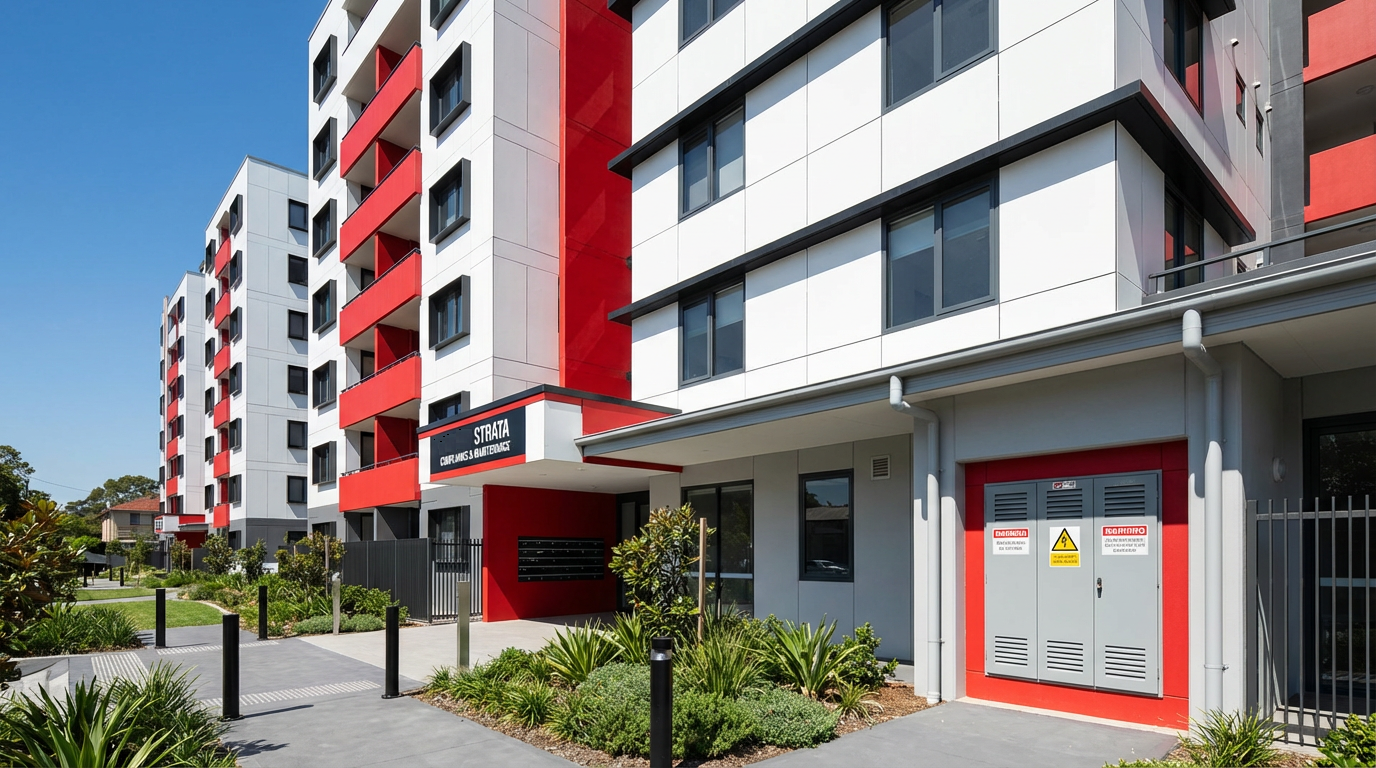
Navigating strata compliance NSW requirements has never been more critical for property managers and owners corporations. With new NSW strata legislation taking effect in 2026, understanding your strata maintenance requirements NSW obligations is essential to avoid penalties and protect property values. From October 2025, NSW Fair Trading introduced expanded enforcement powers for common property repairs, and from April 2026, mandatory Initial Maintenance Schedules become law. This comprehensive guide breaks down everything strata managers need to know about strata electrical compliance, strata plumbing regulations NSW, building maintenance schedules, and fire safety standards to keep your properties compliant and residents safe.
Navigating strata compliance NSW requirements has never been more critical for property managers and owners corporations. With new NSW strata legislation taking effect in 2026, understanding your strata maintenance requirements NSW obligations is essential to avoid penalties and protect property values. From October 2025, NSW Fair Trading introduced expanded enforcement powers for common property repairs, and from April 2026, mandatory Initial Maintenance Schedules become law. This comprehensive guide breaks down everything strata managers need to know about strata electrical compliance, strata plumbing regulations NSW, building maintenance schedules, and fire safety standards to keep your properties compliant and residents safe.
Understanding NSW Strata Legislation 2026: What’s Changed
The Strata Schemes Management Act 2015 has undergone significant reforms with two critical implementation dates that every strata manager must understand.
October 2025 Reforms: Stronger Enforcement Powers
Since 27 October 2025, NSW Fair Trading gained unprecedented enforcement capabilities for strata common property repairs. Under these NSW Fair Trading strata reforms, owners corporations now face direct government oversight if they fail to maintain common property adequately.
Key Changes Include:
- Expanded Investigation Powers: Fair Trading can now investigate complaints about maintenance failures without requiring NCAT orders
- Mandatory Repair Orders: Government officials can issue binding repair orders with strict timelines
- Financial Penalties: Non-compliant owners corporations face fines up to $22,000 for serious breaches
- Section 106 Enforcement: The duty to “properly maintain and keep in a state of good and serviceable repair” is now actively enforced
This represents a fundamental shift from the previous complaint-driven system. Strata managers can no longer rely on owner inaction or NCAT backlogs to delay essential maintenance.
April 2026 Reforms: Initial Maintenance Schedules
From 1 April 2026, developers must provide standardized Initial Maintenance Schedules (IMS) for all new strata schemes using the prescribed NSW Government template. This strata building maintenance schedule must include:
- Detailed maintenance timelines for all common property elements
- Inspection frequencies for critical systems (plumbing, electrical, drainage, roofing)
- Estimated costs for routine and capital maintenance
- Recommended service providers and licensed trade qualifications
- Warranty information for installed systems and materials
For existing schemes without an IMS, owners corporations should proactively create one to align with best practices and demonstrate due diligence.
Section 106 and Your Legal Obligations
Section 106 of the Strata Schemes Management Act 2015 establishes the fundamental duty of owners corporations:
“An owners corporation for a strata scheme must properly maintain and keep in a state of good and serviceable repair the common property and any personal property vested in the owners corporation.”
This isn’t a suggestion—it’s a legal requirement. Failure to comply can result in:
- NCAT orders compelling repairs
- Personal liability for committee members in cases of gross negligence
- Reduced property values affecting all owners
- Safety incidents leading to insurance claims or legal action
Strata Manager Compliance Checklist: Your Q1 2026 Action Plan
With January 2026 marking the start of a new financial quarter and compliance year, now is the perfect time for strata managers to conduct comprehensive audits. This strata manager compliance checklist NSW framework ensures nothing falls through the cracks.
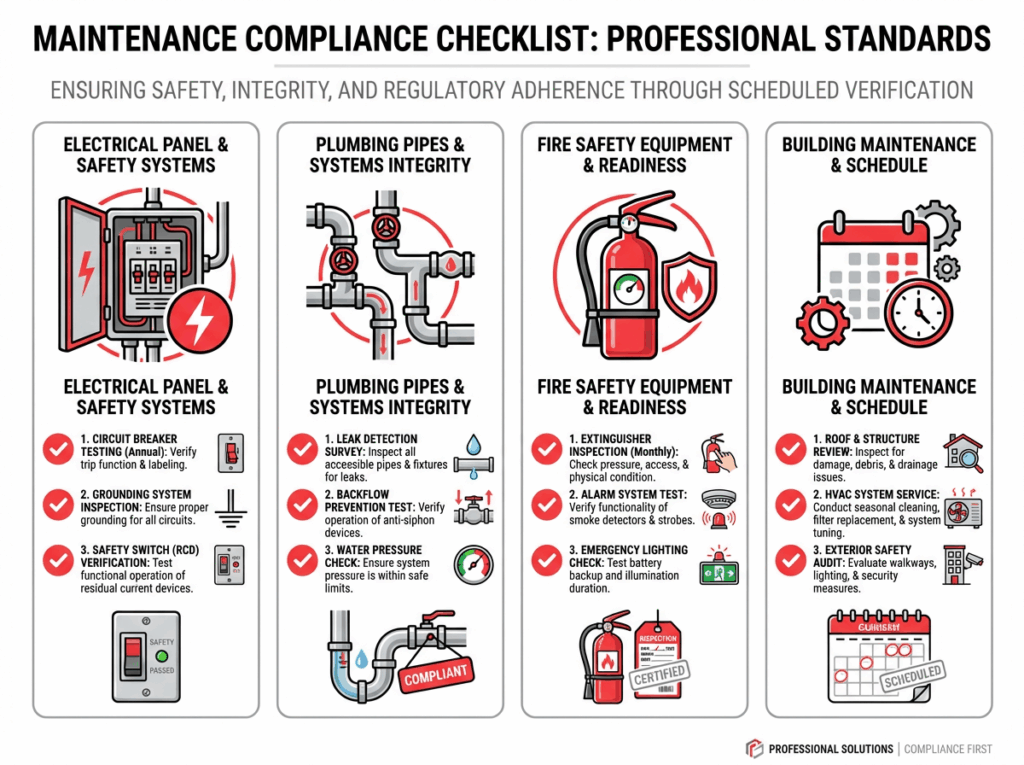
Immediate Actions (January-February 2026)
Documentation Review:
- Verify all current maintenance contracts are valid and licensed
- Confirm insurance policies cover all required areas
- Review and update the 10-year capital works plan
- Ensure all meeting minutes document maintenance decisions
- Compile all compliance certificates for the past 12 months
Safety Audit:
- Check all fire safety certificates are current (AS1851 compliance)
- Verify electrical safety switch testing is documented
- Confirm hot water system compliance certificates
- Review emergency lighting and exit signage
- Inspect common area lighting for safety hazards
Building Systems Check:
- Schedule inspections for plumbing, electrical, drainage, and roofing
- Identify any deferred maintenance items
- Prioritize repairs based on safety and legal urgency
- Obtain quotes from licensed contractors
- Present findings to strata committee with timeline
Quarterly Maintenance Schedule
Every 3 Months:
- Inspect and clean stormwater drains and downpipes
- Test smoke detectors in common areas
- Check for water leaks or moisture issues
- Inspect exterior lighting functionality
- Review and update maintenance logs
Every 6 Months:
- Professional electrical inspection of common property
- Plumbing system assessment including backflow devices
- Roof and gutter inspection and cleaning
- Fire equipment testing per AS1851 requirements
- Review contractor performance and contracts
Annual Compliance Requirements:
- Comprehensive building inspection report
- Fire safety annual statement lodgment
- Electrical safety compliance certificate
- Hot water system testing (thermostatic mixing valves)
- Capital works plan review and update
- Insurance policy renewal and adequacy assessment
Strata Electrical Compliance: Critical Safety Requirements
Strata electrical compliance represents one of the highest risk areas for owners corporations, with electrical faults causing fires, injuries, and significant property damage. NSW strata electrical inspection requirements are non-negotiable.
Mandatory Electrical Safety Inspections
Common Property Electrical Systems:
All electrical installations in common areas must be inspected by a licensed Level 2 electrician at minimum every five years, though best practice recommends annual inspections for:
- Main switchboards and distribution boards
- Electrical safety switches (RCDs)
- Emergency and exit lighting systems
- Common area power outlets
- Lighting circuits and fixtures
- Pool and spa electrical systems
- Lift electrical components
- Fire alarm and detection systems
- Intercom and security systems
Electrical Safety Certificates:
After each inspection or electrical work, you must obtain:
- Certificate of Electrical Safety for completed work
- Inspection Report detailing all findings and recommendations
- Test Results for RCDs and other safety devices
- Defect Notices requiring immediate attention
- Compliance Documentation for insurance purposes
Safety Switch (RCD) Testing Requirements
Residual Current Devices (RCDs) or safety switches are mandatory for all circuits and must be:
- Tested quarterly by pressing the test button and documenting results
- Professionally tested annually by a licensed electrician
- Replaced immediately if they fail to trip within 0.03 seconds
- Upgraded to current standards if installed more than 10 years ago
Failure to maintain functional RCDs can void insurance coverage in the event of an electrical incident.
Emergency Lighting and Exit Signs
The Building Code of Australia requires regular testing:
- Monthly visual inspection to ensure lights are operational
- Six-monthly functional test of emergency mode operation
- Annual discharge test to verify battery backup duration
- Replacement of any non-compliant or failed units
Document all testing in a dedicated log accessible to Fair Trading inspectors.
Common Electrical Hazards in Strata
High-Priority Issues Requiring Immediate Action:
- Exposed or damaged wiring in common areas
- Overheating switchboards or burning smells
- Frequent circuit breaker trips indicating overload
- Moisture ingress in electrical enclosures
- Outdated ceramic fuses instead of modern circuit breakers
- Missing or damaged electrical safety covers
- DIY electrical work by non-licensed individuals
Never delay addressing electrical hazards. Section 106 requires prompt action, and Fair Trading can issue immediate repair orders for safety risks.
Strata Plumbing Regulations NSW: Maintenance and Compliance
Strata plumbing maintenance responsibilities extend across all common property systems, from underground pipes to rooftop hot water units. Compliance requires proactive management and licensed trade services.
Plumbing Maintenance Obligations
Common Property Plumbing Systems:
Owners corporations are responsible for maintaining:
- Water supply pipes servicing common areas and lots (beyond property boundary)
- Sewer and drainage lines in common areas
- Stormwater drainage systems including pits, pipes, and grates
- Hot water systems servicing multiple lots
- Roof plumbing including gutters, downpipes, and valleys
- Backflow prevention devices on the main water supply
- Fire sprinkler systems and hydrant mains
- Pool and spa plumbing in communal facilities
Critical Plumbing Compliance Requirements
Annual Backflow Testing:
NSW legislation mandates annual testing of backflow prevention devices by a licensed plumber with appropriate certification. This prevents contamination of the public water supply.
Backflow Device Requirements:
- Test annually by accredited tester
- Lodge compliance certificate with Sydney Water or local water authority
- Replace devices older than 10 years or failed units
- Maintain testing records for minimum 5 years
Failure to test backflow devices can result in water supply disconnection and substantial fines.
Hot Water System Compliance:
Thermostatic mixing valves (TMVs) on shared hot water systems must be:
- Tested annually by licensed plumber
- Set to maximum 50°C at outlets to prevent scalding
- Certified with documentation provided to owners corporation
- Replaced if failing or older than manufacturer’s recommended lifespan
Drainage System Maintenance:
Proactive drainage maintenance prevents costly emergency repairs:
- CCTV drain inspection every 2-3 years for aging systems
- Regular cleaning of stormwater pits and grates
- Root management near underground pipes
- Prompt repair of identified defects
- Upgrade of non-compliant systems
Emergency Plumbing Protocols
Establish clear emergency plumbing procedures:
1. Identify 24/7 emergency plumber with contact details posted prominently
2. Document shut-off valve locations for water isolation
3. Authorize emergency repairs up to specified dollar limits without committee approval
4. Notify affected residents promptly during emergencies
5. Report to committee at next meeting with full documentation
Quick response to plumbing emergencies minimizes damage and demonstrates Section 106 compliance.
Building Maintenance Schedule Framework: Planning for Success
A comprehensive strata building maintenance schedule transforms reactive crisis management into proactive property stewardship. This framework aligns with the new Initial Maintenance Schedule requirements.
Creating Your Preventive Maintenance Plan
Asset Register Development:
Begin by cataloging all common property assets:
- Building structure (roof, walls, foundations)
- Mechanical systems (lifts, garage doors, pumps)
- Electrical infrastructure
- Plumbing and drainage
- Safety systems (fire, security)
- Outdoor areas (gardens, driveways, pools)
- Fixtures and fittings
For each asset, document:
- Installation date and expected lifespan
- Manufacturer warranty information
- Maintenance requirements and frequency
- Responsible contractor and license details
- Estimated replacement cost
10-Year Capital Works Plan Integration
Under NSW strata legislation, owners corporations must maintain a 10-year capital works plan predicting major repairs and their costs. This plan should:
Year 1-3 (Immediate Priority):
- Address all safety compliance issues
- Complete deferred maintenance
- Replace failed or failing systems
- Upgrade non-compliant installations
Year 4-7 (Medium-Term Planning):
- Schedule major component replacements (roof, gutters)
- Plan building upgrades (energy efficiency, accessibility)
- Budget for anticipated failures based on asset age
- Consider value-adding improvements
Year 8-10 (Long-Term Strategy):
- Prepare for major structural works
- Plan significant system overhauls
- Budget for regulatory compliance changes
- Consider building modernization
Review and update this plan annually as actual costs and timelines become clearer.
Maintenance Documentation Best Practices
Compliance requires meticulous record-keeping:
Essential Documentation:
- Maintenance schedules and completed work logs
- All invoices and payment records
- Compliance certificates and test results
- Contractor licenses and insurance certificates
- Before/after photos of repairs
- Committee decisions regarding maintenance
- Owner communications about work
- Warranty documentation
Store these records securely for minimum 7 years, with critical compliance documents retained permanently.
Working with Licensed Contractors
All strata maintenance work must be performed by appropriately licensed tradespeople:
Contractor Vetting Process:
- Verify current NSW Fair Trading license
- Confirm public liability insurance ($20 million minimum)
- Check workers compensation insurance
- Review references from other strata complexes
- Assess response times for emergencies
- Evaluate communication and documentation quality
Never use unlicensed contractors, even for seemingly minor work. This voids insurance and exposes the owners corporation to liability.
Fire Safety Compliance Standards: AS1851 and Beyond
Strata fire safety compliance NSW requirements protect lives and properties. From 13 February 2026, mandatory AS1851 compliance becomes fully enforceable for all strata schemes.
AS1851-2012 Compliance Requirements
Australian Standard 1851 establishes maintenance schedules for fire protection systems and equipment. All owners corporations must:
Essential Safety Measure (ESM) Inspections:
Different fire safety equipment requires specific inspection frequencies:
Monthly Testing:
- Fire extinguisher visual inspection
- Exit sign and emergency lighting visual check
- Fire door operation verification
- Smoke detector indicator light check
Six-Monthly Professional Inspection:
- Fire extinguisher detailed examination
- Emergency lighting functional test
- Fire hose reel operation test
- Exit door hardware functionality
Annual Certification:
- Fire extinguisher pressure testing and servicing
- Emergency lighting battery discharge test
- Fire alarm system comprehensive test
- Smoke detector sensitivity testing
- Fire sprinkler system inspection (if installed)
- Fire hydrant and booster operation
- Fire door hardware and seals inspection
Fire Safety Annual Statement
Owners corporations must lodge an Annual Fire Safety Statement with their local council certifying:
- All required fire safety measures are installed
- Equipment meets current standards
- Maintenance schedules have been followed
- All defects have been addressed
- Licensed contractors performed all work
Lodgment Requirements:
- Deadline: 12 months from previous statement
- Format: Prescribed form only
- Signatures: Building certifier or fire safety practitioner
- Distribution: Council, Fire and Rescue NSW, building owners
- Display: Prominent common area location
Failure to lodge can result in fines and inability to sell lots within the scheme.
Fire Door Compliance
Fire doors in strata buildings are critical life safety measures requiring regular maintenance:
Annual Inspection Requirements:
- Door closer operation and adjustment
- Self-latching mechanism functionality
- Intumescent seal integrity
- Door gap compliance (3-4mm maximum)
- Signage presence and legibility
- Obstruction-free operation
- Hardware condition and operation
Document all inspections and repairs. Never prop open fire doors or remove self-closing mechanisms, even temporarily.
Emergency Evacuation Planning
While not always legally mandated for residential strata, emergency evacuation plans demonstrate due diligence:
Plan Components:
- Clear evacuation routes marked on floor plans
- Assembly point designation
- Emergency contact procedures
- Special assistance protocols for mobility-impaired residents
- Communication methods during emergencies
- Regular evacuation drills (especially for commercial strata)
Distribute plans to all residents annually and post in common areas.
Drainage and Roofing: Protecting Your Investment
Roof and drainage system maintenance prevents the most common and expensive strata building damage: water ingress. Proactive roof and gutter maintenance combined with drainage system inspection saves thousands in remediation costs.
Roof Inspection and Maintenance Schedule
Seasonal Inspection Timing:
Sydney’s storm season (November-March) demands strategic roof maintenance:
Pre-Storm Season (September-October):
- Professional roof inspection
- Gutter and downpipe cleaning
- Valley and flashing check
- Skylight seal inspection
- Roof tile/sheet security verification
- Repair all identified issues BEFORE storms
Post-Storm Season (April-May):
- Damage assessment inspection
- Storm damage documentation for insurance
- Emergency repairs prioritization
- Long-term repair planning
Quarterly Visual Inspections:
- Walk roof perimeter from ground level
- Check for visible damage or debris
- Inspect downpipes for overflow staining
- Look for ponding water indicators
- Document any concerns for professional assessment
Common Roofing Issues in Strata Properties
High-Priority Defects:
- Damaged or missing tiles/sheets allowing water entry
- Failed valley linings causing internal leaks
- Blocked gutters and downpipes creating overflow
- Rusted or damaged flashing at penetrations
- Cracked or perished roof penetration seals
- Damaged or inadequate box gutters
- Inadequate fall causing water pooling
All roof defects should be assessed and priced by a licensed roofer, with urgent repairs authorized immediately under emergency provisions.
Drainage System Compliance
Stormwater drainage failures cause property damage, erosion, and potential liability:
Comprehensive Drainage Maintenance:
- Surface Drainage: Inspect paving and driveways for ponding water; ensure proper grade directing water away from buildings
- Pit and Grate Cleaning: Remove debris quarterly, particularly before and after storms
- Underground Inspection: CCTV inspection every 3-5 years for buried drainage lines
- Root Intrusion Management: Proactively address trees near drainage lines; chemical root barriers where appropriate
- Connection Points: Verify all downpipes connect properly to stormwater system
Gutter and Downpipe Maintenance
Blocked gutters are the leading cause of roof leaks in strata properties:
Cleaning Frequency:
- Minimum twice yearly (before and after storm season)
- Quarterly for properties near trees
- After any significant storm event
- When overflow or staining is visible
Professional Gutter Cleaning Includes:
- Remove all debris from gutters
- Flush downpipes to ensure flow
- Check gutter bracket security
- Inspect for rust or damage
- Verify appropriate fall toward downpipes
- Clear leaf guards if installed
Consider installing gutter guard systems to reduce maintenance frequency, especially for properties surrounded by vegetation.
Smart Technology for Compliance Management
Modern strata compliance increasingly leverages technology for efficiency and documentation:
Maintenance Management Software
Purpose-built strata maintenance platforms offer:
- Automated scheduling of recurring inspections and servicing
- Digital work orders sent directly to contractors
- Photographic evidence attached to service records
- Certificate storage and expiry alerts
- Budget tracking against capital works plans
- Owner communication portals for transparency
Leading platforms integrate with accounting systems and generate compliance reports for Fair Trading audits.
Smart Building Monitoring
Emerging technology enables proactive maintenance:
- Water leak detection sensors alerting to issues before visible damage
- Electrical monitoring identifying abnormal power consumption patterns
- Fire system connectivity providing real-time status monitoring
- HVAC optimization reducing energy costs while maintaining function
- Access control integration improving security and contractor management
While upfront investment is required, these systems reduce emergency repairs and demonstrate sophisticated compliance management.
NSW Fair Trading Enforcement: What to Expect
Understanding NSW Fair Trading’s enforcement approach helps strata managers prepare for the new compliance landscape.
Fair Trading Investigation Process
When complaints are received about maintenance failures:
1. Initial Assessment: Fair Trading reviews complaint details and may request documentation from owners corporation
2. Investigation: Officials may inspect property, interview committee members, and review maintenance records
3. Notice to Comply: If deficiencies are found, formal notice with repair timeline is issued
4. Follow-Up Inspection: Verification that required work has been completed
5. Enforcement Action: If non-compliance continues, penalties and NCAT proceedings may follow
Documentation Fair Trading May Request
Be prepared to provide:
- Maintenance schedules and completed work logs
- Contractor licenses and insurance certificates
- Compliance certificates for all systems
- Committee meeting minutes discussing maintenance
- Capital works plan and maintenance budget
- Correspondence with owners regarding levies for repairs
- Evidence of emergency response to urgent issues
Organized, comprehensive records demonstrate compliance and reduce investigation duration.
Penalty Framework
NSW Fair Trading can impose:
- Formal warnings for minor first-time issues
- Compliance orders with specific timelines
- Penalty notices up to $2,200 for individuals, $11,000 for corporations
- Court prosecution for serious or repeat violations with fines up to $22,000
- Appointment of compulsory strata manager in extreme cases
The threat of enforcement powers motivates proactive compliance for previously recalcitrant owners corporations.
Frequently Asked Questions About Strata Compliance NSW
What are the essential strata compliance requirements in NSW for 2026?
Essential requirements include maintaining all common property in good repair per Section 106, conducting required safety inspections (electrical, plumbing, fire), lodging annual fire safety statements, testing backflow devices annually, implementing maintenance schedules, and maintaining comprehensive documentation. From April 2026, new schemes must have Initial Maintenance Schedules.
How often should strata electrical inspections be conducted?
Licensed electrician inspections should occur annually for common property electrical systems, including switchboards, safety switches (RCDs), emergency lighting, and power outlets. RCD functionality must be tested quarterly, with professional annual testing. More frequent inspections may be required for aging systems or after storm damage.
Who is responsible for plumbing repairs in strata properties NSW?
Responsibility depends on location: owners corporations maintain common property plumbing including pipes servicing multiple lots, shared hot water systems, roof plumbing, and drainage systems. Individual owners maintain plumbing within their lot boundaries. Ambiguous situations should reference the strata plan and by-laws for clarification.
What happens if an owners corporation fails to maintain common property?
NSW Fair Trading can investigate complaints, issue repair orders with timelines, impose fines up to $22,000, and in severe cases, apply for appointment of a compulsory strata manager. Additionally, property values may decline, insurance claims may be denied, and individual owners can seek NCAT orders compelling repairs.
Do existing strata schemes need an Initial Maintenance Schedule?
While only mandatory for new schemes from April 2026, existing schemes benefit significantly from creating one. An IMS demonstrates proactive compliance, aids budgeting, protects against Fair Trading enforcement, and provides valuable documentation for property sales and refinancing.
How can strata managers prepare for new compliance requirements?
Conduct comprehensive audits of all maintenance obligations, verify all contractors are licensed and insured, organize documentation systematically, update capital works plans, schedule overdue inspections immediately, communicate compliance requirements to committees and owners, and consider maintenance management software for tracking obligations.
What qualifications must contractors have for strata maintenance work?
All trade work requires appropriate NSW Fair Trading licenses: electrical work requires licensed electrician (level 2 for switchboards), plumbing requires licensed plumber (with backflow testing certification where relevant), fire safety work requires accredited practitioners, and roofing requires licensed roofing contractor. All must carry adequate public liability and workers compensation insurance.
How do the 2026 strata reforms affect property managers?
Property managers face increased scrutiny and enforcement of maintenance obligations. Proactive compliance is now essential rather than optional. The reforms emphasize documentation, timely action on defects, and transparent communication with owners about maintenance requirements and costs. Managers should implement systematic compliance tracking to meet new expectations.
Taking Action: Your Q1 2026 Compliance Strategy
As we begin 2026 with new strata compliance NSW regulations in full effect, proactive action separates compliant properties from those facing Fair Trading enforcement.
Immediate Action Items for January 2026
Week 1-2: Documentation Audit
Gather and review all compliance documentation from 2025. Identify expired certificates, overdue inspections, and missing records. Create a master compliance calendar with all upcoming obligations.
Week 3-4: Professional Inspections
Schedule electrical, plumbing, fire safety, and roofing inspections with licensed contractors. Prioritize any systems that haven’t been inspected in the past 12 months. Request detailed reports with photographic evidence.
By End of January: Committee Reporting
Present comprehensive compliance status to your strata committee. Provide clear recommendations for addressing any deficiencies, with cost estimates and proposed timelines. Seek authorization for necessary work.
Building Long-Term Compliance Culture
Sustainable compliance requires shifting from reactive to proactive management:
Education and Communication:
- Conduct annual compliance briefings for strata committees
- Provide owners with plain-language compliance summaries
- Share maintenance schedules and completed work regularly
- Explain how levies fund compliance obligations
Systematic Processes:
- Implement maintenance management software
- Create standard procedures for emergency repairs
- Develop contractor vetting and onboarding processes
- Establish documentation protocols all staff follow
Budget Prioritization:
- Allocate adequate funds for preventive maintenance
- Build contingency reserves for unexpected compliance issues
- Justify levy increases with comprehensive compliance needs
- Demonstrate cost savings from proactive maintenance
Partner with Compliance Experts
The complexity of strata compliance NSW requirements demands experienced partners. AIM LOCAL specializes in multi-trade strata property maintenance across Sydney, Central Coast, and Newcastle, offering:
- Licensed expertise in plumbing, electrical, drainage, roofing, and hot water systems
- Compliance-focused service with all required certificates and documentation
- Emergency response available 24/7 for urgent strata issues
- Proactive maintenance programs tailored to strata obligations
- Single-point accountability eliminating contractor coordination challenges
Don’t wait for Fair Trading enforcement or emergency failures. Take control of your strata compliance obligations today.
Conclusion: Compliance is Protection
Strata compliance NSW requirements represent far more than regulatory boxes to tick. Comprehensive maintenance protects property values, ensures resident safety, minimizes emergency repair costs, and demonstrates professional stewardship of communal assets.
The 2026 reforms signal a fundamental shift: owners corporations can no longer defer essential maintenance without consequence. NSW Fair Trading’s expanded enforcement powers mean accountability is real, immediate, and potentially costly for non-compliant schemes.
By implementing the strata manager compliance checklist outlined in this guide, conducting required inspections across electrical, plumbing, fire safety, and building systems, maintaining meticulous documentation, and partnering with licensed contractors experienced in strata requirements, you position your properties for success in this new compliance landscape.
Start your Q1 2026 compliance audit today. Your residents, your budget, and your peace of mind will thank you.
Need expert assistance with strata compliance across Sydney, Central Coast, or Newcastle? AIM LOCAL delivers comprehensive, licensed trade services for residential, commercial, and strata properties. Contact us today for a compliance consultation and discover how proactive maintenance protects your investment.