
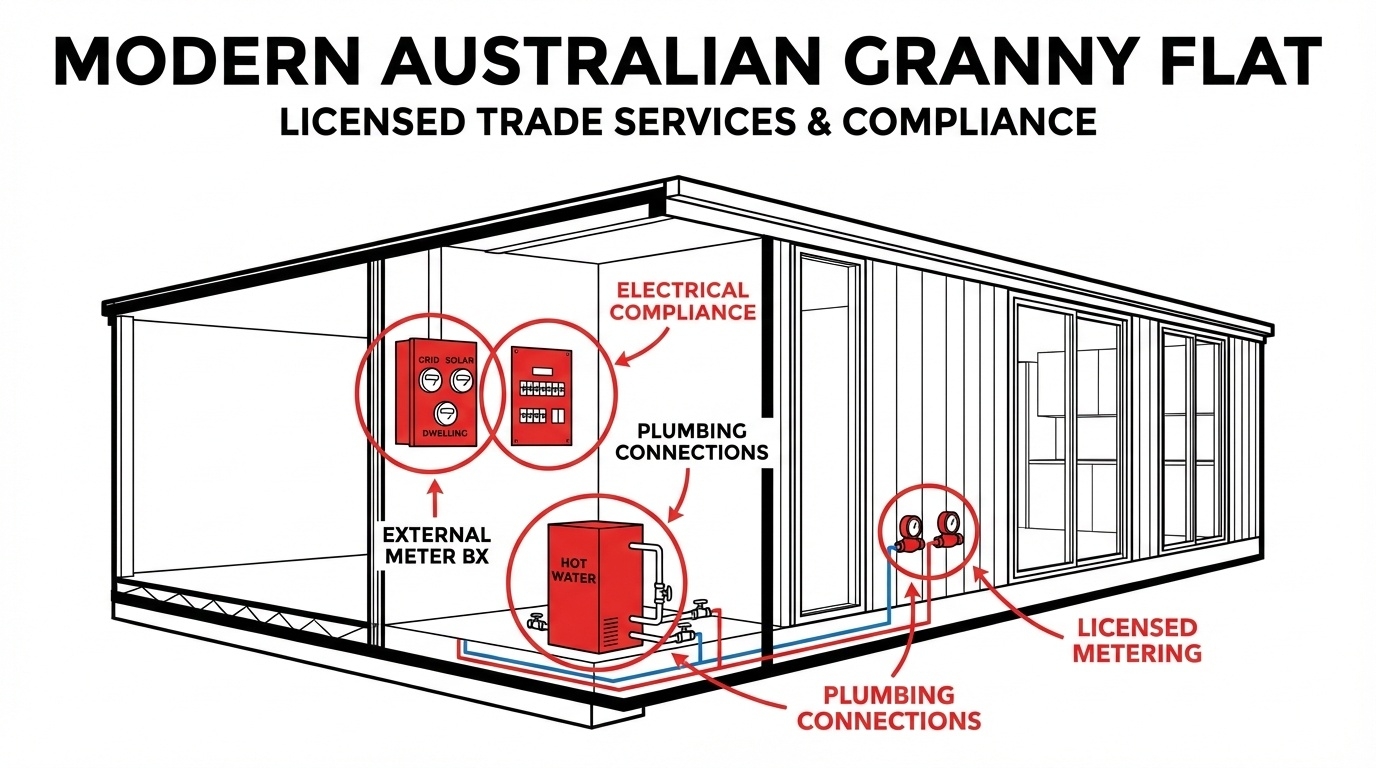
Building a granny flat (secondary dwelling) in NSW represents one of the smartest property investments Sydney homeowners can make in 2026. With housing costs at record highs and demand for affordable rental accommodation surging, a compliant granny flat delivers rental income, increases property value, and provides flexible living space for extended family.
However, navigating the NSW granny flat requirements for its electrical and plumbing proves surprisingly complex. Many property owners discover too late that their “simple backyard dwelling” requires separate utility meters, BASIX-compliant hot water systems, licensed Level 2 electricians, Sydney Water approvals, and compliance certificates that significantly impact budgets and timelines.
This comprehensive guide reveals everything Sydney, Central Coast, and Newcastle property owners need to know about granny flat electrical and plumbing requirements. From AS3000 electrical standards and separate meter costs to plumbing connection regulations and BASIX certificate requirements, we’ll explain the complete compliance process that transforms your granny flat from concept to legally habitable dwelling.
Whether you’re planning a detached granny flat, converting an existing structure, or exploring complying development options, understanding these electrical and plumbing requirements from the outset prevents costly mistakes, approval delays, and non-compliance issues that plague unprepared property owners.
Understanding NSW Granny Flat Regulations 2026
NSW granny flat regulations (officially “secondary dwellings”) fall under the Housing State Environmental Planning Policy (Housing SEPP), which streamlines approval processes while maintaining strict technical standards. As of 2026, complying development certificates (CDC) allow many granny flats to bypass traditional Development Applications, significantly reducing approval timeframes from 6-12 months to 4-8 weeks.
However, this streamlined approval comes with non-negotiable compliance requirements, particularly regarding electrical and plumbing installations. Every granny flat must meet Building Code of Australia standards, obtain separate utility connections where required, and demonstrate BASIX compliance for energy and water efficiency.
What Qualifies as a Granny Flat in NSW
NSW defines secondary dwellings as self-contained residential accommodation on the same lot as the principal dwelling. This means granny flats must include:
- Separate kitchen facilities
- Bathroom with toilet and shower
- Living/sleeping areas
- Independent access
- Self-contained amenities (not shared with main dwelling)
Maximum floor area: 60 square meters internal
Minimum lot size: 450 square meters (most councils)
Maximum height: 8.5 meters
Setbacks: 3 meters rear, 0.9 meters side boundaries
These size limitations directly impact electrical load calculations and plumbing connection requirements, making professional assessment essential during planning stages.
Electrical Requirements & AS3000 Compliance
Granny flat electrical installations must comply with AS/NZS 3000:2018 (Australian/New Zealand Wiring Rules), the mandatory standard governing all electrical work in NSW. This comprehensive standard dictates everything from circuit design and cable sizing to safety switch requirements and electrical certifications.
Unlike simple renovations, granny flats are classified as new dwellings under electrical regulations, triggering stricter compliance requirements than modifications to existing homes. Property owners cannot legally perform any fixed electrical work themselves—all installations require licensed electricians, and specific tasks demand Level 2 electricians with network operator authorisation.
Mandatory Electrical Safety Features
Every NSW granny flat must incorporate:
- Safety Switches (RCDs): Residual Current Devices on all power and lighting circuits, disconnecting within 0.03 seconds of earth fault detection
- Smoke Alarms: Photoelectric smoke alarms in all bedrooms, hallways, and interconnected throughout dwelling
- Circuit Breakers: Appropriately rated overcurrent protection for each circuit
- Adequate Power Points: Minimum two double power points per habitable room
- Lighting Circuits: Separate circuits for lighting and power
- Surge Protection: Recommended for sensitive equipment protection
- Compliant Switchboard: Modern circuit breaker panel meeting current standards
All installations must receive a Certificate of Compliance for Electrical Work (CCEW), proving the work meets AS3000 standards and passes mandatory testing. Without this certificate, council cannot issue occupation certificates, and insurance coverage may be void.
Load Calculations and Circuit Design
Licensed electricians calculate electrical load requirements based on granny flat size, planned appliances, heating/cooling systems, and hot water equipment. AS3000 specifies minimum circuit requirements:
- Lighting circuit: 10 amps minimum
- Power circuits: Multiple 20-amp circuits for general power
- Dedicated circuits: Air conditioning, hot water, cooking appliances
- Total load capacity: Typically 60-100 amps for 60m² dwelling
Undersized electrical systems cause safety hazards, frequent breaker trips, and expensive remediation. Professional load calculations ensure your granny flat electrical system safely accommodates both current and reasonable future needs.
Separate Electricity Meter: Requirements & Costs
NSW regulations require separate electricity meters for granny flats where tenants differ from main dwelling occupants—the most common scenario for rental granny flats. Separate metering ensures tenants pay their own electricity costs rather than landlords subsidising utilities through inclusive rent arrangements.
Installing separate granny flat meters involves coordination between licensed Level 2 electricians, your electricity distributor (Ausgrid, Endeavour Energy, or Essential Energy), and potentially your electricity retailer. The process differs significantly from standard electrical work, requiring network operator approvals and specialized equipment.
Types of Granny Flat Electricity Meters
Three metering options exist for NSW granny flats:
1. Separate Network Meter (Full Individual Connection)
Dedicated connection from street infrastructure to granny flat. Requires separate electrical service from distributor. Tenant establishes independent electricity account.
Cost: $2,500 – $8,000 (distance-dependent)
Timeline: 4-8 weeks from application to connection
Best for: Detached granny flats, long-term rental arrangements
2. Submeter (Individual Metering Arrangement)
Master meter remains on main dwelling; submeter installed to isolate granny flat consumption. Landlord reads submeter and bills tenant directly or through third-party service.
Cost: $800 – $2,500
Timeline: 1-2 weeks installation
Best for: Attached granny flats, family arrangements
3. Shared Metering
Single meter serves both dwellings. Utilities included in rent. Legal only when landlord and tenant related or under specific tenancy agreements.
Cost: No additional metering costs
Considerations: Rent must adequately compensate utilities; complex tenancy law implications
Most rental granny flats require Option 1 (separate network meter) for compliance with NSW residential tenancy legislation requiring tenants to pay their own utility costs.
Level 2 Electrician Requirements
Connecting granny flat meters to electricity network infrastructure requires Level 2 electricians—specialized tradespeople with additional qualifications and network operator authorization. Standard residential electricians (Level 1) cannot legally perform this work.
Level 2 electricians handle:
- Service cable installation from street to property
- Network equipment connection
- Metering equipment installation
- Network isolation and reconnection
- Compliance with distributor specifications
Attempting connections without Level 2 qualification results in rejected applications, voided insurance, and potential prosecution. Licensed Level 2 electricians like those at AIM LOCAL coordinate directly with network operators, eliminating miscommunication that delays projects.
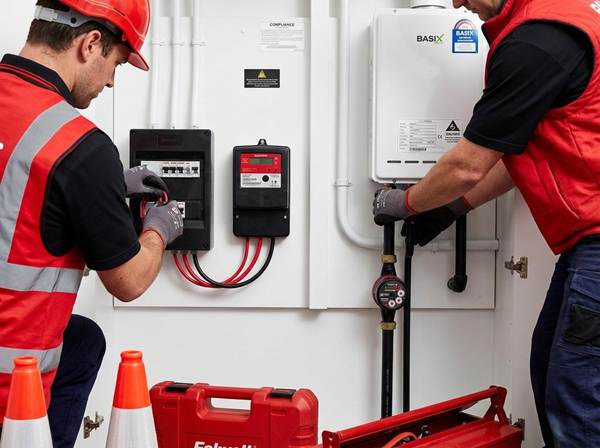
Professional Granny Flat Installation Services
Plumbing Connection Standards & Sydney Water Requirements
Granny flat plumbing connections to mains water and sewer systems require Sydney Water approval (Greater Sydney) or respective water authority consent (regional NSW). These connections carry different requirements than simple plumbing repairs, involving licensed plumbers, formal applications, and inspection schedules.
Water Connection Requirements:
Sydney Water mandates separate water services for granny flats classified as additional dwellings on the property. Connection process involves:
1. Licensed plumber submits Section 73 Compliance Certificate application
2. Sydney Water reviews plans and site conditions
3. Approved plumber completes physical connection
4. Sydney Water inspects and approves connection
5. Separate water account established for granny flat
Cost: $1,500 – $4,000 (typically)
Timeline: 2-4 weeks approval plus installation time
Sewer Connection Requirements:
Granny flats must connect to existing sewer infrastructure where available. Licensed plumbers:
- Install separate sewer line from granny flat to connection point
- Ensure proper fall (minimum 1:60 gradient)
- Install inspection openings per plumbing code
- Obtain sewer connection approval from water authority
- Provide compliance certification
Alternative systems (septic, aerated wastewater treatment) may be permitted in areas without sewer access, but require additional approvals from local council and NSW Health.
Hot Water System BASIX Compliance
All NSW granny flats require BASIX (Building Sustainability Index) certificates demonstrating minimum energy and water efficiency standards. Hot water systems represent the largest single component of granny flat energy consumption, making compliant selection critical for BASIX approval.
BASIX-Compliant Hot Water Options:
1. Heat Pump Hot Water Systems
Most popular choice for granny flat BASIX compliance. Extract ambient heat from air to warm water, using 60-75% less energy than conventional electric systems.
BASIX Points: High (excellent for meeting targets)
Cost: $2,500 – $4,500 installed
Electricity: Requires dedicated 15-20 amp circuit
Space: Compact outdoor installation possible
2. Solar Hot Water Systems
Solar collectors with electric or gas boost. Highest BASIX points but higher installation costs.
BASIX Points: Highest available
Cost: $3,500 – $6,500 installed
Requirements: Suitable roof orientation and space
Maintenance: Periodic system servicing required
3. Instantaneous Gas Hot Water
Continuous flow systems heat water on-demand. Lower BASIX points than heat pumps but viable with other efficiency measures.
BASIX Points: Moderate
Cost: $1,800 – $3,200 installed
Requirements: Natural gas connection or LPG bottles
Considerations: Venting requirements, gas compliance
Licensed plumbers ensure hot water installations meet both BASIX requirements and AS/NZS 3500 (Plumbing and Drainage Standard), preventing approval issues.
Rainwater Tank & Water Efficiency Requirements
BASIX certificates mandate water efficiency measures for granny flats, typically requiring rainwater tanks connected to toilets, laundry, or outdoor taps. Minimum tank capacities vary by region and dwelling size, but commonly require:
- 2,000 – 3,000 litre minimum capacity
- Connection to at least one internal fixture
- Overflow directed to stormwater system
- First-flush diverter for water quality
- Licensed plumber installation and compliance
Additionally, all granny flat fixtures must meet WELS (Water Efficiency Labelling and Standards) ratings:
- Toilets: 4-star minimum (dual-flush required)
- Showerheads: 3-star minimum (9 litres/minute maximum)
- Tapware: 3-star minimum where applicable
- Dishwashers/washing machines: Minimum efficiency ratings
Licensed plumbers specify compliant fixtures during planning stages, ensuring BASIX approval without compromising functionality.
Licensing Requirements: Why DIY Isn’t Legal
NSW law prohibits unlicensed persons from performing fixed electrical or plumbing work, with particularly strict enforcement for new construction like granny flats. These restrictions protect public safety, ensure quality standards, and maintain insurance coverage validity.
Electrical Work Licensing:
ALL fixed electrical work requires licensed electricians. No exceptions exist for property owners, handymen, or “experienced DIYers.” Licensed electricians carry:
- Contractor License (electrical work over $1,000)
- Public Liability Insurance ($20 million minimum)
- Workers Compensation Insurance
- Current licensing with NSW Fair Trading
- Continuing education and compliance knowledge
Level 2 Electrician Requirements:
Network connections require additional Level 2 accreditation from electricity distributors:
- Ausgrid accreditation (Sydney, Central Coast, Hunter)
- Endeavour Energy accreditation (Western Sydney)
- Essential Energy accreditation (Regional NSW)
AIM LOCAL’s licensed electricians hold all necessary accreditations for complete granny flat electrical installations across Sydney, Central Coast, and Newcastle.
Plumbing Work Licensing:
NSW plumbers must hold:
- Plumbing Contractor License
- Water and Sewer Service Line Work endorsement (for mains connections)
- Backflow Prevention qualification
- Gas Fitting License (for gas appliances)
- Public Liability and Workers Compensation insurance
Unlicensed Plumbing or Electrical Work Consequences:
- Fines up to $55,000 for individuals, $110,000 for companies
- Insurance claims automatically denied
- Council cannot issue Occupation Certificates
- Forced removal and professional reinstallation
- Criminal prosecution for serious breaches
- Property sale complications
- Tenant safety liability
Professional licensing exists for good reason—electrical and plumbing systems directly impact life safety, fire risk, water quality, and structural integrity. The modest professional service costs pale against potential consequences of non-compliance.
Complete Cost Breakdown: Electrical & Plumbing Installation
Understanding total electrical and plumbing costs helps property owners budget accurately for granny flat projects. Costs vary by site conditions, dwelling size, and specification choices, but typical Sydney installations include:
Electrical Installation Costs:
- Base electrical fit-out (wiring, switches, lights, power points): $8,000 – $15,000
- Switchboard installation: $1,500 – $2,500
- Separate meter installation (network connection): $2,500 – $8,000
- Level 2 electrician services and approvals: $1,200 – $2,000
- Safety switches, smoke alarms, surge protection: $800 – $1,500
- Air conditioning electrical connection: $600 – $1,200
- BASIX-compliant lighting and efficiency measures: $500 – $1,000
Total Electrical Range: $15,000 – $32,000
Plumbing Installation Costs:
- Base plumbing rough-in (supply, waste, drainage): $6,000 – $12,000
- Fixtures (toilet, shower, vanity, laundry): $2,000 – $5,000
- Hot water system (heat pump BASIX-compliant): $2,500 – $4,500
- Separate water meter and connection: $1,500 – $4,000
- Sewer connection to main line: $2,000 – $5,000
- Rainwater tank and connection: $1,500 – $3,000
- Licensed plumber compliance certificates: $500 – $1,000
Total Plumbing Range: $16,000 – $34,500
Combined Electrical & Plumbing: $31,000 – $66,500
These costs represent professional installations meeting all compliance requirements. Budget projects attempting cost-cutting through reduced specifications or unlicensed work typically exceed these figures once remediation, compliance corrections, and approval delays factor in.
Site-Specific Variables Affecting Costs:
- Distance from existing utilities (longer runs increase materials and labor)
- Rock or difficult excavation conditions
- Heritage overlays requiring specific materials or methods
- Existing infrastructure upgrades required to support additional dwelling
- Access limitations for equipment and materials
- Council-specific requirements beyond standard regulations
Step-by-Step Process: From Planning to Connection
Successful granny flat electrical and plumbing installations follow systematic processes ensuring compliance, coordinating trades, and minimizing delays.
Phase 1: Planning and Design (Weeks 1-2)
1. Engage licensed electrician and plumber for preliminary site assessment
2. Determine utility connection points and requirements
3. Calculate electrical loads and plumbing demands
4. Select BASIX-compliant fixtures and systems
5. Prepare documentation for CDC application
6. Submit applications to electricity distributor and water authority
Phase 2: Approvals (Weeks 3-8)
1. Obtain Complying Development Certificate from private certifier
2. Receive electricity distributor approval for meter connection
3. Secure Sydney Water Section 73 approval
4. Obtain BASIX certificate with specified systems
5. Arrange construction insurance and notify council
Phase 3: Construction – Rough-In Stage (Weeks 9-10)
1. Licensed electrician installs electrical conduits, wiring, and switchboard
2. Licensed plumber installs supply pipes, drainage, and sewer connections
3. Coordinate waterproofing (bathrooms/laundry) with plumbing
4. Install rainwater tank and associated plumbing
5. First inspections by certifier
Phase 4: Meter and Service Connections (Weeks 11-12)
1. Level 2 electrician installs separate electrical meter
2. Electricity distributor connects to network (scheduled appointment)
3. Licensed plumber completes water meter installation
4. Sydney Water inspection and connection
5. Hot water system installation and testing
Phase 5: Fit-Out and Final Fixtures (Weeks 13-14)
1. Install light fixtures, switches, and power points
2. Install bathroom fixtures, tapware, and appliances
3. Commission hot water system
4. Test all electrical circuits and safety devices
5. Pressure test plumbing systems
Phase 6: Testing and Certification (Week 15)
1. Licensed electrician issues CCEW (electrical compliance certificate)
2. Licensed plumber issues plumbing compliance certificates
3. Private certifier conducts final inspection
4. Address any defects or compliance issues
5. Obtain Occupation Certificate
Timeline Variables:
Best case (straightforward project): 12-15 weeks from CDC to occupation
Average case (typical challenges): 16-20 weeks
Complex case (access issues, upgrades required): 20-28 weeks
Early engagement with licensed electricians and plumbers prevents the most common delays—underestimated requirements, specification changes, and approval complications.
Common Mistakes That Cause Approval Delays
Property owners new to granny flat development frequently encounter preventable issues that delay occupancy and increase costs:
Mistake 1: Starting Construction Before Approvals
Some owners begin site preparation or order materials before CDC approval, risking non-compliant work if specifications change during approval process.
Solution: Wait for formal CDC approval and all utility authority confirmations before commencing any work.
Mistake 2: Hiring Unlicensed or Incorrectly Licensed Tradespeople
Using standard electricians without Level 2 qualifications, or plumbers without water service endorsements, causes work rejections and reinstallation requirements.
Solution: Verify licensing credentials before engagement. Licensed Level 2 electricians and endorsed plumbers provide documentation proving qualifications.
Mistake 3: Inadequate Load Calculations
Undersized electrical systems require expensive upgrades when air conditioning or appliances won’t operate simultaneously without tripping breakers.
Solution: Professional load calculations during planning stages account for realistic usage patterns, not just minimum standards.
Mistake 4: Ignoring BASIX Requirements
Selecting non-compliant hot water systems or fixtures prevents BASIX certificate approval, delaying entire projects.
Solution: Licensed plumbers recommend BASIX-compliant systems during design phase, ensuring selections meet requirements.
Mistake 5: Assuming Existing Utilities Have Sufficient Capacity
Main dwelling electrical panels or water services may lack capacity for additional granny flat connections, requiring expensive infrastructure upgrades.
Solution: Professional assessment of existing systems identifies upgrade requirements before construction commences.
Mistake 6: Poor Coordination Between Trades
Electrical and plumbing work must coordinate precisely—conflicting locations for pipes and conduits cause delays and remediation work.
Solution: Engage electricians and plumbers who communicate effectively. Multi-trade providers like AIM LOCAL eliminate coordination issues through integrated planning.
Mistake 7: Missing Interim Inspections
Covering work before required inspections necessitates expensive remediation to expose installations for certifier review.
Solution: Understand inspection schedules and coordinate with certifiers before covering rough-in work.
Mistake 8: Underestimating Timeline Requirements
Rushed schedules pressure tradespeople, increase error rates, and frustrate everyone involved.
Solution: Allow realistic timelines with buffer periods for approval delays and unexpected site conditions.
Frequently Asked Questions
Q: How much does it cost to install separate electricity and water meters for a granny flat in NSW?
A: Separate electricity meter installation typically costs $2,500-$8,000 depending on distance from existing network infrastructure and whether Level 2 electrician services and distributor connection fees are included. Separate water meters cost $1,500-$4,000 including licensed plumber installation, Sydney Water approvals, and physical connection work. Combined, property owners should budget $4,000-$12,000 for separate utility metering, with costs varying significantly based on site-specific conditions and existing infrastructure proximity.
Q: Do I legally need a licensed electrician and plumber for my NSW granny flat?
A: Yes, absolutely. NSW law mandates licensed electricians for all fixed electrical work and licensed plumbers for all plumbing installations. Granny flats additionally require Level 2 electricians (with network operator accreditation) for meter connections and plumbers with water service endorsements for mains connections. DIY electrical or plumbing work is illegal, voids insurance, prevents occupation certificates, and risks fines up to $55,000. Professional licensing ensures safety compliance, quality installations, and legal protection for property owners and tenants.
Q: What hot water system meets BASIX requirements for granny flats?
A: Heat pump hot water systems represent the most popular BASIX-compliant choice for NSW granny flats, offering excellent BASIX points while balancing installation costs ($2,500-$4,500) and operating efficiency. Solar hot water systems achieve highest BASIX ratings but cost more initially ($3,500-$6,500). Instantaneous gas systems may meet BASIX targets when combined with other efficiency measures. Licensed plumbers assess your specific BASIX certificate requirements and recommend systems guaranteeing approval while meeting budget and site constraints.
Q: How long does the electrical and plumbing approval process take for granny flats?
A: Electrical approval (distributor network connection authorization) typically requires 4-8 weeks from application submission to scheduled installation. Plumbing approvals (Sydney Water Section 73 certificates) generally take 2-4 weeks for straightforward applications. However, overall project timelines from CDC application to occupation certificate span 12-20 weeks for typical granny flats, accounting for approval periods, construction scheduling, inspections, and coordination between multiple authorities. Early engagement with licensed electricians and plumbers who understand approval processes minimizes delays.
Q: Can a granny flat share utilities with the main house?
A: NSW granny flats can share utilities (single meters) only under specific circumstances: when landlord and tenant are related, when utilities are genuinely included in rent with appropriate compensation, or under particular tenancy arrangements. However, most rental granny flats require separate metering for compliance with residential tenancy legislation mandating tenants pay their own utility costs. Attempting to circumvent separate metering requirements through informal arrangements creates tenancy law complications and potential legal liabilities for property owners.
Q: What happens if I use unlicensed electricians or plumbers for my granny flat?
A: Unlicensed electrical or plumbing work triggers severe consequences: automatic insurance claim denials, council refusal to issue occupation certificates, mandatory work removal and professional reinstallation at owner expense, fines up to $55,000 for individuals or $110,000 for companies, and potential criminal prosecution for serious violations. Additionally, property sales become complicated when illegal work is discovered during conveyancing, and tenant safety liability rests entirely with property owners. Professional licensing costs represent tiny fractions of these potential consequences while ensuring compliant, safe installations.
Ensure Compliance with Professional Granny Flat Services
Navigating NSW granny flat electrical and plumbing requirements demands expertise, coordination, and compliance knowledge that extends far beyond basic trade skills. From Level 2 electrician network connections and BASIX-compliant hot water systems to Sydney Water approvals and AS3000 electrical standards, every installation component requires professional attention ensuring your investment delivers legal, safe, and valuable additional dwelling space.
The licensed electricians and plumbers at AIM LOCAL bring extensive granny flat experience across Sydney, Central Coast, and Newcastle, coordinating complete electrical and plumbing installations that meet all compliance requirements while optimizing costs and timelines. Our multi-trade capability eliminates coordination headaches that plague projects using multiple contractors, and our Level 2 accreditations ensure network connections proceed smoothly without delays or rejections.
Whether you’re planning your first granny flat or managing multiple property developments, professional electrical and plumbing services from the project’s outset prevent the costly mistakes, approval delays, and compliance failures that turn profitable investments into expensive nightmares.
Don’t risk your granny flat project with unlicensed trades or incomplete specifications. Contact AIM LOCAL today for comprehensive electrical and plumbing assessments tailored to your specific property and granny flat requirements.
Call AIM LOCAL: 1800 187 168 (24/7)
Available across Sydney, Central Coast & Newcastle
Transform your property with a compliant, valuable granny flat—delivered by licensed professionals who understand exactly what NSW regulations demand.