
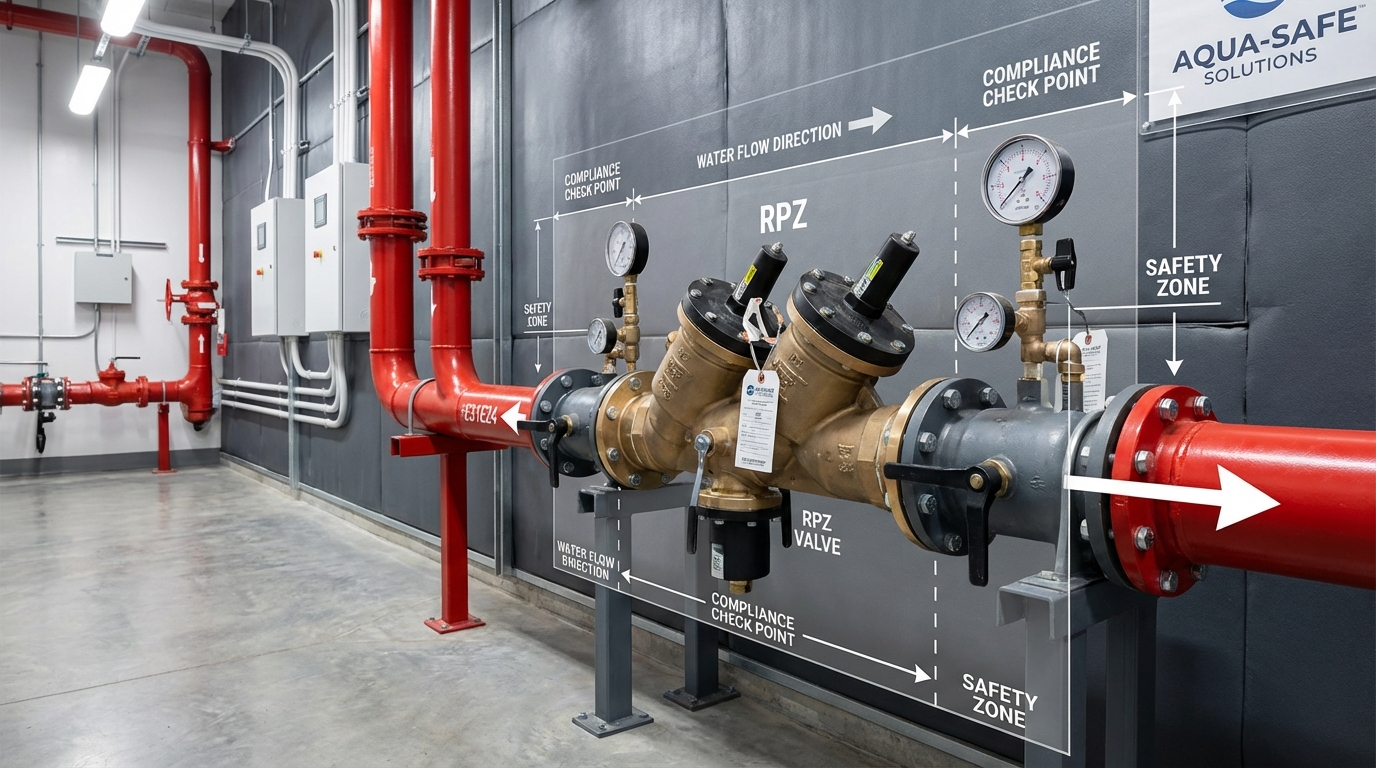
As we enter 2026, Sydney commercial property owners face increasingly strict backflow prevention Sydney commercial compliance requirements that can result in hefty fines, water supply disconnection, and serious liability issues if ignored. Whether you operate a café in the CBD, manage a medical facility on the Central Coast, or run a manufacturing plant in Newcastle, understanding and maintaining proper backflow prevention devices isn’t optional—it’s a legal obligation that protects public health and your business reputation.
Recent enforcement actions by NSW Fair Trading and Sydney Water have put backflow prevention compliance in the spotlight, with hundreds of businesses receiving breach notices for expired testing certificates and improperly maintained devices. The consequences extend beyond financial penalties: contaminated water supplies traced back to faulty commercial backflow systems can lead to business closures, public health emergencies, and devastating legal liability.
This comprehensive guide from AIM LOCAL covers everything Sydney commercial property owners need to know about backflow prevention compliance in 2026. We’ll explain what backflow prevention devices your business needs, annual testing requirements, how to choose licensed backflow testers, compliance certification processes, and practical strategies to maintain continuous compliance without disrupting your operations. Whether you’re new to commercial property ownership or need to update your compliance knowledge, this guide provides the authoritative information you need to protect your business and community water supply.
Understanding Backflow Prevention: What Sydney Business Owners Must Know
Backflow prevention protects drinking water from contamination by preventing water from flowing backward into the public water supply. For commercial properties, this isn’t just good practice—it’s a legal requirement under the Plumbing Code of Australia and enforced by Sydney Water, Hunter Water, and local councils across NSW.
When water pressure drops due to main breaks, high-demand situations, or system failures, water can reverse direction and flow back into the public supply. Without proper backflow prevention devices, contaminated water from commercial operations—chemicals from car washes, bacteria from food service, toxins from medical facilities, or industrial waste—can enter the drinking water system that serves your entire community.
Sydney Water classifies all commercial connections by hazard rating—high, medium, or low—based on the contamination risk your business activities pose. This hazard rating determines which type of backflow prevention device you must install and how frequently testing is required. Restaurants, dental clinics, car washes, industrial facilities, and properties with irrigation systems typically require robust backflow protection due to elevated contamination risks.
The stakes are substantial. Businesses operating without compliant backflow prevention devices face:
- Fines ranging from $1,100 to $5,500 for individuals and up to $27,500 for corporations under NSW plumbing regulations
- Water supply disconnection until compliance is achieved
- Liability for contamination events traced to your property
- Insurance complications if contamination damages occur
- Mandatory costly remediation and public notification requirements
- Reputational damage from public health violations
Understanding your legal obligations and implementing proper backflow prevention compliance protects public health, shields your business from liability, and ensures uninterrupted water service essential to your operations.
Types of Commercial Backflow Prevention Devices Required in NSW
Not all backflow prevention devices offer equal protection, and NSW regulations specify which device types your commercial property requires based on your hazard rating classification. Choosing and installing the correct device ensures compliance while providing appropriate protection for public water supplies.
Reduced Pressure Zone Devices (RPZ Valves)
RPZ valves represent the gold standard for backflow prevention and are mandatory for high-hazard commercial properties. These sophisticated devices use multiple check valves and a pressure relief valve to prevent backflow even under the most challenging conditions. Sydney Water requires RPZ valves for:
- Food service establishments including restaurants, cafes, and commercial kitchens
- Medical, dental, and veterinary facilities
- Car washes and vehicle service centers
- Industrial properties using chemicals or toxic substances
- Properties with fire suppression systems
- Commercial laundries and dry cleaners
RPZ valves require annual testing by licensed, accredited backflow testers to verify proper operation. Installation costs typically range from $1,500 to $4,000 depending on size and site complexity, with annual testing fees between $200-$400 per device.
Dual Check Valves
For medium-hazard properties, dual check valves provide adequate protection at lower cost and complexity. These devices use two independent check valves in series to prevent backflow under normal operating conditions. They’re suitable for:
- Office buildings without chemical use
- Retail stores
- Warehouses and storage facilities
- Low-risk light industrial properties
- Small commercial properties with standard water usage
Dual check valves are non-testable once installed, though they still require periodic inspection and replacement every 5-10 years depending on water quality and usage patterns. Installation costs range from $500-$1,200.
Registered Air Gaps and Break Tanks
The most reliable backflow prevention method involves physical separation between the water supply and potential contamination sources. Air gaps—physical vertical spaces between water outlets and flood levels—provide absolute protection but aren’t always practical for commercial operations. Break tanks offer similar protection for larger installations.
These solutions suit:
- Water treatment facilities
- Large commercial cooling systems
- Industrial processes requiring guaranteed contamination prevention
- Properties unable to maintain testable mechanical devices
Installation complexity and costs vary significantly based on site requirements and existing infrastructure.
Selecting the Right Device for Your Business
Proper device selection requires professional hazard assessment by licensed plumbers familiar with Sydney Water requirements. The wrong device selection leads to non-compliance, failed inspections, and potential water supply disconnection. Licensed plumbers assess your business activities, water usage patterns, and connection point characteristics to recommend appropriate backflow prevention solutions that satisfy regulatory requirements while minimizing ongoing maintenance costs.
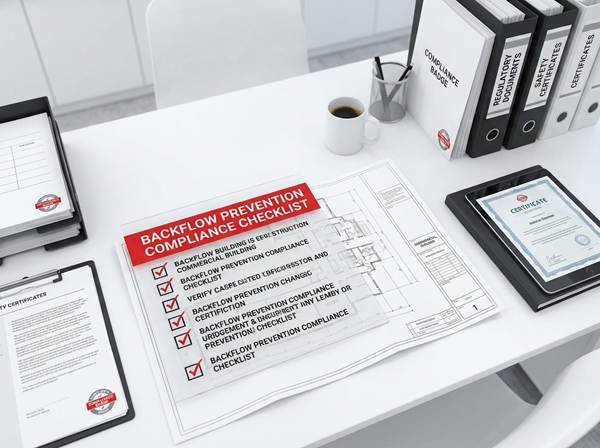
Commercial backflow prevention compliance checklist and regulatory documents for Sydney businesses
Annual Backflow Testing Requirements: What Sydney Businesses Must Do
NSW law mandates annual testing of all testable backflow prevention devices installed on commercial properties. This isn’t a recommendation—it’s a legal requirement with significant penalties for non-compliance. Understanding testing obligations, processes, and documentation requirements ensures your business maintains continuous compliance.
Who Can Test Backflow Devices in NSW
Only licensed plumbers holding current backflow prevention accreditation can legally test commercial backflow devices in NSW. Sydney Water maintains a register of accredited testers who have completed specialized training and demonstrated competency in testing procedures as outlined in AS/NZS 2845.3:2020 standards.
When engaging backflow testing services, verify:
- Current NSW plumbing license
- Backflow prevention accreditation
- Professional liability insurance
- Familiarity with Sydney Water or Hunter Water reporting requirements
- Calibrated test equipment with current certification
- Ability to provide compliant test reports and certificates
Using non-accredited testers results in invalid test certificates that don’t satisfy compliance obligations, leaving your business exposed to enforcement action.
The Annual Testing Process Explained
Proper backflow testing follows standardized procedures that assess device functionality and identify potential failures before they compromise water supply safety:
- Visual Inspection: Testers examine devices for physical damage, corrosion, leaks, and proper installation
- Valve Testing: Individual check valves and relief valves undergo pressure testing to verify proper operation
- Differential Pressure Testing: Specialized gauges measure pressure differentials confirming the device prevents backflow under all conditions
- Documentation: Comprehensive test reports record all findings, measurements, and device condition
- Compliance Certification: Passing tests generate compliance certificates submitted to water authorities
Testing typically takes 30-45 minutes per device for standard RPZ valves, with costs ranging from $200-$400 depending on device size, accessibility, and tester rates. Properties with multiple devices often receive discounted rates for concurrent testing.
What Happens If Your Device Fails Testing
Failed backflow tests require immediate attention. Testers will:
- Issue a notice of device failure
- Recommend specific repairs or replacement
- Provide timeline for remediation (typically 14-28 days)
- Not issue compliance certificate until device passes retest
Common failure reasons include:
- Worn check valve seats allowing reverse flow
- Fouled relief valves unable to discharge properly
- Damaged diaphragms or springs affecting pressure response
- Excessive debris buildup preventing proper operation
- Incorrect initial installation creating compliance issues
Licensed plumbers repair or replace failed devices, then accredited testers conduct retests to verify proper operation. Retest fees typically range from $100-$200.
Testing Frequency and Scheduling
Standard commercial properties require annual testing measured from installation date or last test completion. High-risk facilities like chemical plants or medical centers may require more frequent testing—every six months or quarterly depending on hazard assessment and water authority requirements.
Pro tip: Schedule testing proactively 2-3 weeks before your compliance due date. This buffer allows time for repairs if devices fail while maintaining continuous compliance. Many Sydney businesses schedule January testing as part of their annual maintenance program, taking advantage of new-year service availability.
Sydney Water Backflow Compliance: Registration and Reporting Requirements
Sydney Water, Hunter Water, and local councils throughout NSW maintain comprehensive backflow device registers tracking every testable device within their service areas. Commercial property owners must register devices and submit annual compliance certificates demonstrating ongoing maintenance and testing.
Device Registration Process
New backflow prevention device installations require registration within 30 days of commissioning. Licensed plumbers installing devices complete compliance certificates confirming:
- Device type matches hazard rating requirements
- Installation meets AS/NZS 3500 plumbing code standards
- Initial testing confirms proper operation
- Device location and specifications
Sydney Water’s online portal allows licensed plumbers to submit registration directly, creating permanent records in the backflow device register. Property owners receive notification of registration completion and annual testing due dates.
Failure to register devices results in non-compliance status even if devices are properly installed and maintained. Water authorities conduct periodic audits identifying unregistered devices and issuing breach notices requiring immediate registration and testing.
Submitting Annual Compliance Certificates
After annual testing, accredited testers submit compliance certificates to appropriate water authorities—Sydney Water for metropolitan areas, Hunter Water for Newcastle and surrounding regions, or local councils for other NSW areas. These certificates document:
- Test date and tester details
- Device identification and location
- Test results and measurements
- Pass/fail determination
- Any repairs or maintenance performed
- Next test due date
Most water authorities now accept electronic submission through online portals, streamlining compliance reporting and reducing paperwork. Property owners should retain copies of all compliance certificates for their records—these documents prove compliance if questions arise during property transactions, insurance claims, or regulatory audits.
Compliance Certificate Expiry and Renewal
Backflow compliance certificates remain valid for 12 months from test date. Operating with expired certificates constitutes non-compliance subject to enforcement action. Water authorities typically send reminder notices 30-60 days before expiry, though property owners bear ultimate responsibility for maintaining current compliance.
If certificates expire without renewal:
- Immediate non-compliance status applies
- Follow-up enforcement notices arrive with compliance deadlines
- Continued non-compliance may result in water supply restriction
- Fines and penalties accumulate
- Insurance complications may arise
Maintaining calendar reminders and engaging reliable testing services with automatic annual scheduling prevents inadvertent compliance lapses.
Understanding Your Hazard Rating
Sydney Water assigns hazard ratings during initial property assessment based on:
- Business type and activities
- Chemical use and storage
- Connection point characteristics
- Irrigation systems and landscape features
- Fire suppression installations
High-hazard ratings require RPZ devices and annual testing. Medium-hazard properties typically use dual check valves with less frequent inspection. Low-hazard connections may need minimal protection.
If your business activities change—new equipment installation, operational changes, or expanded services—reassessment may be required to ensure appropriate protection levels. Licensed plumbers conduct hazard reassessments and recommend device upgrades if your risk profile increases.
Cost of Backflow Prevention Compliance for Sydney Commercial Properties
Understanding the financial investment required for backflow prevention compliance helps businesses budget appropriately and avoid unexpected expenses. While costs vary based on property size, hazard rating, and existing infrastructure, typical Sydney commercial properties face predictable expense ranges.
Initial Device Installation Costs
New installations represent the largest one-time expense:
- RPZ Valve Installation: $1,500 – $4,000
- Device cost: $600 – $1,500
- Labor and installation: $900 – $2,500
- Commissioning and initial testing: Included
- Compliance certificate submission: Included
- Dual Check Valve Installation: $500 – $1,200
- Device cost: $200 – $400
- Labor and installation: $300 – $800
- Commissioning: Included
Costs increase for:
- Properties requiring multiple devices
- Difficult access or complex site conditions
- Large-diameter connections serving high-volume usage
- Specialized devices for unique hazards
- Simultaneous water meter upgrades
- Extensive site preparation or modification
Annual Testing and Maintenance Costs
Ongoing compliance requires annual budget allocation:
- Standard RPZ Testing: $200 – $400 per device annually
- Retest After Repairs: $100 – $200 per device
- Routine Maintenance Service: $150 – $300 annually
- Emergency Repairs: $300 – $800 depending on failure type
- Device Replacement: $1,200 – $3,500 (lifespan typically 10-15 years)
Multi-device properties often negotiate annual service contracts with licensed plumbers, securing:
- Scheduled testing coordinated with business operations
- Priority service if devices fail
- Discounted rates for multiple devices
- Automatic compliance certificate submission
- Reminder services preventing expired certificates
Penalties for Non-Compliance
The cost of ignoring backflow prevention requirements far exceeds compliance investment:
- NSW Plumbing Violations:
- Individuals: $1,100 – $5,500 per offense
- Corporations: Up to $27,500 per offense
- Water Supply Disconnection:
- Reconnection fees: $300 – $800
- Business disruption costs: Potentially thousands daily
- Emergency compliance corrections: Premium pricing
- Contamination Liability:
- Public health emergency response costs
- Civil liability for affected parties
- Legal defense expenses
- Reputational damage and lost business
- Potential criminal charges for serious incidents
Maximizing Value and Minimizing Costs
Smart commercial property owners reduce backflow compliance costs through:
1. Annual Service Contracts: Locking in rates and ensuring timely compliance
2. Proactive Maintenance: Preventing expensive emergency repairs
3. Device Monitoring: Identifying issues before testing failures occur
4. Licensed Plumber Relationships: Accessing priority service and competitive pricing
5. Compliance Calendar: Avoiding last-minute premium-priced emergency testing
The modest investment in proper backflow prevention compliance delivers substantial returns through regulatory compliance, public health protection, liability risk reduction, and uninterrupted business operations.
Common Backflow Compliance Mistakes Sydney Businesses Make (And How to Avoid Them)
Many Sydney commercial property owners inadvertently violate backflow prevention requirements through common mistakes that seem minor but create serious compliance and liability issues. Understanding these pitfalls helps you maintain proper protection and avoid enforcement problems.
Mistake #1: Assuming Previous Owner Maintained Compliance
New commercial property owners often discover expired compliance certificates or unregistered devices months after purchase. Previous owners may have neglected annual testing or never registered devices with water authorities. Property due diligence should always include:
- Requesting current backflow compliance certificates
- Verifying device registration with Sydney Water
- Confirming testing schedules and arrangements
- Checking device condition and age
- Understanding any outstanding compliance issues
Discovering non-compliance post-purchase leaves you responsible for corrections and potential penalties.
Mistake #2: Using Non-Accredited Testers
Some businesses attempt to save money by hiring general plumbers without backflow accreditation. These tests don’t satisfy compliance requirements, leaving you with invalid certificates. Always verify:
- Current backflow prevention accreditation
- Familiarity with Sydney Water reporting procedures
- Calibrated equipment with certification
- Proper insurance coverage
Invalid test certificates provide no protection if water authorities audit your compliance status.
Mistake #3: Ignoring Failed Test Notifications
When devices fail annual testing, some property owners delay repairs hoping to avoid expense. This creates immediate non-compliance and escalating problems:
- Certificates remain expired
- Follow-up enforcement notices arrive
- Penalty timelines begin
- Water disconnection becomes possible
- Liability for contamination increases dramatically
Address failed tests immediately through licensed plumbers qualified to perform necessary repairs.
Mistake #4: Modifying Plumbing Without Hazard Reassessment
Business changes often trigger new backflow prevention requirements:
- Installing commercial kitchens or food service
- Adding chemical storage or processing
- Implementing new cleaning systems
- Installing irrigation or fire suppression
- Expanding operations into new areas
These modifications may upgrade your hazard rating, requiring different backflow devices. Licensed plumbers assess whether operational changes necessitate compliance updates.
Mistake #5: Neglecting Device Accessibility
Improperly located devices that become inaccessible due to storage, equipment placement, or landscaping create testing difficulties and potential non-compliance. Testers require clear access to:
- Device location and test ports
- Isolation valves
- Relief valve discharge points
- Pressure gauge connection points
Maintain clear access zones around devices, documenting locations for testers and emergency responders.
Mistake #6: Missing Reminder Notices
Relying solely on water authority reminder notices for testing creates risk if notices are misplaced, misaddressed, or delayed. Maintain independent compliance calendars with:
- Testing due dates for all devices
- Scheduled tester appointments
- Certificate expiry tracking
- Service contract renewal dates
Proactive scheduling prevents inadvertent compliance lapses.
Best Practices for Continuous Compliance
Successful commercial property owners implement systems ensuring ongoing compliance:
- Annual Service Agreements: Contracted testing services with automatic scheduling
- Internal Compliance Calendars: Independent tracking beyond water authority reminders
- Regular Device Monitoring: Visual inspections identifying potential issues early
- Maintenance Records: Comprehensive documentation of all testing, repairs, and certifications
- Professional Relationships: Established connections with licensed backflow specialists
- Staff Training: Ensuring key personnel understand compliance requirements and processes
Choosing Licensed Backflow Testing Services in Sydney, Central Coast & Newcastle
Selecting qualified backflow prevention services ensures compliance while minimizing disruption to your business operations. Licensed plumbers with backflow accreditation vary significantly in reliability, responsiveness, and service quality. These selection criteria help you identify the best providers for your commercial property.
Essential Qualifications and Credentials
Every backflow service provider must demonstrate:
- Current NSW Plumbing License: Verify license status through NSW Fair Trading
- Backflow Prevention Accreditation: Confirmed through Sydney Water or industry associations
- Professional Liability Insurance: Minimum $10 million coverage protecting against testing errors
- Calibrated Test Equipment: Current certification for all pressure testing devices
- Water Authority Recognition: Registered with Sydney Water, Hunter Water, or relevant councils
Request copies of credentials before engaging services—reputable providers readily supply verification.
Service Quality Indicators
Beyond basic qualifications, quality providers demonstrate:
- Prompt Scheduling: Availability within 2-3 weeks for routine testing
- Flexible Timing: Willingness to test during off-hours minimizing business disruption
- Clear Communication: Explaining test results, device condition, and compliance status
- Comprehensive Reporting: Detailed test reports beyond basic pass/fail certificates
- Repair Capabilities: Ability to address failures immediately rather than requiring second visits
- Certificate Submission: Handling compliance certificate lodgment with water authorities
- Reminder Services: Proactive contact before certificates expire
Questions to Ask Potential Backflow Testers
When evaluating services, ask:
- 1. How long have you provided backflow testing services in Sydney?
- 2. How many commercial properties do you service annually?
- 3. What’s your typical scheduling timeframe for routine testing?
- 4. Can you test outside business hours if necessary?
- 5. Do you carry replacement parts for common device failures?
- 6. What happens if my device fails testing?
- 7. Do you submit compliance certificates directly to Sydney Water?
- 8. Do you provide reminder services before certificates expire?
- 9. What are your testing fees and payment terms?
- 10. Can you provide references from similar commercial properties?
Annual Service Contracts vs. Individual Testing
Commercial properties with multiple devices or complex operations benefit from annual service contracts providing:
- Scheduled Testing: Automatic annual appointments without your coordination
- Priority Service: Fast response if devices fail or emergencies arise
- Discounted Rates: Lower per-device costs for contracted services
- Comprehensive Maintenance: Regular device inspection and preventative maintenance
- Compliance Tracking: Provider monitors certificate expiry and ensures timely renewals
- Single Point Contact: Consistent service from familiar technicians
Contract costs typically range from $500-$2,000 annually depending on device count and property complexity—often providing substantial savings and peace of mind compared to individual testing arrangements.
Red Flags to Avoid
Be cautious of providers who:
- Cannot provide current accreditation verification
- Offer testing rates significantly below market (typically $150-$250 below standard rates)
- Lack knowledge of Sydney Water registration processes
- Won’t provide written quotes or contracts
- Have no established local business presence
- Can’t explain testing procedures or device types
- Refuse to provide references
- Pressure immediate decisions without documentation
Local Service Coverage: Sydney, Central Coast, Newcastle
AIM LOCAL provides licensed backflow prevention testing throughout:
- Sydney Metro: CBD, Eastern Suburbs, Western Sydney, North Shore, South Sydney
- Central Coast: Gosford, Wyong, Terrigal, Erina, Lake Macquarie
- Newcastle: Newcastle CBD, Lake Macquarie, Port Stephens, Hunter Region
Our licensed plumbers hold current backflow accreditation, maintain calibrated testing equipment, and provide comprehensive compliance services including device installation, annual testing, repair services, compliance certificate submission, and reminder scheduling. Whether you need one device tested or commercial property-wide compliance management, our team delivers reliable service that keeps your business compliant and protected.
Frequently Asked Questions About Commercial Backflow Prevention
Q: How often must commercial backflow devices be tested in NSW?
A: NSW regulations require annual testing of all testable backflow prevention devices installed on commercial properties. Testing must be completed by licensed plumbers holding current backflow prevention accreditation, with compliance certificates submitted to relevant water authorities. High-hazard facilities may require more frequent testing—every six months or quarterly—depending on specific risk assessments and water authority requirements.
Q: What happens if my business’s backflow device fails annual testing?
A: Failed devices require immediate repair or replacement to restore compliance. Accredited testers issue failure notices specifying problems identified and providing 14-28 days for remediation. Licensed plumbers repair or replace failed components, then retesting confirms proper operation before compliance certificates are issued. Operating with failed devices constitutes non-compliance subject to enforcement action and potential water supply restriction.
Q: How much does backflow testing cost for Sydney commercial properties?
A: Standard RPZ valve testing costs $200-$400 per device annually, with retesting after repairs typically $100-$200. Initial device installation ranges from $1,500-$4,000 for RPZ valves and $500-$1,200 for dual check valves. Multi-device properties often secure discounted annual service contracts. Costs vary based on device size, accessibility, property location, and service provider rates.
Q: Can any licensed plumber test backflow prevention devices?
A: No. Only licensed plumbers holding current backflow prevention accreditation can legally test commercial backflow devices in NSW. Accreditation requires specialized training in testing procedures outlined in AS/NZS 2845.3:2020 standards. Tests conducted by non-accredited plumbers produce invalid certificates that don’t satisfy compliance obligations. Always verify current accreditation before engaging testing services.
Q: What type of backflow device does my Sydney business need?
A: Device requirements depend on your property’s hazard rating assigned by Sydney Water based on business activities and contamination risks. High-hazard properties (food service, medical facilities, car washes, industrial operations) require RPZ valves. Medium-hazard properties typically use dual check valves. Licensed plumbers conduct hazard assessments and recommend appropriate devices ensuring compliance with water authority requirements.
Q: Who is responsible for backflow compliance—landlords or tenants?
A: Property owners typically bear responsibility for backflow device installation and compliance, though commercial leases may allocate testing and maintenance obligations to tenants. Review lease agreements carefully to understand your specific responsibilities. Regardless of lease terms, water authorities hold property owners ultimately responsible for compliance, making clear contractual arrangements essential.
Q: Do I need backflow prevention if my business only uses water for restrooms and drinking?
A: Yes. All commercial water connections require some form of backflow prevention. Even low-hazard properties need minimum protection—typically dual check valves integrated into water meters. Sydney Water assesses every commercial connection and specifies appropriate protection levels based on property characteristics and usage. Licensed plumbers confirm your specific requirements during property assessment.
Q: Can I install my own backflow prevention device to save money?
A: No. NSW law requires licensed plumbers to install all backflow prevention devices. DIY installations violate plumbing regulations, won’t satisfy water authority requirements, void device warranties, and create serious liability issues if contamination occurs. Licensed plumbers ensure proper device selection, compliant installation, initial testing, and registration with water authorities—essential for legal operation.
Conclusion: Protect Your Business With Proper Backflow Prevention Compliance
Commercial backflow prevention compliance isn’t optional—it’s a legal obligation that protects public health, shields your business from liability, and ensures uninterrupted water service essential to your operations. As Sydney, Central Coast, and Newcastle water authorities strengthen enforcement in 2026, businesses must prioritize proper device installation, annual testing, and compliance certificate maintenance.
The investment in backflow prevention compliance pays substantial dividends through regulatory compliance, reduced liability exposure, protection of community water supplies, and peace of mind knowing your business operates safely and legally. Proactive compliance prevents expensive enforcement penalties, water supply disruption, and reputational damage from non-compliance violations.
Whether you’re establishing new commercial operations, purchasing existing properties, or maintaining long-running businesses, understanding and fulfilling backflow prevention obligations ensures your enterprise operates sustainably and responsibly. Partner with licensed plumbers holding current backflow accreditation to assess your requirements, implement appropriate solutions, and maintain ongoing compliance without disrupting your business operations.
Don’t wait for enforcement notices or water supply restrictions to address backflow prevention compliance. Take action now to protect your business, your community, and your water supply through proper backflow prevention device installation, testing, and maintenance.
Ready to Ensure Your Commercial Property’s Backflow Compliance?
AIM LOCAL provides comprehensive backflow prevention services for Sydney, Central Coast, and Newcastle commercial properties. Our licensed plumbers and accredited backflow testers deliver:
- Commercial hazard assessments and device recommendations
- RPZ valve and dual check valve installation
- Annual backflow device testing with flexible scheduling
- Compliance certificate preparation and submission
- Device repair and maintenance services
- Multi-device service contracts with automatic scheduling
- 24/7 emergency backflow services
Contact AIM LOCAL today on 1800 187 168 to schedule your backflow compliance assessment. Our team provides expert guidance, reliable service, and complete compliance solutions that keep your business protected and operating without interruption. Make 2026 the year your commercial property achieves perfect backflow prevention compliance.