
Following the February 2026 NSW fire safety regulation reforms, electrical safety compliance has never been more critical for Sydney homeowners. Whether you’re preparing for winter’s increased electrical demand, ensuring compliance with new smoke alarm mandates, or simply protecting your family from electrical hazards, a comprehensive safety inspection is your first line of defence.
This detailed electrical safety compliance checklist provides Sydney homeowners with everything you need to know about mandatory inspections, current NSW regulations, seasonal preparation requirements, and how to identify potential electrical hazards before they become dangerous or costly problems.
With over 25% of Australian house fires caused by electrical faults and new compliance deadlines now in effect, understanding what professional electricians look for during safety inspections can save lives, prevent property damage, and avoid hefty fines.
Why Electrical Safety Compliance Matters in 2026
Recent NSW Regulatory Changes You Need to Know
The February 13, 2026 fire safety reforms introduced significant electrical compliance changes across NSW.
Key regulatory updates include:
- Mandatory 10-year smoke alarm replacement for all residential properties
- Photoelectric smoke alarm requirements (AS 3786:2014 standard)
- Enhanced safety switch (RCD) installation standards
- Stricter switchboard compliance for properties built before 2000
- Updated electrical installation certification requirements
Property owners who fail to meet these compliance standards face penalties ranging from $1,100 to $55,000 for residential properties, with even higher fines for strata and commercial buildings.
The Hidden Cost of Non-Compliance
Beyond legal penalties, non-compliant electrical systems create serious risks:
- Fire hazards: Faulty wiring and overloaded circuits cause approximately 5,800 house fires annually in Australia
- Insurance invalidation: Many insurers won’t cover claims if electrical systems fail to meet current standards
- Electric shock risks: Non-compliant installations increase the likelihood of fatal or serious electric shocks
- Property devaluation: Homes with electrical safety issues struggle to pass building inspections during sale
- Higher energy costs: Inefficient or damaged electrical systems waste power and drive up utility bills
The Complete Electrical Safety Inspection Checklist
A professional electrical safety inspection conducted by a licensed electrician covers multiple critical areas. Here’s exactly what should be examined during a comprehensive compliance check:
1. Smoke Alarm Compliance & Testing
Current Requirements:
- Photoelectric smoke alarms on every level where people sleep
- Alarms manufactured within the last 10 years (post-February 2026 mandate)
- Hard-wired alarms in homes built or significantly renovated after May 1, 2006
- 10-year lithium battery backup for hard-wired systems
- Working condition verified through button test and audible alarm response
Professional electricians test functionality, verify manufacturing dates, and ensure proper placement per AS 3786:2014.
2. Switchboard Safety Inspection
Your switchboard is the heart of your home’s electrical system. Modern inspections assess:
- Overall condition and age (switchboards older than 25 years typically require replacement)
- Presence and functionality of all required safety switches (RCDs)
- Circuit breaker condition and appropriate rating for connected circuits
- Evidence of overheating, burning, or corrosion
- Adequate labelling of all circuits
- Surge protection installation
- Compliance with current AS/NZS 3000 wiring rules
- Available capacity for future electrical additions
Warning signs requiring immediate attention include: burn marks, buzzing sounds, frequently tripping breakers, flickering lights when large appliances start, or ceramic fuses (indicating outdated equipment).
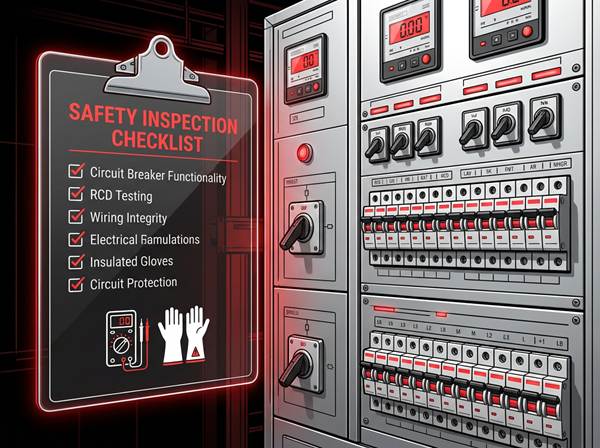
3. Safety Switch (RCD) Testing
Residual Current Devices (RCDs), commonly called safety switches, are your primary protection against electric shock. NSW regulations require:
- RCD protection on all power point circuits
- RCD protection on all lighting circuits (for properties where work has been done post-regulation)
- Quarterly manual testing by homeowners (press test button)
- Professional testing every 2 years minimum
- Trip time testing (must disconnect within 30 milliseconds)
- Verification that RCDs haven’t been bypassed or tampered with
Electricians use specialized equipment to verify trip times, sensitivity, and adequate protection across all circuits.
4. Power Point & Outlet Safety Assessment
Inspections examine every accessible power point for:
- Physical damage, cracks, or burn marks
- Loose or worn connections
- Correct earthing
- Appropriate location (away from water sources as required)
- Overloading indicators (discoloration from heat)
- Outdated non-compliant outlets requiring replacement
- Proper installation depth and secure mounting
High-risk areas like bathrooms, kitchens, laundries, and outdoor locations receive special attention.
5. Electrical Wiring & Cable Inspection
While much wiring remains hidden, inspectors evaluate:
- Visible wiring condition in roof spaces, under floors, and meter box areas
- Evidence of rodent damage or insulation deterioration
- Compliance of any visible additions or modifications
- Appropriate cable types for their applications
- Secure cable support and protection from physical damage
- Junction box accessibility and condition
- Thermal imaging to detect hot spots indicating failing connections
Older homes with aluminum wiring, fabric-insulated cables, or pre-1960s systems receive particular scrutiny due to elevated fire risks.
6. Earthing & Bonding Verification
Proper earthing protects you from electric shock if faults occur. Inspections confirm:
- Main earthing conductor connection and condition
- Earth stake or electrode integrity
- Bonding of metal water pipes, gas pipes, and structural steel
- Earth continuity testing throughout the installation
- Adequate earth resistance (typically under 5 ohms for residential)
- Lightning protection system integration (if applicable)
Winter-Specific Electrical Safety Considerations
As Sydney heads into autumn and winter, electrical systems face increased demand. March is the ideal time for preventive inspections before peak usage.
Preparing for Increased Electrical Load
Winter brings heaters, electric blankets, heated towel rails, and clothes dryers into regular use. Your electrical system must safely handle this additional load:
- Circuit capacity assessment for planned heater installation
- Dedicated circuits for high-draw appliances
- Switchboard capacity evaluation before adding heating equipment
- Power board and extension cord safety review
- Inspection of heating appliance electrical connections
- Verification that circuits won’t overload with simultaneous winter appliance use
Outdoor & Weather-Related Electrical Concerns
Sydney’s winter weather creates specific electrical risks:
- Water ingress into outdoor power points, meter boxes, and light fittings
- Storm damage to overhead service lines and weather heads
- Leaf and debris buildup around electrical equipment creating fire risks
- Moisture affecting subfloor electrical components
- Garden lighting and outdoor power point weatherproofing verification
- Generator safety and proper installation for winter power outage preparation
Pre-winter inspections identify vulnerabilities before they cause power failures or expensive emergency callouts.
Understanding Professional Inspection Costs & Process
What to Expect During Your Inspection
A comprehensive electrical safety inspection typically includes:
- Initial consultation discussing any electrical concerns or recent issues
- Visual inspection of all accessible electrical equipment
- Testing of safety switches, circuit breakers, and smoke alarms
- Earthing and bonding continuity testing
- Power point polarity and earth fault testing
- Thermal imaging (advanced inspections)
- Detailed written report outlining findings and recommendations
- Compliance certification if all requirements are met
Most residential inspections take 2-4 hours depending on property size and complexity.
Inspection Costs in Sydney (2026)
Professional electrical safety inspections in Sydney typically cost:
- Basic safety compliance check: $150-$250
- Comprehensive residential inspection: $250-$400
- Detailed pre-purchase inspection: $400-$600
- Strata/multi-unit inspection: $500-$800+
- Thermal imaging inclusion: Additional $100-$200
These costs are minimal compared to insurance claims averaging $17,000 for electrical fires or $3,500-$8,000 for emergency switchboard replacement.
Choosing the Right Electrician
Ensure your inspector:
- Holds current NSW electrical contractor licence
- Has Level 2 authorisation (for meter box and service line work)
- Provides itemised written reports and recommendations
- Issues electrical compliance certificates
- Carries appropriate insurance coverage
- Offers clear explanations of findings and required remedial work
Licensed electricians in NSW must display their license number on quotes, invoices, and advertising. You can verify licenses through the NSW Fair Trading website.
Common Electrical Hazards Found During Inspections
Understanding common issues helps homeowners recognise warning signs and understand inspection findings:
Critical Issues Requiring Immediate Attention
- Missing or non-functional RCD protection
- Exposed live electrical parts
- Evidence of electrical burning or overheating
- Damaged or deteriorated wiring insulation
- Incorrectly installed DIY electrical work
- Water damage to electrical equipment
- Switchboards containing asbestos components (pre-1990 installations)
- Overloaded circuits with insufficient protection
Non-Urgent But Important Findings
These issues require addressing but don’t pose immediate danger:
- Outdated ceramic fuses that should be upgraded to circuit breakers
- Insufficient power points leading to overuse of power boards
- Non-compliant outdoor electrical installations
- Missing or inadequate circuit labelling
- Smoke alarms approaching 10-year replacement deadline
- Switchboards lacking surge protection
- Insufficient lighting circuit protection
DIY Safety Checks Between Professional Inspections
While professional inspections are essential, homeowners can perform basic safety checks every 3-6 months:
Monthly Quick Checks
- Test all smoke alarms using the test button
- Press test button on safety switches (RCDs) to ensure they trip
- Look for discoloured or warm power points
- Check that power boards aren’t overloaded
- Ensure outdoor power points have weatherproof covers closed
Seasonal Inspection Points
- Before winter: Check heating appliance cords and plugs for damage
- After storms: Inspect meter box and overhead lines for visible damage
- Spring cleaning: Ensure roof space electrical wiring isn’t damaged by pests
- Before summer: Test ceiling fans and air conditioning electrical connections
⚠️ Important: Never attempt electrical repairs yourself. Any issue beyond testing buttons and visual inspection requires a licensed electrician. DIY electrical work is illegal in NSW and extremely dangerous.
Creating Your Electrical Safety Compliance Action Plan
Follow this timeline to ensure comprehensive electrical safety compliance:
Immediate Actions (This Week)
- Test all smoke alarms and safety switches
- Visual check of switchboard for obvious damage or burning
- Identify any damaged power points or electrical equipment
- List any electrical concerns or recent issues
- Book professional inspection if last inspection was over 2 years ago
Short-Term Actions (This Month)
- Complete professional electrical safety inspection
- Replace smoke alarms over 10 years old
- Address any critical safety issues identified
- Obtain and file electrical compliance certificate
- Update home maintenance records with inspection findings
Ongoing Compliance (Next 12 Months)
- Schedule non-urgent upgrades identified in inspection report
- Maintain quarterly smoke alarm and RCD testing routine
- Before winter: Pre-season electrical capacity check
- Keep all electrical compliance certificates for property records
- Plan next professional inspection (every 2-5 years depending on property age)
Frequently Asked Questions
How often should I have a professional electrical safety inspection?
For residential properties, every 2-5 years depending on age. Homes built before 2000 should be inspected every 2 years. Newer homes can extend to 5 years between inspections. Rental properties require inspection before each new tenancy. If you’re experiencing electrical issues, notice warning signs, or planning renovations, schedule an inspection immediately regardless of when the last one occurred.
Are electrical safety inspections mandatory in NSW?
While not routinely mandatory for owner-occupied homes, inspections become mandatory when: selling a property (pre-purchase inspections), renting a property (safety compliance checks), undertaking renovations requiring approval, connecting solar systems, or following significant electrical work. Strata properties have additional mandatory inspection requirements. Post-February 2026, smoke alarm compliance specifically requires verification.
What happens if my home fails an electrical safety inspection?
Inspections identify issues requiring attention but don’t result in “pass/fail” in the traditional sense. Your electrician will provide a detailed report categorising issues as: Critical (immediate safety hazards), Non-compliant (must be fixed for certification), and Recommended (advisable but not urgent). You’ll receive quotes for necessary repairs. Once critical and compliance issues are addressed, the electrician issues a compliance certificate.
Can I do any electrical safety checks myself?
Yes, homeowners can: test smoke alarms using test buttons, test RCD safety switches, visually inspect power points for damage, check appliance cords for wear, ensure adequate ventilation around electrical equipment, and avoid overloading power points. However, any actual electrical work, repairs, or testing beyond these basic checks must be performed by licensed electricians. DIY electrical work is illegal and dangerous in NSW.
How much does it cost to fix common electrical safety issues?
Typical repair costs include: Smoke alarm replacement $150-$250 per alarm, RCD safety switch installation $250-$400 per circuit, Single power point replacement $120-$180, Circuit breaker replacement $150-$300, Complete switchboard upgrade $2,500-$5,000, Rewiring a room $800-$2,000. Costs vary based on accessibility, complexity, and whether asbestos is present requiring specialist removal.
Do I need different electrical inspections for older homes?
Older homes require more comprehensive inspections focusing on: outdated wiring systems (pre-1970s fabric or aluminum wiring), ceramic fuses requiring upgrade to circuit breakers, insufficient earthing systems, lack of RCD protection, inadequate power points for modern usage, potential asbestos in old switchboards, and general wear after decades of service. Homes built before 2000 should be inspected every 2 years rather than the 5-year interval suitable for newer construction.
Protect Your Home with Professional Electrical Safety Compliance
Electrical safety compliance isn’t just about meeting regulations—it’s about protecting your family, your property, and your investment. With recent NSW regulatory changes, increased winter electrical demands, and the ongoing risks of aging electrical systems, there’s never been a more important time to ensure your home meets current safety standards.
A professional electrical safety inspection provides peace of mind, identifies potential hazards before they become emergencies, ensures compliance with 2026 regulations, and can even reduce insurance premiums while increasing property value.
Don’t wait for warning signs or regulatory enforcement. Schedule your comprehensive electrical safety inspection today and take the first step toward a safer, compliant home.
AIM LOCAL‘s licensed electricians provide thorough electrical safety inspections across Sydney, Central Coast, and Newcastle. Our comprehensive inspections cover all compliance requirements, including smoke alarm certification, switchboard assessment, RCD testing, and complete electrical system evaluation. Contact us today for professional inspection services backed by years of expertise and commitment to your safety.
📞 Emergency electrical services available 24/7
🔧 Fully licensed and insured electricians
✅ Comprehensive compliance certification
💰 Competitive pricing with transparent quotes