
If you’re a Sydney homeowner or property manager, understanding when and why you need an electrical switchboard upgrade NSW could literally save lives—and significant money. With the Australian Wiring Rules AS/NZS 3000:2018 Amendment 2 banning Type AC RCDs since May 2023, and Building Commission NSW issuing over $20,000 in fines for non-compliance, electrical safety has never been more critical.
Your switchboard is the nerve centre of your home’s electrical system. It’s responsible for distributing power safely throughout your property and protecting you from electrical hazards like fire and electrocution. Yet many Sydney homes—particularly those over 25 years old—still operate with outdated fuse boxes and obsolete safety devices that no longer meet current safety standards.
In this comprehensive guide, we’ll walk you through everything you need to know about electrical switchboard upgrades in NSW for 2026: the legal requirements, when upgrades become mandatory, what the process involves, how much it costs, and why this investment is one of the most important safety decisions you’ll make for your home. Whether you’re planning to install solar panels, add an EV charger, or simply ensure your family’s safety, this guide has you covered.
What Is an Electrical Switchboard and Why Does It Matter?
Understanding Your Home’s Electrical Heart
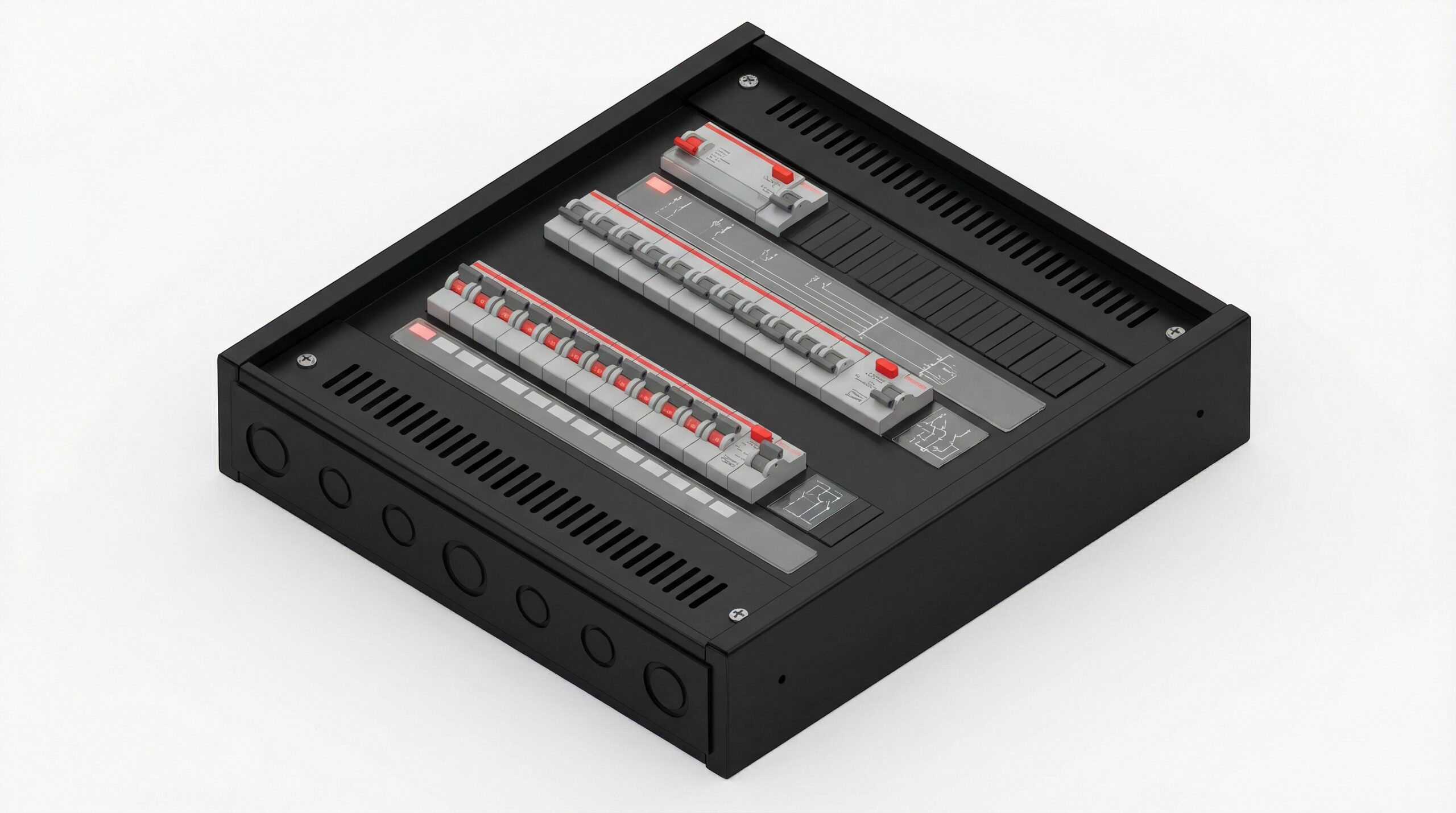
Your electrical switchboard (also called a distribution board, consumer unit, or breaker panel) is the central hub where electricity from the main supply enters your property and is distributed to individual circuits throughout your home. Think of it as the command centre that manages power flow to your lights, appliances, power points, and all electrical systems.
Modern switchboards contain several critical safety components:
- Circuit Breakers: Automatically cut power to individual circuits when they detect overcurrent or short circuits, preventing wire overheating and fire risks
- RCD Safety Switches (Residual Current Devices): Monitor the flow of electricity and instantly cut power (within 0.03 seconds) if they detect current leakage, protecting you from potentially fatal electric shocks
- Main Switch: Controls power to the entire switchboard, allowing you to isolate all circuits for maintenance or emergencies
- Surge Protection (optional but recommended): Protects sensitive electronics from voltage spikes caused by lightning or power grid fluctuations
Old vs. Modern Switchboards: Critical Differences
The difference between an old fuse box and a modern switchboard isn’t just technological—it’s a matter of life and death. Here’s what separates them:
| Feature | Old Fuse Box (Pre-2000s) | Modern Switchboard (2026) |
| Safety Protection | Ceramic fuses only | Circuit breakers + RCD safety switches |
| Response Time | 5-10 seconds (too slow) | 0.03 seconds (life-saving speed) |
| Reset Method | Manual fuse replacement | Simple switch reset |
| Capacity | 60-100 amps (insufficient) | 200+ amps (modern needs) |
| Fire Risk | High (fuses can be “overfused”) | Minimal (automatic protection) |
| Compliance Status | Non-compliant with 2026 standards | Meets AS/NZS 3000:2018 Amendment 2 |
NSW Legal Requirements: When Switchboard Upgrades Are Mandatory
The Type AC RCD Ban: What Changed in 2023
One of the most significant regulatory changes affecting NSW homeowners is the ban on Type AC Residual Current Devices (RCDs), which came into effect on May 1, 2023, under AS/NZS 3000:2018 Amendment 2.
Type AC RCDs are no longer considered safe because they cannot detect pulsating DC faults common in modern electrical devices like:
- LED lighting and drivers
- Solar panel inverters
- Electric vehicle (EV) chargers
- Variable speed drives
- Heat pump systems
- Modern appliances with electronic controls
When DC leakage occurs, Type AC RCDs can fail to trip, leaving circuits unprotected and creating serious electric shock and fire risks. The DC current can also saturate the RCD’s current transformer core, preventing it from detecting even normal AC faults.
⚠️ COMPLIANCE WARNING: Building Commission NSW has issued over $20,000 in fines since May 2023 for installing or failing to replace Type AC RCDs. Fines up to $1,000 apply under Section 34(a) of the Gas & Electricity (Consumer Safety) Act 2017.
Required RCD Types in 2026
Under current NSW regulations, all new installations and upgrades must use:
- Type A RCDs: Standard for most residential circuits. Can detect both AC faults and pulsating DC faults up to 6mA. Suitable for general power points, lighting, and most appliances.
- Type B RCDs: Required for circuits with higher DC leakage risks, including EV chargers, solar inverters, and commercial/industrial equipment. Provides protection against smooth DC currents.
Mandatory Upgrade Scenarios
You are legally required to upgrade your switchboard in NSW when:
- Installing or modifying any electrical circuits (modifications trigger compliance requirements)
- Adding new appliances that require dedicated circuits (EV chargers, air conditioning, induction cooktops)
- Installing solar panels or battery storage systems
- Renovating your home (any electrical work requires current compliance)
- Selling your property (many conveyancing lawyers now require electrical safety certificates)
- Receiving a defect notice from an electrician or building inspector
- Your property contains Type AC RCDs (banned since May 2023)
- Insurance claims for electrical faults (insurers may require upgrades before payout)
Clear Warning Signs Your Switchboard Needs Upgrading
Don’t wait for a mandatory situation to address switchboard safety. Here are the critical warning signs that indicate your switchboard requires immediate professional assessment:
1. Age of Your Switchboard (25+ Years)
If your home was built before 2000 and the switchboard has never been replaced, it almost certainly needs upgrading. Electrical standards have evolved significantly, and older switchboards lack modern safety features like RCD protection and adequate capacity for today’s electrical demands.
2. Ceramic Fuses Instead of Circuit Breakers
Ceramic fuses were standard until the 1990s but are now obsolete and dangerous. They offer minimal protection compared to modern circuit breakers and can be “overfused”—replaced with higher-rated fuses than the circuit can safely handle, creating severe fire risks. If you’re still rewiring fuses when power goes out, you need an immediate switchboard upgrade NSW.
3. Frequent Circuit Breaker Tripping
While occasional tripping is normal when circuits are overloaded, frequent tripping indicates your switchboard can’t handle your electrical demand. This is common in older homes where modern appliances (air conditioning, home offices, entertainment systems) exceed the original 60-100 amp capacity.
4. Flickering Lights or Dimming When Appliances Start
If lights flicker or dim when you turn on the air conditioner, kettle, or other appliances, it signals insufficient electrical capacity or loose connections in your switchboard—both serious safety concerns.
5. Buzzing, Crackling Sounds or Burning Smells
Any unusual sounds or burning smells from your switchboard indicate electrical arcing, loose connections, or component failure. This is an emergency—switch off power at the main switch and call a licensed electrician immediately.
6. No RCD Safety Switches Present
Open your switchboard and look for devices labelled “RCD,” “RCBO,” or with a “TEST” button. If you don’t see any, your home lacks critical electric shock protection. NSW regulations require RCDs on all power point and lighting circuits, making this a compliance issue as well as a safety hazard.
7. Scorch Marks, Rust, or Physical Damage
Visible signs of overheating (scorch marks), water damage (rust, corrosion), or physical damage to the switchboard enclosure indicate serious problems. Water ingress is particularly dangerous as it creates electrocution and fire risks.
8. Planning Major Electrical Additions
If you’re installing solar panels, EV chargers, heat pumps, pool equipment, or undergoing renovations, your existing switchboard likely won’t meet capacity or compliance requirements. Plan for a switchboard upgrade as part of these projects.
The Switchboard Upgrade Process: What to Expect
Understanding the upgrade process helps you prepare and ensures there are no surprises. Here’s what happens from initial assessment to final certification:
Step 1: Professional Electrical Assessment
A licensed electrician will conduct a comprehensive inspection of your existing electrical system, including:
• Switchboard condition and capacity assessment
• Identification of safety hazards and non-compliance issues
• Review of your electrical load requirements (current and planned)
• Recommendation for appropriate switchboard size and configuration
• Detailed quote including all components, labour, and certification
This assessment typically takes 30-60 minutes and costs $100-$200, often waived if you proceed with the upgrade.
Step 2: Selecting Your New Switchboard
Based on the assessment, your electrician will recommend a switchboard with appropriate capacity:
• 200 amp capacity: Standard for most modern homes
• 250-315 amp capacity: Larger homes or high electrical demand (multiple air conditioners, pool, EV charger, solar)
• Solar-ready configuration: Extra space and provisions for future solar/battery installation
• Smart panel technology: Optional advanced monitoring and control features
Your switchboard will include Type A or Type B RCDs as required, circuit breakers for all circuits, surge protection, and proper labelling.
Step 3: Council Permits and Approvals
Electrical switchboard upgrades require compliance with local council requirements. Your licensed electrician will:
• Submit necessary electrical work notifications to NSW Fair Trading
• Obtain required permits from your local council (not always required but varies by council)
• Coordinate with your electricity distributor if meter relocation is needed
• Arrange scheduled power disconnection with your energy retailer (typically 1-2 weeks notice)
Professional electricians handle all paperwork and regulatory requirements on your behalf.
Step 4: Installation Day
The upgrade installation typically takes 4-8 hours depending on complexity. Here’s what happens:
1. Your electricity distributor disconnects power supply at the meter (scheduled in advance)
2. Electrician removes old switchboard and assesses wiring condition
3. Installation of new switchboard, circuit breakers, and RCD safety switches
4. Connection and testing of all circuits
5. Proper labelling of all circuits for future reference
6. Cleanup and removal of old equipment
7. Power reconnection by your electricity distributor
8. Final testing and demonstration of safety features
You’ll be without power for the duration of installation, so plan accordingly (typically same day restoration).
Step 5: Testing, Certification and Compliance
After installation, your electrician conducts comprehensive testing:
• RCD trip time testing (must operate within 0.03 seconds)
• Earth continuity testing
• Insulation resistance testing
• Circuit polarity verification
• Load balance checks
Upon successful testing, you receive:
• Certificate of Compliance (NSW Fair Trading)
• Electrical Safety Certificate
• Detailed circuit directory
• Operation and safety instructions
• Warranty documentation (typically 1-5 years on parts and labour)
These documents are essential for insurance, property sales, and future electrical work.
How Much Does a Switchboard Upgrade Cost in Sydney? (2026 Pricing)
Switchboard upgrade costs vary based on several factors, but understanding the price ranges helps you budget appropriately and identify fair quotes.
Typical Cost Ranges
| Upgrade Type | Cost Range (Sydney 2026) | What’s Included |
| Basic Residential Upgrade | $1,500 – $2,500 | Standard 200A board, Type A RCDs, circuit breakers, labour, compliance certificate |
| Mid-Range Upgrade | $2,500 – $4,000 | Larger capacity (250A+), surge protection, more circuits, complex installations |
| Premium/Complex Upgrade | $4,000 – $7,000+ | High-capacity boards, smart monitoring, extensive rewiring, multiple properties, commercial |
| Additional Meter Box Work | $800 – $1,500 | Meter disconnection/reconnection, meter box replacement if required |
Cost Factors That Affect Final Price
Several variables influence the final cost of your switchboard upgrade NSW:
- Switchboard Location and Accessibility: Difficult access (inside cupboards, tight spaces, high walls) increases labour time and costs
- Number of Circuits: More circuits require more circuit breakers and RCDs, increasing material and labour costs
- Wiring Condition: If existing wiring is damaged, deteriorated, or non-compliant, partial or full rewiring may be necessary
- Asbestos Presence: Older meter boxes sometimes contain asbestos, requiring specialist removal ($500-$2,000 additional)
- Meter Relocation: If your meter needs moving to comply with current regulations, this adds significant cost and coordination
- Strata Approval Requirements: Unit/apartment upgrades may require strata committee approval and common area work approvals
- Urgent/Emergency Work: After-hours or emergency upgrades attract premium rates (typically 1.5-2x normal rates)
- Geographic Location: Sydney CBD and Eastern Suburbs typically charge 10-20% more than Western Sydney or Central Coast
Are Switchboard Upgrades Tax Deductible?
For residential properties: Switchboard upgrades are generally considered capital improvements rather than repairs, so they’re not immediately tax deductible for owner-occupied homes. However, they may add to your property’s cost base for capital gains tax purposes when you sell.
For investment properties: You can claim the switchboard upgrade as a capital works deduction over 40 years (2.5% per year), or potentially as an immediate repair deduction if replacing a damaged switchboard (seek advice from your accountant).
For businesses and commercial properties: Switchboard upgrades may qualify for immediate or accelerated depreciation deductions under various business asset schemes—consult your tax professional.
With the financial year ending June 30, autumn (March-May) is an excellent time to complete upgrades and maximise tax benefits in the current financial year.
Benefits Beyond Safety: Why Upgrading Makes Financial Sense
While safety is the primary reason for upgrading, modern switchboards deliver significant additional benefits that provide ongoing value:
1. Future-Proofing Your Home
A modern 200-250 amp switchboard provides capacity for future electrical additions without requiring another upgrade. This means you’re ready for:
• Solar panel installations (typically 5-10kW systems)
• Home battery storage systems
• Electric vehicle chargers (7-22kW)
• Additional air conditioning zones
• Heat pump hot water systems
• Home office equipment and technology
• Pool and spa equipment
• Home automation and smart systems
This flexibility saves you from costly secondary upgrades and provides confidence that your electrical system can adapt to your changing needs.
2. Insurance Benefits and Claims Protection
Many insurance companies now require electrical safety certificates before paying out claims related to electrical faults. An upgraded switchboard:
• Reduces your fire risk significantly (electrical faults cause 40% of Australian house fires)
• Provides documented compliance if you need to make a claim
• May reduce your insurance premiums (ask your insurer about safety discounts)
• Protects you from claim denial due to non-compliant electrical installations
• Gives you peace of mind that your family and investment are protected
Some insurers specifically exclude coverage for damage caused by non-compliant switchboards—don’t find this out when making a claim.
3. Property Value and Saleability
When selling your property:
• Buyers increasingly request electrical safety certificates during due diligence
• Modern switchboards are an attractive selling point, especially to safety-conscious families
• You avoid last-minute upgrade demands from buyers’ building inspectors
• Properties with solar-ready switchboards appeal to environmentally conscious buyers
• Compliance certificates streamline the conveyancing process
Real estate agents report that electrical upgrades rank among the top five features that help properties sell faster and for better prices.
4. Improved Electrical Performance
Beyond safety, you’ll notice practical improvements:
• No more nuisance tripping from overloaded circuits
• Stable power supply without flickering lights or voltage drops
• Better protection for sensitive electronics and appliances
• Quieter operation (no buzzing or humming from overloaded components)
• Clear circuit labelling makes troubleshooting easier
• Faster, easier circuit isolation for maintenance
These quality-of-life improvements are immediately noticeable.
5. Energy Efficiency Enablement
Modern switchboards enable significant energy cost savings by allowing:
• Solar panel installation (typical $1,000-$2,500 annual electricity bill reduction)
• Smart home energy monitoring systems
• Load management to reduce peak demand charges
• Integration with battery storage for time-of-use optimization
• EV charging during off-peak rates
The NSW Government specifically identifies switchboard upgrades as essential enablers for household energy efficiency investments.
Choosing the Right Electrician: What to Look For
Your switchboard upgrade is a critical safety investment—choosing the right electrician ensures it’s done properly, safely, and in compliance with all regulations.
Essential Qualifications and Credentials
Verify your electrician has:
- • NSW electrical contractor license (check at Fair Trading NSW website)
- • Appropriate public liability insurance ($10-20 million coverage minimum)
- • Workers compensation insurance (mandatory if they have employees)
- • Current electrical work cover (renewable insurance showing active registration)
- • Membership in industry associations (Master Electricians Australia, NECA)
- • Specific experience with switchboard upgrades (ask for recent examples)
- • Familiarity with AS/NZS 3000:2018 Amendment 2 (the current wiring rules)
Red Flags to Watch For
Avoid electricians who:
- ❌ Cannot provide a license number or refuse to show credentials
- ❌ Offer quotes significantly below market rates (likely cutting corners)
- ❌ Suggest “workarounds” to avoid permits or compliance requirements
- ❌ Pressure you to make immediate decisions without proper assessment
- ❌ Cannot explain what Type A/Type B RCDs are or why they matter
- ❌ Offer to install Type AC RCDs (these are banned and they should know this)
- ❌ Won’t provide written quotes or compliance certificates
- ❌ Request large upfront payments (typically 10-30% deposit is standard)
Questions to Ask Before Hiring
When getting quotes, ask:
- “What’s your electrical contractor license number?” (verify at Fair Trading)
- “Can you provide references from recent switchboard upgrades?”
- “What capacity switchboard do you recommend and why?”
- “Will you handle all permits and compliance notifications?”
- “What type of RCDs will be installed?” (must be Type A or Type B)
- “What’s included in your quote?” (get itemised breakdown)
- “How long will installation take and when will power be restored?”
- “What warranties do you provide on parts and labour?”
- “Will I receive all compliance certificates?”
- “What happens if you discover additional problems during installation?”
Why Choose AIM Local for Your Switchboard Upgrade
AIM Local combines deep technical expertise with genuine customer care across Sydney, Central Coast, and Newcastle:
✓ Fully licensed and insured electrical contractors with 15+ years experience
✓ Specialists in residential, commercial, and strata switchboard upgrades
✓ 100% compliance with AS/NZS 3000:2018 Amendment 2 standards
✓ Transparent, fixed-price quotes with no hidden fees
✓ 24/7 emergency electrical services for urgent safety concerns
✓ Comprehensive warranties on all parts and labour
✓ Fast turnaround with minimal disruption to your daily routine
✓ Complete certification and documentation for compliance and peace of mind
✓ Expertise across all trades (electrical, plumbing, roofing) for multi-service efficiency
Our team understands that electrical safety is not negotiable. We take the time to explain your options, answer your questions, and ensure you’re completely confident in your upgrade decision.
Frequently Asked Questions About Switchboard Upgrades
Q: Is a switchboard upgrade legally required in NSW?
A: While there’s no blanket requirement to upgrade, switchboard upgrades become legally mandatory when:
• You perform any electrical modifications or additions to your property
• Your current switchboard contains banned Type AC RCDs (prohibited since May 2023)
• You’re installing systems requiring dedicated circuits (solar, EV chargers, air conditioning)
• A licensed electrician issues a defect notice identifying safety hazards
• You’re renovating and any electrical work is involved
Additionally, if your property was built before 1991 (power points) or 2000 (lighting circuits) and still has the original switchboard, it almost certainly doesn’t meet current safety standards and should be upgraded proactively.
Q: How long does a switchboard upgrade take?
A: A typical residential switchboard upgrade takes 4-8 hours from power disconnection to reconnection, usually completed in a single day. The process includes:
• 1-2 hours: Removal of old switchboard and preparation
• 3-4 hours: Installation of new switchboard, circuit breakers, and RCDs
• 1-2 hours: Connection, testing, labelling, and final inspection
You’ll be without power for this duration, so plan accordingly. More complex installations (extensive rewiring, meter relocation, difficult access) may require a second day.
Lead time from quote acceptance to installation is typically 1-3 weeks, accounting for equipment ordering, permit processing, and scheduling with your electricity distributor.
Q: Will my home insurance cover the switchboard upgrade cost?
A: Generally, no. Home insurance typically covers sudden damage from events (storms, fire, electrical faults) but doesn’t cover routine maintenance, upgrades, or bringing non-compliant installations up to current standards.
However, if an electrical fault damages your switchboard (lightning strike, power surge), insurance may cover replacement with a modern compliant switchboard—effectively giving you an upgraded system.
Critical note: Many insurers will deny claims for electrical fires if they determine your switchboard was non-compliant or unsafe. Having an upgraded, compliant switchboard actually protects your insurance coverage.
For investment properties, the upgrade cost may be tax deductible—consult your accountant about capital works deductions.
Q: Can I upgrade my switchboard myself to save money?
A: Absolutely not. In NSW, all electrical work must be performed by licensed electricians—this is law, not a recommendation.
DIY electrical work is:
• Illegal under NSW regulations (significant fines apply)
• Extremely dangerous (risk of electrocution and death)
• Uninsurable (insurers won’t cover damage from unlicensed electrical work)
• Uncertifiable (you won’t receive required compliance certificates)
• Potentially fatal (electrical work causes deaths every year in Australia)
Even qualified electricians from other states or countries cannot legally work on NSW electrical installations without appropriate NSW licensing.
The modest cost savings aren’t worth the catastrophic risks to your safety, legal standing, and insurance coverage.
Q: What’s the difference between Type A and Type B RCDs?
A: Both are compliant safety devices that replaced the banned Type AC RCDs, but they offer different levels of protection:
Type A RCDs:
• Detect both AC faults and pulsating DC faults up to 6mA
• Suitable for most residential circuits (power points, lighting, general appliances)
• Standard recommendation for typical home electrical systems
• More affordable than Type B
Type B RCDs:
• Detect AC faults, pulsating DC faults, and smooth DC faults
• Required for circuits with higher DC leakage risks
• Mandatory for EV chargers, solar inverters, and some commercial equipment
• More expensive but necessary for specific high-DC applications
Your licensed electrician will specify which type is appropriate for each circuit based on the connected equipment and compliance requirements. Most residential upgrades use predominantly Type A RCDs with Type B RCDs only where specifically required.
Q: Do I need council approval for a switchboard upgrade?
A: Requirements vary by local council. Some councils require development approval or electrical safety permits, while others only require notification.
Your licensed electrician will:
• Know your specific council’s requirements
• Submit all necessary notifications to NSW Fair Trading (mandatory)
• Obtain permits if required by your council
• Coordinate with your electricity distributor for meter disconnection/reconnection
• Handle all regulatory paperwork on your behalf
Never attempt to bypass permit requirements—non-compliant electrical work creates safety hazards, insurance problems, and legal liability.
For strata properties (units/townhouses), you’ll also need strata committee approval before proceeding, which can add 2-4 weeks to the timeline.
Q: Should I upgrade before installing solar panels?
A: In most cases, yes—especially if your switchboard is over 20 years old or lacks RCD protection.
Solar panel installations require:
• Adequate switchboard capacity (typically adding 20-30 amps)
• Type B RCDs for solar inverter circuits (DC fault protection)
• Space for solar circuit breakers and additional safety devices
• Proper earthing and surge protection
If your existing switchboard can’t accommodate these requirements, you’ll need to upgrade before or during solar installation. Most solar installers will assess your switchboard during the quote process and recommend upgrades if necessary.
Combined upgrades (switchboard + solar) often save money versus sequential installations, and ensure your electrical system is future-proofed for battery storage additions later.
NSW Government’s energy.nsw.gov.au specifically identifies switchboard upgrades as essential prerequisites for solar panel installations.
Q: What should I do if my switchboard is making strange noises?
A: Strange noises (buzzing, humming, crackling, sizzling) from your switchboard indicate serious problems requiring immediate action:
Immediate steps:
1. Do not touch the switchboard
2. Turn off the main switch if safe to do so
3. Evacuate the area if you smell burning or see smoke
4. Call a licensed electrician immediately for emergency assessment
5. Do not restore power until professionally assessed
Common causes of switchboard noises:
• Loose connections (arcing and overheating)
• Overloaded circuits
• Failing circuit breakers or RCDs
• Corrosion or moisture damage
• Deteriorated wiring connections
These conditions create fire and electrocution risks. Don’t delay—electrical problems worsen rapidly and can result in catastrophic failures.
AIM Local provides 24/7 emergency electrical services across Sydney, Central Coast, and Newcastle for urgent switchboard problems.
Take Action Now: Protect Your Home and Family
Your electrical switchboard is your home’s first line of defense against electrical fires and electrocution—two of the most preventable causes of property damage and injury in Australian homes. With Building Commission NSW actively enforcing compliance and issuing fines for non-compliant installations, and the ban on Type AC RCDs now firmly in place, there’s never been a more important time to ensure your switchboard meets 2026 safety standards.
Whether you’re responding to warning signs, planning electrical additions, preparing for winter storms, or simply prioritizing your family’s safety, a professional electrical switchboard upgrade NSW provides peace of mind that your home’s electrical system is safe, compliant, and ready for the future.
Don’t wait for a mandatory situation or safety incident to force your hand. As autumn progresses and we approach winter storm season, now is the ideal time to schedule your assessment and upgrade before weather creates access challenges and emergency demand increases.
Ready to upgrade your switchboard or need expert advice? AIM Local’s licensed electrical experts are ready to help with comprehensive assessments, transparent quotes, and professional installations across Sydney, Central Coast, and Newcastle.
📞 Call AIM Local today for a no-obligation switchboard assessment
🔧 Available 24/7 for emergency electrical services
✅ Fully licensed, insured, and compliant with AS/NZS 3000:2018 Amendment 2
💯 Fixed-price quotes with complete compliance certification included
Your family’s safety is not negotiable. Contact AIM Local today and ensure your home’s electrical system meets 2026 safety standards.