
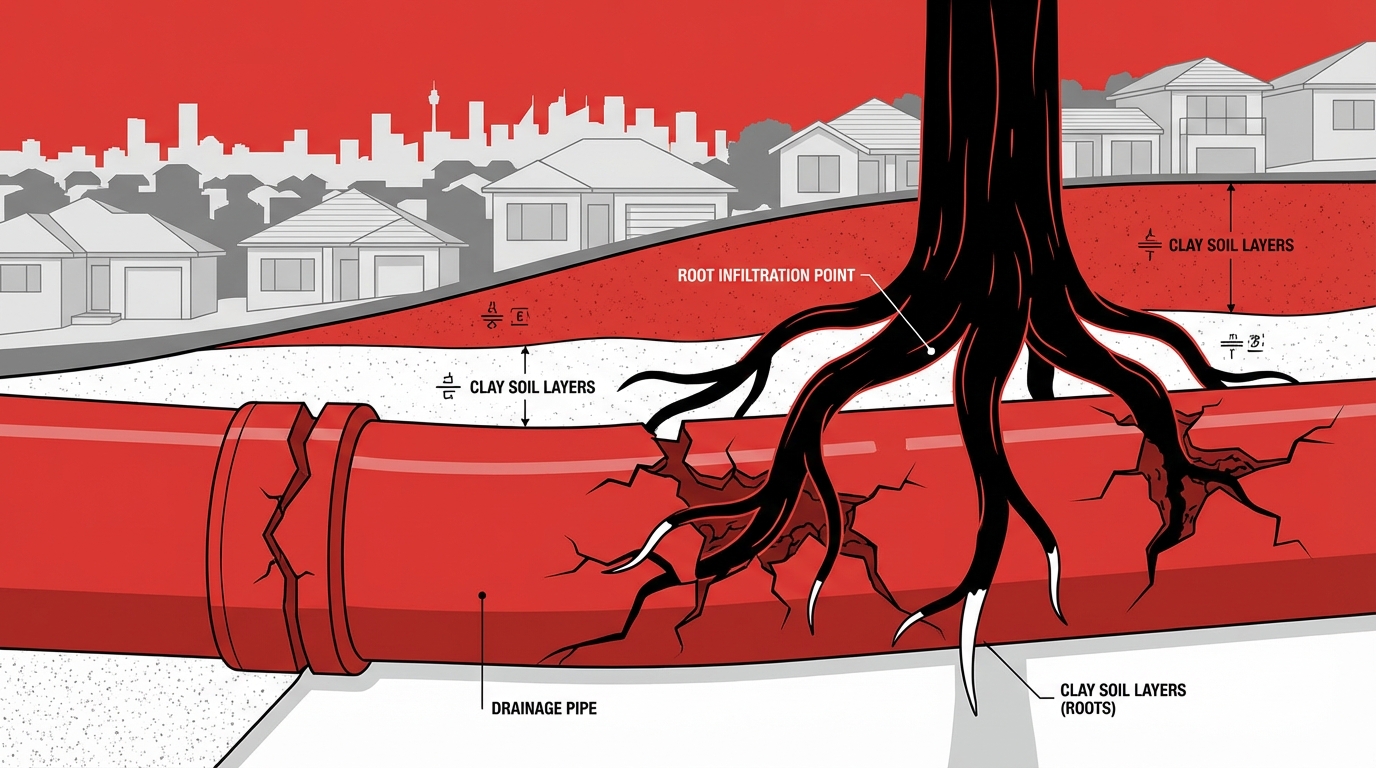
Blocked drains are not distributed evenly across Sydney. Some suburbs battle constant drainage issues while others rarely call emergency plumbers. If you live in Newtown, Balmain, Leichhardt, or Parramatta, you already know this truth-your suburb probably tops the blocked drain complaint list every single year.
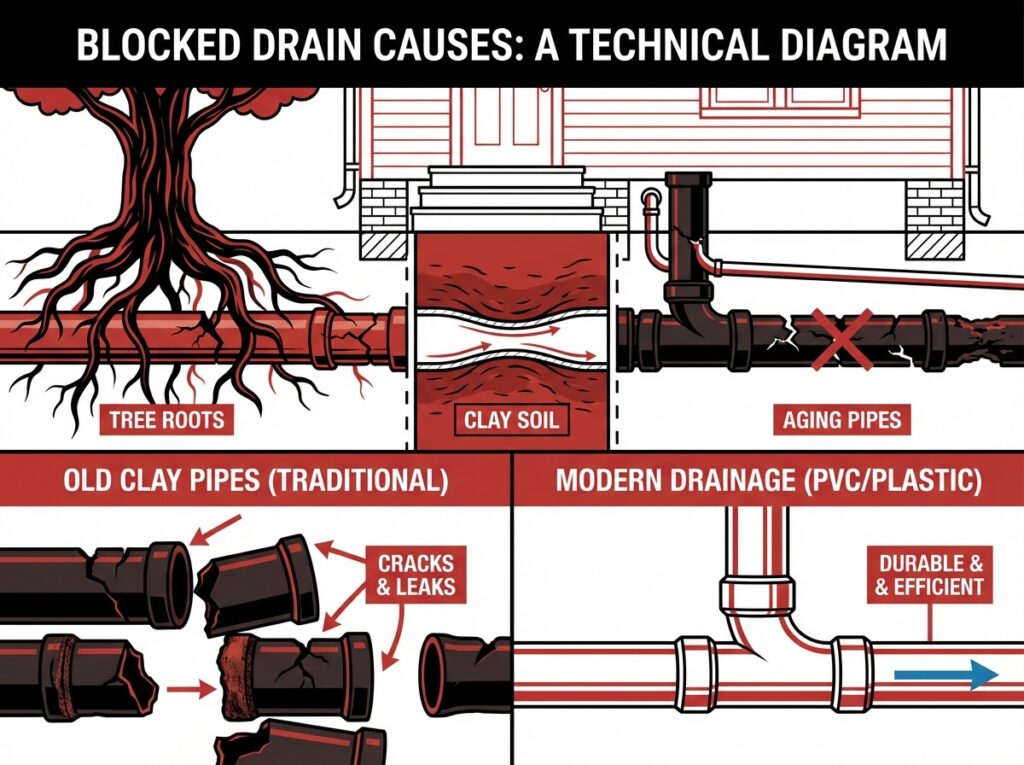
Three factors determine why Sydney suburbs worst blocked drain problems happen: reactive clay soil that shifts and cracks pipes, aging drainage infrastructure installed decades before modern standards, and dense tree canopy where roots aggressively seek moisture inside underground pipes. When these three elements combine-as they do across Sydney’s inner west and western suburbs-you get the perfect storm for recurring, expensive blockages.
At AIM LOCAL, we’ve cleared thousands of blocked drains across Sydney, Central Coast, and Newcastle. We’ve mapped exactly where problems concentrate and why certain suburbs need emergency drain services three times more frequently than others. This data-backed analysis reveals which suburbs face the worst blocked drain problems, the specific infrastructure issues causing repeated failures, and what property owners can do beyond temporary fixes.
Understanding your suburb’s specific drainage challenges empowers you to move from reactive emergency calls to proactive solutions that actually work. Stop paying for temporary drain clearing that fails within months. Start addressing the underlying causes making your suburb a blocked drain hotspot.
Why These Suburbs Are Most at Risk
Sydney’s blocked drain crisis concentrates in specific suburbs for three interconnected reasons that compound each other’s effects. Understanding this pattern explains why the same suburbs appear repeatedly on emergency plumber call logs-and why superficial drain clearing never provides lasting solutions.
Reactive Clay Soil Creates Underground Chaos
Sydney sits largely on reactive clay soil-earth that dramatically expands when wet and shrinks during drought. This constant expansion-contraction cycle shifts ground beneath drainage pipes, creating stress on joints, connections, and pipe walls that were not designed for continuous movement.
Inner west suburbs including Newtown, Marrickville, Ashfield, and Leichhardt sit directly on particularly reactive clay deposits. The Sydney Basin clay formations here experience significant seasonal movement-sometimes shifting 40-60mm between wet winter and dry summer conditions. Drainage pipes installed in the 1920s through 1960s could not accommodate this movement, leading to:
- Separated pipe joints allowing root infiltration
- Cracked pipe walls from ground pressure
- Misaligned connections creating water flow restrictions
- Collapsed sections where clay pressure exceeds pipe strength
- Bellied pipes where settling creates low points trapping debris
Western Sydney suburbs like Parramatta also battle expansive clay, though different geological formation creates distinct drainage challenges. The clay here retains water longer, meaning pipes stay surrounded by saturated soil for extended periods-accelerating corrosion in older metal pipes and encouraging aggressive root growth seeking moisture.
Heritage-Era Drainage Infrastructure Breaking Down
The suburbs experiencing worst blocked drain problems share one common characteristic: most properties installed drainage systems 50-100 years ago using materials and standards that seem primitive by modern benchmarks. Victorian-era earthenware pipes, 1950s concrete sections, and early PVC installations all approach or exceed their design lifespan.
Newtown’s drainage network dates primarily from the 1920s-1940s, featuring brittle clay pipes with mortared joints. These joints become entry points for tree roots once ground movement creates the slightest gap. Balmain’s system includes even older sections from the 1890s-pipes so deteriorated that CCTV drain inspections regularly reveal sections held together more by surrounding soil than pipe integrity.
Leichhardt and Marrickville drainage systems expanded rapidly during post-war housing booms using concrete pipes that seemed robust at installation but crack predictably as they age. Parramatta blends very old city centre infrastructure with 1960s-70s suburban sections, creating network where blockages cascade through pipes of wildly different ages and materials.
Modern PVC and HDPE pipes installed today will outlast these heritage materials by decades-but upgrading entire suburb drainage networks remains financially prohibitive, meaning most properties continue battling problems rooted in century-old infrastructure decisions.
Established Tree Canopy Means Aggressive Root Systems
Sydney’s beautiful tree-lined streets create the third factor making certain suburbs blocked drain hotspots. Established gardens featuring mature eucalyptus, figs, and plane trees develop extensive root systems seeking moisture and nutrients. When heritage-era pipes with cracked joints run beneath these trees, roots detect water vapor escaping and grow directly toward-then into-drainage lines.
Inner west suburbs planted street trees decades ago that now reach 15-30 meters height with root zones extending well beyond their canopy spread. A single mature fig tree in Balmain can send roots 20+ meters searching for water, easily reaching property drainage lines. These roots enter through tiny cracks but expand rapidly once inside pipes, creating dense masses that trap debris and completely block flow.
Parramatta’s mix of native and introduced species creates varied root challenges. Eucalyptus trees drop branches and bark that blocks stormwater grates while roots infiltrate underground. Council street tree programs planted decades ago without considering underground infrastructure now cause thousands of drainage problems requiring professional intervention.
Ashfield and Strathfield feature particularly dense residential tree coverage-beautiful for amenity, devastating for aging drainage systems. Properties here often battle multiple tree root sources simultaneously: street trees, neighbour’s garden plantings, and their own landscape choices all sending roots toward the same underground pipe network.
1. Newtown: Where Heritage Charm Meets Drainage Crisis
Newtown tops blocked drain complaint lists year after year. This vibrant inner west suburb blends Victorian-era terrace houses with aging walk-up apartments, almost all built before modern drainage standards existed. The combination of reactive clay soil, century-old earthenware pipes, and mature street tree canopy creates perfect conditions for recurring blockages that frustrate residents and landlords alike.
Most Newtown properties connect to drainage infrastructure installed 1920s-1950s using brittle clay pipes with mortared joints. Ground movement from reactive soil cracks these joints, creating entry points for aggressive fig and plane tree roots lining King Street and surrounding residential streets. Once roots enter, they expand rapidly, forming dense masses that trap cooking fats, wet wipes, and debris-creating complete blockages requiring emergency professional clearing.
Why Newtown Drains Block Constantly
- Clay pipes from 1920s-40s now exceed 80-100 year lifespan
- Reactive clay soil creates 40-50mm seasonal ground movement
- Established fig trees send roots 15-20 meters seeking moisture
- High-density housing increases waste volume beyond original design
- Narrow terrace house blocks make access for repairs difficult
- Heritage listing restrictions complicate infrastructure upgrades
Emergency blocked drain callouts in Newtown peak during seasonal transitions. Autumn leaves block stormwater grates just as winter rain increases flow, while summer drought causes clay soil shrinkage that shifts pipes. Property owners here need proactive CCTV drain inspection identifying root intrusion and pipe damage before complete failures occur-reactive clearing provides only temporary relief.
AIM LOCAL provides comprehensive blocked drain solutions for Newtown properties, from high-pressure hydro jetting clearing root masses to trenchless pipe relining creating permanent root barriers. Our 24/7 emergency response serves Newtown residents battling sudden sewage backups and overflowing toilets.
2. Balmain: Peninsula Location Compounds Infrastructure Problems
Balmain’s peninsula geography creates unique drainage challenges that place this affluent suburb among Sydney’s worst for blocked drains. The mix of 1890s sandstone drainage culverts, early 1900s earthenware pipes, and mid-century concrete sections means properties here battle problems spanning three different pipe generations simultaneously.
Waterfront proximity means high water tables that saturate clay soil year-round, keeping ground in perpetually expanded state that stresses aging pipe joints. Mature Moreton Bay figs-some over 100 years old-dominate Balmain’s streetscape, their massive root systems infiltrating every crack in heritage drainage networks. These roots do not just block pipes; they physically crush deteriorated sections, requiring complete replacement rather than simple clearing.
Balmain’s Specific Drainage Challenges
- Some drainage sections date from 1890s using primitive earthenware
- Moreton Bay fig roots grow thick as arms inside pipes
- Peninsula topology creates complex gravity-flow requirements
- Heritage restrictions limit modern repair techniques
- High property values mean expensive emergency repairs
- Narrow streets complicate access for excavation equipment
Balmain residents frequently discover blocked drains only after sewage backs up into showers and toilets-the first clear symptom that roots have completely compromised main sewer lines. By this point, simple augering will not solve problems; comprehensive pipe inspection, root removal, and often pipe relining become necessary to restore function and prevent immediate recurrence.
Professional CCTV drain inspection reveals problems before crises occur. AIM LOCAL’s drain camera services identify root intrusion, pipe cracks, and bellied sections requiring attention, allowing scheduled repairs rather than panicked emergency calls when guests arrive and toilets overflow.
3. Leichhardt: Post-War Plumbing Reaches Breaking Point
Leichhardt’s drainage crisis stems from 1950s-60s infrastructure approaching end-of-life all at once. Post-war housing boom saw rapid development using concrete drainage pipes that seemed durable at installation but crack predictably after 50-60 years. Now, entire streets experience simultaneous drainage failures as pipes reach critical age together.
The suburb sits on reactive clay that shifts seasonally, creating stress on rigid concrete pipes unable to flex with ground movement. Cracks form at joints first, then propagate along pipe lengths until sections separate completely. Norton Street’s mature plane trees compound problems, with roots entering every crack and expanding until pipes collapse under combined root pressure and ground movement.
Why Leichhardt Faces Epidemic Blockages Now
- Concrete pipes from 1950s-60s all failing simultaneously
- Clay soil movement creates cascading crack propagation
- Plane tree roots particularly aggressive in seeking moisture
- Italian Club area has oldest, most deteriorated infrastructure
- Increased population stresses undersized original systems
- Commercial kitchen grease from Norton Street restaurants
Leichhardt property owners face choice between repeated emergency clearing-temporary fix lasting months-or comprehensive pipe relining that addresses root intrusion and structural deterioration permanently. Trenchless relining installs new pipe inside failed concrete sections without excavating gardens and driveways, restoring full function at fraction of traditional dig-and-replace costs.
AIM LOCAL’s professional hydro jetting services clear even severe root blockages in Leichhardt properties, using 4,000 PSI water pressure to completely remove organic masses and scale buildup. Following clearing, pipe relining creates seamless, root-proof barrier preventing future intrusions-the only lasting solution for aging Leichhardt drainage systems.
4. Parramatta: Old City Centre, New Suburban Sprawl
Parramatta battles dual drainage crises: deteriorating colonial-era infrastructure in the historic city centre and inadequate 1960s-70s systems in suburban areas never designed for current population density. This creates suburb-wide blocked drain problems affecting everything from heritage cottages to modern apartment complexes.
Church Street and surrounding historic areas feature Sydney’s oldest continuously-used drainage systems-some sections date from 1850s. These sandstone and brick culverts leak, collapse, and block constantly. Meanwhile, suburban Parramatta developments from the 1960s used minimum-code PVC systems now overwhelmed by population growth, with tree roots from established gardens infiltrating every joint.
Parramatta’s Complex Drainage Problems
- Historic centre has Sydney’s oldest active drainage infrastructure
- Western clay soil stays saturated, accelerating pipe corrosion
- Suburban 1960s-70s systems undersized for current population
- Eucalyptus and native tree roots particularly aggressive
- Mix of residential and commercial waste complicates clearing
- Rapid development outpaces infrastructure upgrade timelines
Emergency blocked drain services in Parramatta address everything from tourist-area restaurant grease blockages to suburban family home tree root problems. Each requires different approach: commercial hydro jetting for grease removal, mechanical augering for root cutting, CCTV inspection for infrastructure assessment, and pipe relining for permanent repair.
Property owners in Parramatta’s older suburbs should schedule regular CCTV drain camera inspection-annual checks identify developing root intrusions before complete blockages occur. AIM LOCAL’s drain camera services provide detailed video documentation showing exact problem locations and recommended solutions, allowing informed repair decisions rather than expensive guesswork.
5. Marrickville: Inner West Drainage Disaster Zone
Marrickville rivals Newtown for blocked drain complaints, suffering nearly identical problems from reactive clay soil, heritage-era pipes, and mature tree canopy. The suburb’s extensive Victorian and Federation-era housing means most properties connect to drainage systems installed 1900-1930 using brittle earthenware pipes with mortared joints-prime targets for root intrusion and ground-movement damage.
Flood-prone areas near the Cooks River experience particularly severe drainage problems. High water tables keep clay soil saturated year-round, creating constant ground pressure on aging pipes. When autumn storms hit, blocked stormwater drains cannot handle sudden volume, causing property flooding that reveals deteriorated infrastructure requiring urgent replacement.
Marrickville’s Worst Drainage Issues
- Clay pipes from 1900-1930 now critically deteriorated
- River proximity creates high water table pressuring pipes
- Fig tree roots from heritage gardens infiltrate networks
- Flood-prone low-lying areas overwhelm old stormwater systems
- Mixed industrial-residential waste complicates clearance
- Gentrification has not reached underground infrastructure
Marrickville property owners frequently battle recurring blockages despite regular drain clearing. This pattern indicates root intrusion or structural pipe damage requiring comprehensive solution beyond surface-level clearing. Professional CCTV inspection identifies whether roots, collapsed sections, or bellied pipes cause problems-essential information for choosing between temporary augering and permanent pipe relining.
AIM LOCAL provides 24/7 emergency blocked drain services throughout Marrickville, responding rapidly to sewage backups, overflowing toilets, and stormwater flooding. Our licensed plumbers bring professional hydro jetting equipment, drain cameras, and pipe relining capabilities-complete solutions addressing both immediate blockages and underlying causes.
6. Ashfield: Dense Tree Coverage Devastates Old Pipes
Ashfield stands out for particularly dense residential tree coverage-beautiful mature gardens surrounding almost every property. Unfortunately, these established trees send aggressive root systems directly toward aging drainage pipes seeking moisture during Sydney’s frequent dry spells. When roots meet 1940s-50s earthenware and concrete pipes showing typical age-related cracks, infiltration becomes inevitable.
The suburb’s hilly typography creates additional drainage challenges. Steep grades mean pipes rely on gravity flow, but when roots partially block lines or ground movement creates bellied sections, debris accumulates in low points until complete blockages form. Properties downslope from established trees face particular risk-roots follow water flow right to main sewer connections.
Ashfield’s Tree Root Problem
- Among Sydney’s highest residential tree density per property
- Mature eucalyptus, fig, and fruit trees everywhere
- Roots seek moisture in aging 1940s-50s pipe networks
- Hilly topology creates complex drainage flow patterns
- Heritage gardens mean old trees cannot simply be removed
- Multiple root sources attack same pipes simultaneously
Property owners here need proactive root management strategies rather than reactive emergency clearing. Annual root treatment using products like Vaporooter kills roots inside pipes without harming trees, preventing dense masses from forming. Combined with regular CCTV inspection monitoring root regrowth, this approach maintains clear drains without constant emergency plumber calls.
When roots severely compromise pipes, trenchless relining provides permanent solution without removing treasured garden trees. AIM LOCAL’s pipe relining services install seamless barriers inside existing pipes, creating root-proof surface that prevents future intrusions while preserving property aesthetics and avoiding excavation costs.
7. Strathfield: Prestige Homes, Problem Pipes
Strathfield’s reputation for prestige housing and manicured gardens masks serious drainage infrastructure problems beneath beautiful surfaces. Large properties with extensive landscaping mean mature trees everywhere-and roots seeking moisture in aging pipes everywhere beneath them. Federation and inter-war homes feature original drainage systems now 80-120 years old, well beyond their design lifespan and vulnerable to root damage and ground movement.
The suburb’s reactive clay soil creates seasonal ground movement that stresses rigid old pipes. Dry summers cause clay shrinkage dropping pipe supports, creating bellied sections where debris accumulates. Winter rain expands clay again, pushing on already-stressed joints until they separate. Combined with aggressive root systems from garden plantings, this cycle guarantees drainage problems requiring professional intervention.
Strathfield Drainage Failures
- Federation homes have original 1900s-1920s drainage still in use
- Large properties mean extensive private drainage networks
- Mature garden trees including figs, planes, and eucalyptus
- Reactive clay causes 50-60mm seasonal ground movement
- High property values make infrastructure failures expensive
- Heritage considerations complicate replacement options
Strathfield property owners often delay addressing drainage problems due to anticipated excavation costs and garden damage. Modern trenchless relining eliminates these concerns, installing new pipes inside failed sections through existing access points-no digging, no landscape destruction, no weeks-long disruption. The new relined pipe lasts 50+ years with manufacturer warranties, providing genuine long-term solution.
AIM LOCAL serves Strathfield’s premium properties with professional drainage solutions matching the area’s standards. Our licensed plumbers provide discreet, efficient service using latest technology-CCTV inspection, hydro jetting, and pipe relining-that solves problems permanently without compromising property aesthetics or value.
8. Glebe: Harbourside Beauty, Underground Chaos
Glebe combines every factor creating blocked drain nightmares: Victorian-era terrace housing with century-old pipes, harbourside clay soil staying perpetually saturated, mature street tree plantings, and high-density occupation stressing undersized original systems. The result is one of Sydney’s highest rates of emergency drainage callouts relative to population.
Glebe Point Road and surrounding heritage streets feature continuous terraces built 1880s-1920s, all connecting to shared drainage systems using brittle earthenware pipes with mortared joints. When one property’s drainage fails, blockages often affect entire terrace rows. Tree roots from street plantings enter through any crack, forming dense masses that require professional hydro jetting to remove completely.
Why Glebe Drains Fail Constantly
- Continuous terraces share connected 1880s-1920s drainage
- Harbourside location means permanently saturated clay soil
- High student population creates heavy drain usage patterns
- Street tree roots infiltrate shared terrace drainage systems
- Heritage listing prevents straightforward infrastructure upgrades
- Narrow lane access complicates repair equipment access
Glebe residents need understand drainage problems often originate in shared terrace infrastructure rather than individual properties. CCTV drain inspection identifies exact blockage locations and whether issues sit within private property or shared systems-essential information for determining repair responsibility and costs. Owners corporations should commission regular inspections preventing crisis situations affecting multiple households.
Emergency blocked drain situations in Glebe terraces require rapid professional response before sewage backs up through multiple properties. AIM LOCAL’s 24/7 emergency service responds quickly with equipment sized for narrow terrace access-compact but powerful hydro jetting units and flexible drain cameras that navigate complex shared pipe networks.
What Property Owners Should Do About Recurring Blockages
Understanding your suburb’s specific drainage challenges is first step toward solving recurring blocked drain problems. Reactive emergency clearing provides temporary relief but never addresses underlying infrastructure failures causing problems to return within months. Property owners in high-risk suburbs need proactive strategies that identify and fix root causes-literally and figuratively.
Schedule Professional CCTV Drain Inspection
Stop guessing about drainage problems and get definitive answers. Professional CCTV drain inspection reveals exactly what is happening inside your pipes: root intrusion extent, crack locations, pipe material and condition, bellied sections, and structural failures. This visual evidence determines whether simple clearing will work or comprehensive pipe relining becomes necessary for lasting solution.
Annual drain camera inspection in high-risk suburbs identifies developing problems before complete blockages occur. Early detection of root intrusion allows treatment preventing dense masses from forming. Spotting crack progression lets you schedule relining proactively rather than emergency replacement when pipes collapse. The $300-400 inspection cost prevents $3,000+ emergency repairs and sewage damage.
Consider Trenchless Pipe Relining for Permanent Solution
When CCTV inspection reveals extensive root damage, multiple cracks, or structural deterioration, pipe relining provides permanent solution without excavating your garden. This trenchless technology installs new pipe inside failed sections, creating seamless, root-proof barrier that lasts 50+ years with manufacturer warranties.
Relining costs more upfront than simple clearing-typically $300-500 per meter depending on pipe diameter-but eliminates recurring blockages and repeated emergency callout costs. Property owners paying $400-600 annually for reactive drain clearing reach relining break-even within 2-3 years, then enjoy decades of trouble-free drainage. For properties in Newtown, Balmain, Leichhardt, and other high-risk suburbs, relining often represents the only genuine long-term solution.
Implement Strategic Tree Management
You do not have to remove beloved garden trees to solve drainage problems. Strategic root management using products like Vaporooter kills roots inside pipes without harming trees themselves. Applied annually through cleanout access points, these treatments prevent root masses from forming while preserving property aesthetics.
For new landscaping, choose tree species with less aggressive root systems and plant them away from drainage lines. Consult with arborists about root barrier installation protecting vulnerable pipes. These proactive measures prevent problems rather than managing crisis after crisis.
Know When Emergency Service is Truly Necessary
Some drainage situations demand immediate professional response: sewage backing up through toilets or showers, overflowing gully traps, multiple fixtures draining slowly simultaneously, or foul sewage odors throughout property. These symptoms indicate main sewer line blockages requiring professional equipment to clear safely and completely.
AIM LOCAL provides 24/7 emergency blocked drain services across Sydney, Central Coast, and Newcastle. Our licensed plumbers respond rapidly with professional hydro jetting equipment, drain cameras, and expertise to clear even severe blockages and identify underlying causes. Do not let blocked drains escalate to sewage damage and health hazards-call for emergency help when warning signs appear.
Stop Accepting Recurring Blockages as Normal
Living in Newtown, Balmain, Leichhardt, Parramatta, or other high-risk Sydney suburbs does not mean you must accept blocked drains as inevitable part of property ownership. Yes, your suburb’s combination of reactive clay soil, aging infrastructure, and established tree canopy creates perfect conditions for drainage problems-but modern solutions address these challenges permanently rather than temporarily.
Understanding why your suburb experiences persistent drain blockages can help you make better decisions when dealing with plumbing problems. Instead of relying on repeated drain clearing that only provides a temporary fix, ask your plumbing contractor to carry out a CCTV drain inspection to identify the exact cause of the blockage. Where damaged or root-affected pipes are responsible, trenchless pipe relining may provide a longer-lasting solution by repairing structural damage and creating a strong barrier against future root intrusion. Proactive tree root management can also help reduce the risk of unexpected drainage emergencies.
Many of the suburbs discussed here are likely to continue experiencing blocked drain problems due to ageing infrastructure, established trees and limitations on large-scale public drainage upgrades. For property owners, maintaining private drainage systems is therefore particularly important. Investing in proper inspections, preventative maintenance and long-term repairs can help reduce recurring blockages, minimise emergency call-outs and avoid the ongoing cost of repeatedly treating the same drainage problem.
AIM LOCAL specializes in comprehensive blocked drain solutions for Sydney’s most problematic suburbs. Our licensed plumbers understand exactly why Newtown pipes fail differently than Parramatta systems, and we bring appropriate solutions for each suburb’s specific challenges. From emergency clearing to permanent pipe relining, we deliver results that last years rather than months.
If you are battling recurring blocked drains in any suburb discussed here, stop accepting temporary fixes that fail predictably. Contact AIM LOCAL for professional CCTV drain inspection revealing exactly what is happening underground, then comprehensive solutions addressing root causes permanently. Your suburb’s drainage challenges might be complex-but proven solutions exist for every problem identified here.
📞LIVING IN ONE OF THE SYDNEY SUBURBS WORST BLOCKED DRAIN AREAS?
AIM LOCAL provides 24/7 emergency blocked drain services across Sydney, Central Coast & Newcastle.
Professional CCTV inspection | Hydro jetting | Pipe relining | Root removal
☎️ Call AIM LOCAL now for fast, lasting drainage solutions.