
What to Do When a Pipe Is Leaking Behind a Wall in Your Sydney Home
A leaking pipe behind wall in Sydney homes is one of the most damaging plumbing problems a homeowner can face. Water seeping silently through cavities can rot framing, buckle plasterboard, and breed mould before you notice a single drop. The good news: there are clear signs to watch for, and licensed Sydney plumbers have the tools to find and fix leaks without unnecessary destruction.
How Do You Know If a Pipe Is Leaking Behind a Wall?
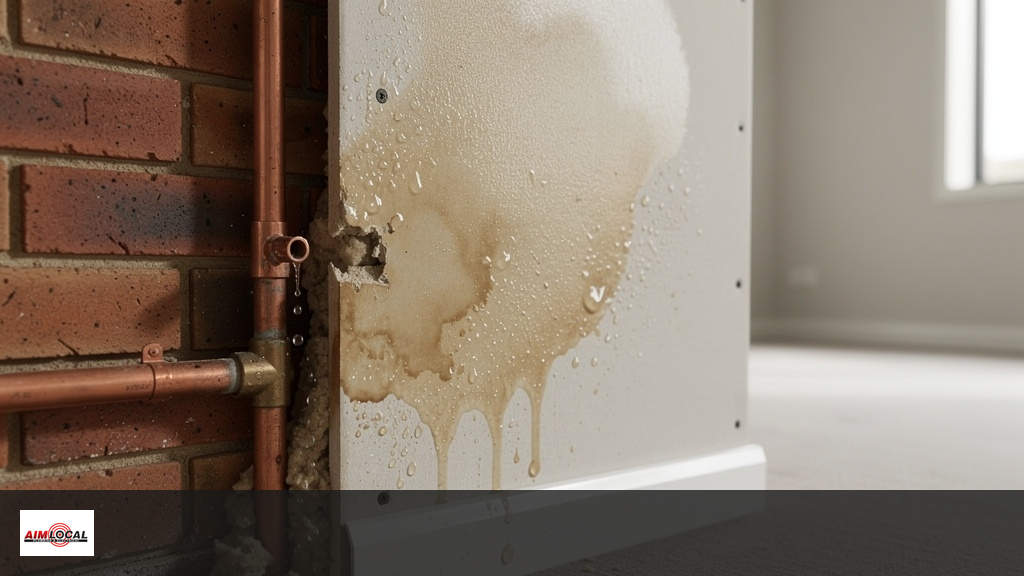
The most reliable signs of a leaking pipe behind a wall in Sydney are unexplained water stains, damp patches, or bubbling paint on an interior surface. You may also notice a musty or mouldy smell in a room that has no obvious moisture source. Here is a practical checklist of warning signs to check:
- Water stains or yellow-brown patches on plasterboard or cornice
- Bubbling, peeling, or blistering paint on walls or ceiling
- Soft or spongy wall surface when pressed gently
- Musty or mildew smell that does not go away with ventilation
- Unexpected spike in your water bill without any change in usage habits
- Sound of running water when all taps and appliances are off
- Visible mould growth on walls, skirting boards, or carpet near walls
- Warped or buckling plasterboard — panels bow outward when saturated
- Cold or warm patches on walls — cold water or hot water lines leave different thermal signatures
- Drop in water pressure throughout the house without explanation
One of the quickest self-checks is the water meter test. Turn off every tap, appliance, and irrigation system in your home. Note the meter reading, wait 30 minutes without using any water, then check again. If the meter has moved, you have a leak somewhere in the supply system. This test will not tell you exactly where the leak is, but it confirms one exists.
In Sydney’s older suburbs — Leichhardt, Parramatta, Hornsby, and similar areas with brick veneer homes from the 1960s to 1990s — galvanised steel and copper pipes are still common. These materials corrode over time, and pinhole leaks are a known failure mode in hot water lines running through wall cavities. If your home was built before 1990, a leak behind a wall deserves urgent attention.
Suspect a Leaking Pipe Behind a Wall?
AIM LOCAL’s licensed Sydney plumbers use thermal imaging and acoustic detection to find leaks with minimal wall damage. Available 24/7 across Sydney.
Get Your Free QuoteHow Much Does It Cost to Fix a Leaking Pipe Behind a Wall in Sydney?
Fixing a leaking pipe behind a wall in Sydney typically costs between $350 and $2,500 depending on pipe material, wall type, and how much wall access is required. The table below outlines typical market ranges for different scenarios across the Sydney metropolitan area.
| Repair Type | Typical Cost (AUD) | Notes |
|---|---|---|
| Leak detection only (thermal/acoustic) | $250–$450 | Non-invasive; cost often credited toward repair |
| Minor pinhole or joint repair (single access point) | $350–$700 | Single section of wall opened and patched |
| Burst or failed pipe segment replacement | $600–$1,500 | Larger wall section opened; includes re-plaster |
| Full pipe re-route (bypassing damaged section) | $1,200–$2,500 | Used when pipe is embedded in concrete slab or hard to access |
| Emergency after-hours call-out (Sydney) | $200–$400 surcharge | On top of repair cost; nights, weekends, public holidays |
| Water damage restoration (separate contractor) | $500–$5,000+ | Drying, mould remediation — cost depends on extent of damage |
Most Sydney plumbers charge an $80–$150 callout fee during business hours. After-hours rates typically run $150–$300 on top of the repair cost. Service fees vary between providers. Always confirm the callout fee before booking.
Home insurance may cover sudden and accidental pipe bursts but typically excludes gradual leaks caused by wear and corrosion. Check your policy with your insurer before proceeding. The NSW Fair Trading website at www.fairtrading.nsw.gov.au has guidance on resolving building defect disputes if the leak was caused by a construction or renovation fault.
Factors That Push Costs Up
Concrete slab construction increases access difficulty significantly. If a hot water line runs beneath a concrete floor slab — common in 1970s–1980s Sydney homes — a plumber may need to use pipe re-routing or pipe relining rather than direct repair. Tile-covered walls in bathrooms and kitchens add tile removal and replacement costs. Heritage-listed properties in inner Sydney may require council approval before any structural work.
The longer a leak runs undetected, the higher the total cost. Water damage to plasterboard, insulation, structural timbers, and flooring compounds quickly. A $400 repair can become a $4,000 remediation job if left for months.
Can Leaking Pipes Behind Walls Cause Structural Damage?
Yes — a leaking pipe behind a wall absolutely can cause structural damage to a Sydney home, and the risk is higher in timber-framed brick veneer construction, which is the dominant housing type across metropolitan Sydney. Water saturating timber wall studs, top plates, and floor framing leads to wood rot, which compromises the load-bearing capacity of the frame. Left long enough, a structural wall can require partial rebuild.
The most serious structural risks from a hidden wall leak include:
- Timber framing rot — wall studs, noggins, and sole plates absorb water and decay over months to years
- Subfloor damage — leaks from kitchen or laundry pipes can run down into the subfloor, rotting bearers and joists
- Foundation movement — sustained leaks near footings saturate soil and can cause differential settlement, particularly in clay-heavy Sydney soils
- Mould colonisation — spores spread through wall cavities and HVAC systems; remediation requires specialist treatment
- Plasterboard and cornice failure — saturated plasterboard is a safety hazard and must be replaced entirely
The National Construction Code sets minimum standards for waterproofing and moisture management in Australian buildings. When a licensed plumber repairs a wall leak and there is evidence of structural damage, they are obligated to inform the homeowner. In NSW, any structural repairs beyond the plumbing itself will require a licensed builder.
The critical point is that structural damage from a wall leak rarely presents as a sudden collapse — it is a slow deterioration that is only visible when you open the wall. A building inspection after a major leak repair is money well spent.
How Do Plumbers Find Leaks Behind Walls in Sydney?
Licensed Sydney plumbers use several non-destructive detection methods before cutting into any wall. These tools have transformed leak detection — what once required opening large sections of plasterboard can now often be pinpointed to within a few centimetres.
Thermal Imaging (Infrared Cameras)
An infrared camera detects temperature differences in the wall surface. A cold water leak shows as a cool patch; a hot water leak shows as a warm zone. Thermal imaging works best when there is a meaningful temperature difference between the leaking water and the ambient wall temperature — so hot water leaks are often the easiest to find this way. This is the most common first-line tool used by leak detection specialists in Sydney.
Acoustic Leak Detection
Acoustic sensors pick up the sound frequencies generated by water escaping under pressure through a pinhole or crack. The plumber moves a sensitive microphone along the wall surface and identifies where the sound intensity peaks. This method works well for pressurised supply pipes and is effective even in brick cavity walls where direct thermal access is limited.
Moisture Meters
A moisture meter measures the electrical resistance of a surface — wet materials conduct electricity more readily than dry ones. Plumbers use both pin-type and non-invasive radio frequency meters to map the extent of water spread in a wall without drilling.
Pressure Testing
The plumber isolates sections of the plumbing system and pressurises them with nitrogen or water. A pressure drop over a set period confirms a leak in that section. This helps narrow down whether the leak is in the hot or cold supply line, the drainage system, or the sewer. Sydney Water–licensed plumbers carry out pressure tests in compliance with AS/NZS 3500, the Australian Plumbing Standard.
Endoscopic Inspection
For drain and sewer lines running through walls or under floors, a CCTV drain camera inserted via an existing access point can visually identify cracks, joint failures, and root intrusion without any wall demolition.
If you need an emergency plumber in Sydney after hours, the detection process is the same — the priority is stopping water flow first, then locating the exact source. Most modern Sydney plumbing companies carry thermal imaging equipment as standard.
How Long Does It Take to Repair a Pipe Behind a Wall?
A straightforward pipe repair behind a wall in Sydney typically takes two to four hours from arrival to completion. This covers detection, access, repair, and initial testing. However, the total time from call to finished wall depends on several factors: how quickly the plumber can access the house, whether tiles need removing, and whether a plasterer needs to follow up the pipe repair.
Typical Timeline Breakdown
| Stage | Time Required | Notes |
|---|---|---|
| Detection and location | 30–90 minutes | Depends on method; thermal imaging is fastest |
| Wall access and pipe repair | 1–3 hours | Longer for concrete slab or tiled surfaces |
| Pressure test and cleanup | 30–60 minutes | System re-pressurised, all fittings checked |
| Plasterboard patching (separate trade) | Half to full day | Compound, sand, prime, paint — may need two visits |
| Tile replacement (tiled walls) | Half to full day | Additional cost; matching original tiles can be difficult |
For a pipe re-route — where the leaking section is bypassed entirely — the job may span two days if new pipe runs need to be hidden in cupboards or roof space. Emergency 24/7 plumbing services in Sydney can respond within the hour for burst pipes, but the repair work itself follows the same timeline once water is isolated.
Should You Fix a Leaking Pipe Yourself or Call a Licensed Plumber?
In NSW, any plumbing work beyond basic tap washer replacement must be carried out by a licensed plumber. This is a legal requirement under the NSW Fair Trading contractor licensing rules. Attempting to repair a leaking pipe behind a wall without a licence is illegal in NSW and voids your home insurance for any related damage.
Beyond the legal issue, there are strong practical reasons to use a professional for a wall leak. Accessing a pipe in a wall cavity without the right tools risks cutting through electrical wiring, damaging adjacent pipes, or causing further structural damage. Plumbers carry liability insurance that covers any accidental damage during the repair — homeowners working DIY do not.
What You CAN Do While Waiting for a Plumber
- Turn off the main water supply at the street-level stop tap (usually near the front boundary or water meter)
- Turn off your hot water system to prevent pressure build-up
- Move furniture, rugs, and valuables away from the affected wall
- Take photos of all visible damage — useful for insurance claims
- Call a licensed plumber immediately — every hour matters when water is spreading through cavities
A plumber who is licensed in NSW holds a tradesperson licence from NSW Fair Trading. You can verify a plumber’s licence online at the NSW Fair Trading licence check portal. Never use an unlicensed tradesperson for plumbing work — aside from the legal exposure, their work may fail inspection and leave you liable for rebuilding costs.
You can also review our guides on blocked drains in Sydney and the complete Sydney emergency plumber guide for related plumbing situations.
Stop the Damage Before It Spreads
AIM LOCAL’s licensed Sydney plumbers are available 24/7 for leaking pipes, burst pipes, and water damage emergencies across the greater Sydney area.
Get Your Free QuoteFrequently Asked Questions
How do I know if I have a leaking pipe behind my wall in Sydney?
The clearest signs are water stains or bubbling paint on your walls, a musty smell, a sudden rise in your water bill, or the sound of running water when all taps are off. You can do a simple meter test: turn off everything that uses water, note your meter reading, wait 30 minutes, and check again. Any movement confirms a leak somewhere in your plumbing system.
Is it dangerous to ignore a leaking pipe behind a wall?
Yes. A hidden wall leak causes ongoing timber rot, mould growth, and potential structural damage to wall framing and flooring. In brick veneer homes common across Sydney, wall cavities concentrate moisture and mould can spread rapidly. There is also a risk of water reaching electrical wiring. The longer a leak runs undetected, the higher the total repair and remediation cost.
Does home insurance cover leaking pipes behind walls in NSW?
Most NSW home insurance policies cover sudden and accidental pipe bursts but exclude gradual leaks caused by corrosion or wear. Check your policy with your insurer. If the damage was caused by a construction defect, NSW Fair Trading provides a dispute resolution process for building defects under home building compensation arrangements.
Can a plumber fix a wall leak without breaking down the entire wall?
Yes. Licensed Sydney plumbers use thermal imaging cameras, acoustic detection sensors, and moisture meters to pinpoint the leak location before opening anything. In most cases a single small access hole is all that is needed. The repaired wall is then patched by a plasterer. Only pipes embedded in concrete slabs or heavily tiled walls require more extensive access.
How long does it take to fix a leaking pipe behind a wall in Sydney?
The plumbing repair itself typically takes two to four hours from detection to completion. The wall patching by a plasterer is a separate visit, usually a half to full day depending on the size of the access hole and whether painting is included. If tiles need to be removed and replaced, add another half to full day for that trade.
Do I need a licensed plumber to fix a pipe behind a wall in NSW?
Yes. Under NSW Fair Trading licensing requirements, all plumbing work beyond basic maintenance must be carried out by a licensed plumber. This is a legal requirement, not just a recommendation. Unlicensed plumbing work voids your home insurance and may require full demolition and re-inspection to certify compliance with AS/NZS 3500, the Australian plumbing standard.
What should I do while waiting for an emergency plumber in Sydney?
Turn off the main water supply at the street stop tap near your water meter. Turn off the hot water system. Move furniture and valuables away from the affected area. Take photos for your insurance claim. Do not attempt to open the wall yourself — electrical wiring and other pipes may be present. Call a licensed 24/7 emergency plumber immediately.