
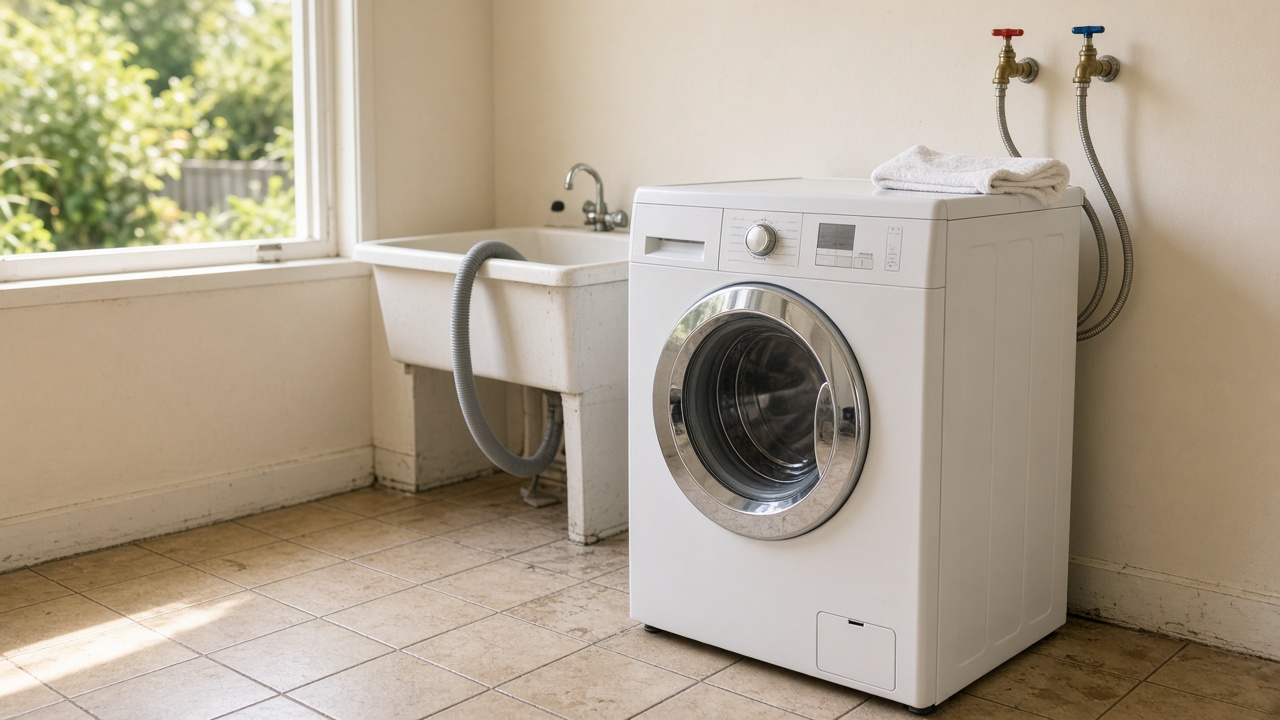
On a still November afternoon in a Terrigal garage laundry, the only sound for a while is the wash cycle and the cicadas outside. Then you hear a sharp hiss, and water starts sheeting across the tiles toward the door. The machine itself is fine. The failure is the thin flexible inlet, a burst washing machine hose Central Coast households rarely look at until the floor is wet.
Those hoses sit in some of the hottest, least visited corners of local homes. In Gosford brick houses they are often behind a machine pushed hard against a wall. Around Avoca Beach, Umina and The Entrance they share a garage or an external laundry with salt air and afternoon sun. With Christmas guests a few weeks away, many families will run more loads than usual.
This guide explains why summer on the Central Coast is hard on flexible appliance hoses, what to look for before one fails, what to do after a burst, and how a licensed plumber replaces them properly. It also covers dishwasher tails and the short flexi lines under vanities, which fail in the same way. Where a scene is used to show a typical situation, it is labelled as an illustrative example, not a record of a named job.
Why summer heat on the Central Coast is hard on these hoses
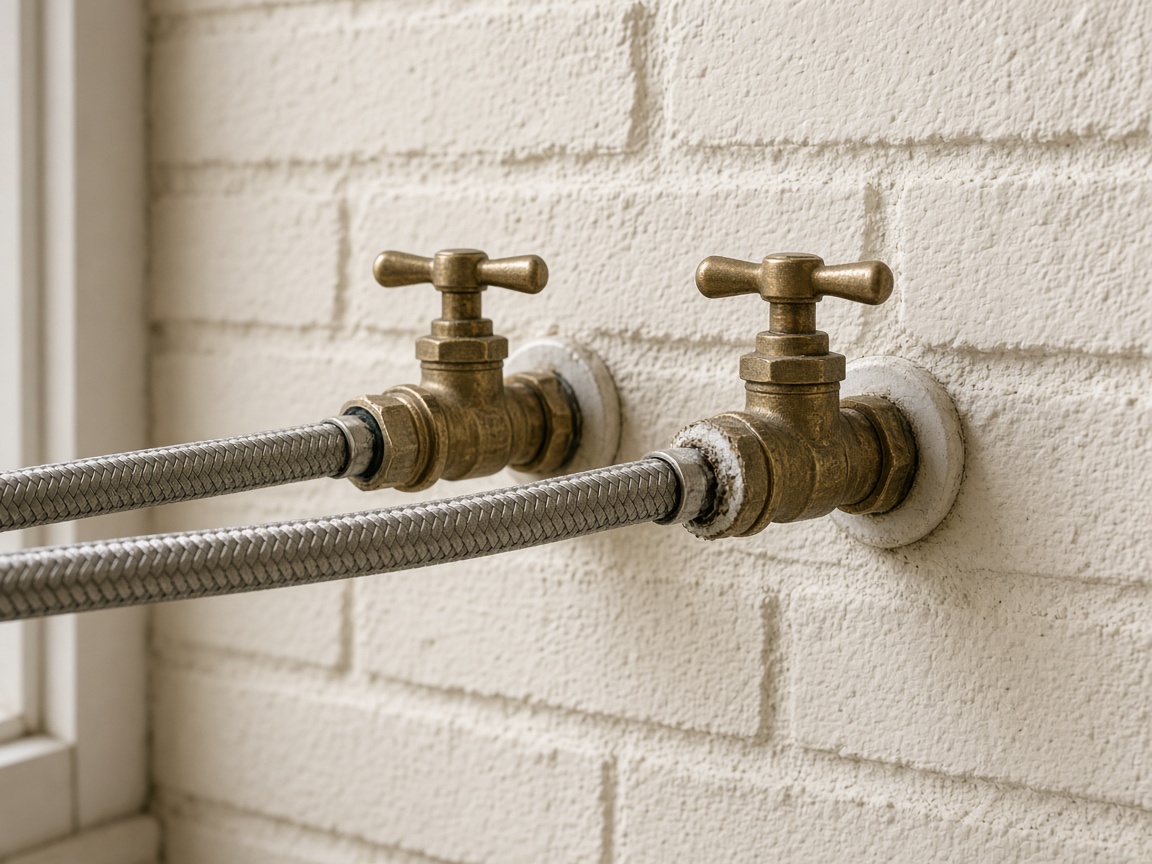
A flexible appliance hose is a thin inner tube, usually rubber or a similar compound, wrapped in a stainless steel braid and finished with metal nuts at each end. The braid is there to hold pressure. The inner tube is what actually carries the water, and that tube ages with heat, time, sunlight and chemical exposure.
Central Coast laundries often run hotter than the rest of the house in late spring and summer. A garage laundry at Erina or Wyoming can sit well above the outdoor shade temperature once the roller door has been closed on a 30 degree day. The hose is then under mains pressure, in still air, against a warm wall.
Heat speeds up the hardening and cracking of the inner tube. Once the tube weeps, water sits inside the braid. From the outside the hose can still look silver and tidy until the braid rusts or a weak point opens.
Salt air adds another stress in beach suburbs. Fine salt settles on the metal ferrules and the tap tails, especially in laundries that open toward the yard, and corrosion at those fittings is a common place for a slow drip to start. If the machine is pushed back so the hose is kinked or rubbed against a concrete wall, the braid wears and the inner tube can bulge through.
Water pressure matters as well. Many appliance makers ask for a pressure limiting valve when supply pressure is high, and a typical figure in their instructions is 500 kilopascals. If your street pressure sits above that, every fill cycle hammers the hose.
A licensed plumber can measure the pressure at the tap and, if it is high, fit a limiting valve so the hose and the machine are not taking the full street load. Ask them to check pressure during the same visit as a hose replacement.
Turning the laundry taps off when the machine is not in use is simple advice, and several hose makers repeat it. It means a hidden failure is less likely to flood the room overnight, which is useful if the house will sit empty over a Christmas weekend.
Where the hoses sit, and how they actually fail
The washing machine usually has two inlet hoses, one for cold water and, if the machine uses it, one for hot. Some modern machines take only a cold supply. There is also a drain hose, a wider, softer tube that empties into a tub or a standpipe. Drain hoses can split too, but the sudden floor flood is more often an inlet hose still under mains pressure.
Dishwashers have a similar inlet hose, usually tucked under the kitchen bench. Vanity basins and toilet cisterns often use shorter flexi tails. The same signs appear: rust at the nut, a bulge in the braid, a stiff or cracked inner tube, or a damp cupboard floor with no obvious tap drip.
Failures tend to follow a pattern. The inner tube develops a pinhole or a split. Water tracks along the braid and appears as a rust stain or a wet mark at the lowest nut.
If nobody moves the machine, the leak can stay hidden for weeks and only show up as a swollen kickboard or a musty smell. If the tube then opens fully, water runs at mains pressure until someone closes the tap. In a two-storey house at Woy Woy or East Gosford, that water can travel through the floor into a living room below.
An illustrative example, not a record of a named job: a family at Forresters Beach leaves the machine mid-cycle and comes home to water across the garage. The hose was still original to a machine bought about eight years earlier. The braid looked acceptable until they pulled the machine out and found a rusted ferrule and a split just behind the nut. That kind of failure is preventable with a scheduled replacement and a working isolation tap.
Installation faults shorten the life of an otherwise sound hose. A hose that is too short gets stretched, and a hose that is too long gets looped and kinked. Nuts tightened with a large shifter can crush the washer.
A hose run across a sharp cabinet edge will wear through the braid. None of these are obvious once the machine is pushed back into place, which is why a careful first look matters.
Warning signs to look for before a burst
You do not need trade tools for a basic check. Turn the power off at the machine, close the wall taps, and ease the machine forward so you can see both hoses in full.
Look for:
- Rust stains, green corrosion or white scale at the nuts and ferrules
- A bulge, flattened section or broken braid wires
- A hose that has gone stiff, cracked or discoloured, especially near the ends
- Dampness, swollen particle board or a musty smell behind or under the machine
- A hose stretched tight, twisted, or bent sharply at the tap or the machine inlet
- Taps that are seized and cannot be closed by hand
- A date stamp on the collar that is several years old, or no stamp and a machine that has been in the house a long time
Any of those signs is a reason to stop using the machine and call a licensed plumber. Do not wait for a dry week, and do not run one more load to finish the school uniforms. A hose that is already weeping can open fully during the next fill.
If you cannot move the machine yourself, you can still check the visible section of hose and the floor. A slow leak may also show up as an unexplained rise in your water use. On the Central Coast, water and sewer services are provided by Central Coast Council, not Sydney Water. If your bill looks wrong, council can help you read the meter. A running meter when every tap is off is a prompt to look for leaks, including appliance hoses, and a high water bill after a hidden leak is a related problem we have covered on this site.
While you are looking, check the dishwasher hose and the flexi tails under the kitchen and bathroom sinks. It takes a few extra minutes and often finds the next weak point in the same visit.
What to do in the first minutes after a hose bursts
The first job is to stop the water, then to make the area safe, then to limit damage.
Close the laundry isolation taps. If they are seized or the leak is upstream of the tap, close the house isolation valve, which is often at the meter or near the front boundary. A plumber can close it if you cannot find it.
If water is near the machine or a power point, do not stand in the water and reach for a switch. If you can reach the switchboard dry-footed, turn off the laundry circuit. Our guide to household warning signs covers that mix of trades. If you are unsure, keep clear and call for help.
Once the water and power are off, move rugs out of the wet area. Photograph the hose, the taps, the floor and any damage to rooms next door. Do not throw the old hose away until the plumber and, if relevant, the insurer have seen it.
A wet carpet or a swollen floor needs drying, not just a mop. In a villa or townhouse, tell the neighbour below or beside you early. If water has gone into a ceiling cavity, get it checked. The plumber who replaces the hose can also look at any blocked gully or drain if lint has been washed into it.
How a licensed plumber replaces the hose
In NSW, water plumbing work is licensed work, even when the job looks like a simple unscrew and screw. NSW Fair Trading sets out when you should use a licensed tradesperson, and plumbing licences are held in the state’s public register. A licensed plumber carries the right hose, checks the taps, and can deal with a seized isolation valve or a damaged machine inlet, which is where a home replacement often stalls.
The new hose should be WaterMark certified for the job. WaterMark is the national certification mark for plumbing products used in Australia, and a licensed plumber is not meant to fit an uncertified hose. You can confirm a mark through the WaterMark Certification Scheme. If you are buying a hose to hand to the plumber, ask them to specify a certified product rather than picking an uncertified one online.
A good replacement visit usually includes closing the water and removing the old hose without damaging the machine inlet, checking the taps and freeing a seized handle, and fitting a WaterMark hose of the right length so it is neither stretched nor kinked. The plumber should then test under pressure, measure supply pressure, look at the dishwasher hose and nearby flexi tails, and point out any floor or wall lining that should be dried.
Do not join two hoses to make up a length, and do not reuse an old hose on a new machine. Manufacturer installation guides are clear on that last point.
Fisher and Paykel’s front-loader installation guide says new hose sets should be used, old sets should not be reused, and it recommends changing inlet hoses every five years, with a warning that failure may result in a flood and damage to property. Other makers give similar advice.
Five years is manufacturer guidance, not a legal expiry date, and a hose can fail earlier if it is kinked, overheated or under high pressure. Treat five years as a prompt to inspect and usually to replace, not as a promise that the hose will last that long.
If you want a wider check at the same time, a professional plumbing inspection can catch other slow leaks before the Christmas shutdown.
Insurance, proof and what is reasonable to expect
Whether your home insurance helps after a burst hose depends on your policy and the facts of the failure. This article cannot tell you what your policy covers. The useful steps are the same in most cases: stop the water, make the area safe, photograph the failure and the damage, keep the old hose, and contact your insurer promptly.
The Insurance Council of Australia publishes general guidance for households on making a claim. Your product disclosure statement is the document that matters. Replacing tired hoses before they fail is almost always cheaper than a flooring claim.
If the property is rented, tell the landlord or agent as soon as the water is stopped. In NSW, a burst water service and a breakdown of laundering are listed as urgent repairs. A seized isolation tap is worth reporting as well.
For owner-occupiers going away over Christmas, closing the laundry and dishwasher taps, and knowing where the meter isolation valve is, can save a very wet return. If you are already booking a plumber, ask them to show you that valve and confirm it moves freely.
A simple summer checklist for Central Coast laundries
Use this as a once-a-season check, ideally now, before the hottest weeks and before guests arrive:
- Pull the machine forward and inspect both inlet hoses along their full length
- Check the dishwasher hose and the flexi tails under sinks
- Confirm both isolation taps close and open by hand
- Look at the floor, kickboards and the wall behind the machine for stains
- Note any date stamp, and replace the hose if it is at or beyond the maker’s recommended interval
- In a beach suburb, look closely at corrosion on ferrules and taps
If anything on that list looks wrong, stop using the appliance and book a licensed plumber. AIM LOCAL’s plumbing team works across the Central Coast, including Avoca Beach and Erina, and can replace WaterMark hoses and free seized taps in one visit. Call 1800 187 168.
A look behind the machine this week, and a replacement when the hose is tired, is the calm way through a Central Coast summer.
Frequently Asked Questions
How often should washing machine hoses be replaced on the Central Coast?
There is no single legal replacement date. Several manufacturers, including Fisher and Paykel, recommend changing inlet hoses every five years. Heat, salt air, high pressure and poor installation can shorten that. Inspect the hoses now, and replace them sooner if you see rust, bulges, cracks or damp.
Can I replace a washing machine hose myself in NSW?
Connecting a hose to the water supply is plumbing work. In NSW that work should be done by a licensed plumber, who will fit a WaterMark certified hose, check the isolation taps and test for leaks under pressure.
Why do these hoses fail in summer heat?
The inner tube ages faster in heat. Central Coast garage and external laundries can get very warm on a still November or January day, and the hose is under mains pressure the whole time. Salt air in beach suburbs also corrodes the metal ends.
What is the first thing I should do if a hose bursts?
Close the laundry isolation taps. If they will not turn, close the house isolation valve at the meter. Keep out of standing water around power points, and turn the laundry circuit off only if you can do that from a dry place. Then photograph the damage and call a licensed plumber.
Do dishwasher and basin flexi hoses need the same attention?
Yes. They use the same kind of flexible tube and braid, and they hide in cupboards where a leak can swell particle board before you notice it. Ask the plumber to check them when the washing machine hoses are replaced.
Should I turn the laundry taps off after each wash?
Many hose manufacturers recommend turning the taps off when the machine is not in use, so a hidden failure is less likely to flood the room overnight. It is a good habit, especially if you are away, and it sits alongside regular inspection and timely replacement.
Will home insurance cover a burst washing machine hose?
It depends on your policy and the facts. Stop the water, photograph everything, keep the old hose, and contact your insurer. Your product disclosure statement is the document that decides cover.