
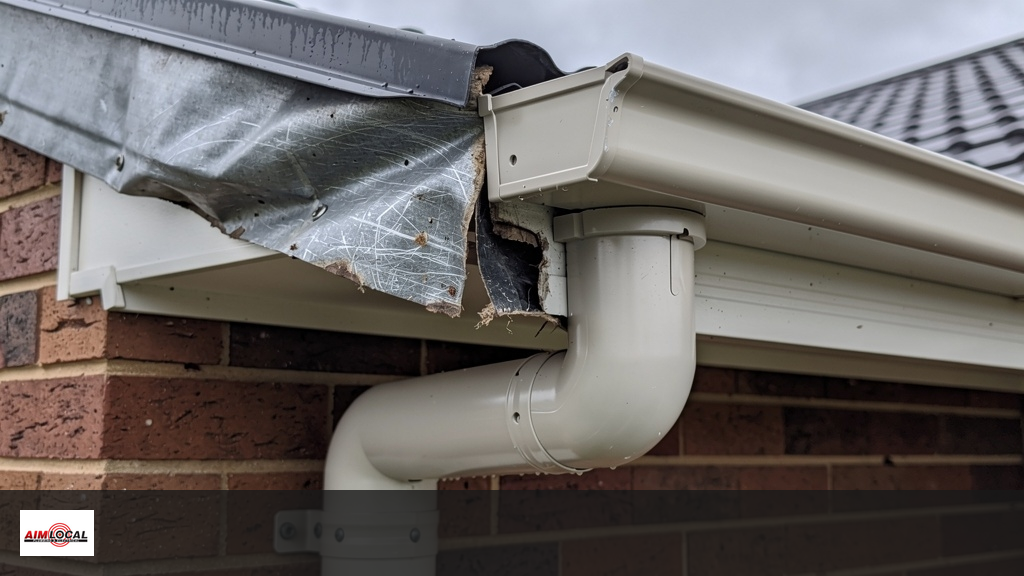
Downpipe replacement cost on the Central Coast typically ranges from $150 to $600 per downpipe, depending on the height, material, and access difficulty. A standard single-storey home with 4-6 downpipes can expect to pay $600–$2,400 all in. This guide breaks down what drives the cost, what materials last longest in the Central Coast climate, and what to ask your roofer before signing off.
Table of Contents
- What Affects Downpipe Replacement Cost?
- Downpipe Replacement Costs: Central Coast 2026
- Downpipe Materials: Which Lasts Longest?
- Signs Your Downpipes Need Replacing
- DIY vs Licensed Roofer: What NSW Law Requires
- How to Get a Fair Quote
- Frequently Asked Questions
What Affects Downpipe Replacement Cost?
The cost of replacing downpipes on a Central Coast home is driven by four main variables: the number of downpipes, the storey height, the material chosen, and how accessible the installation point is. A single-storey home with easy ground-level access costs considerably less than a double-storey home requiring scaffolding or a boom lift on a sloped block.
Number and Length of Downpipes
A standard 3-4 bedroom home typically has 4-8 downpipes depending on roof complexity and drainage design. Each downpipe runs from gutter level to ground or stormwater connection. Longer runs — common on two-storey homes — cost more in materials and labour time. Most licensed roofers quote per downpipe or per linear metre of piping.
Access and Height
Single-storey downpipes on flat ground are the most affordable — a ladder is sufficient. On two-storey homes or blocks with significant slope (common across the Gosford hillside suburbs and Terrigal), the roofer may need a taller ladder setup, scaffolding, or a mobile elevated work platform. This adds $150–$400 to the job depending on how complex the access is.
Stormwater Connection Work
If your downpipes connect to an underground stormwater system, any repairs or adjustments to the junction point require a licensed plumber in NSW — not just a roofer. This is common on older Gosford-era homes where the downpipe feeds directly into a buried drainage line. If the connection is cracked or blocked, expect an additional $200–$600 in plumbing work.
Downpipe Replacement Costs: Central Coast 2026
Here are typical market rates for licensed roofers and plumbers operating on the Central Coast of NSW in 2026.
| Job Type | Typical Cost (AUD) | Notes |
|---|---|---|
| Single downpipe replacement (PVC, single-storey) | $150 – $300 | Most common scenario; includes fitting and sealing |
| Single downpipe replacement (Colorbond steel) | $200 – $400 | More durable; better suits coastal areas |
| Full set (4 downpipes, single-storey) | $600 – $1,200 | Bulk replacement often attracts better pricing |
| Full set (6 downpipes, two-storey) | $1,400 – $2,800 | Includes access equipment surcharge |
| Downpipe + stormwater junction repair | Add $200 – $600 | Requires licensed plumber; separate trade |
| After-hours or emergency callout surcharge | Add $100 – $250 | Weekend/evening response on the Central Coast |
Service fees vary between providers. Always confirm the callout fee and scope before booking.
Downpipe Materials: Which Lasts Longest?
The two most common downpipe materials on Central Coast homes are PVC (uPVC) and Colorbond steel. Each has a clear role depending on the home’s location, age, and budget.
PVC Downpipes
PVC is the most widely used material for residential downpipes in Australia and is the default on most new builds. It is lightweight, easy to cut and join, resistant to corrosion, and the cheapest option upfront. The main weakness of standard PVC in coastal areas like Avoca, Terrigal, and Wamberal is UV degradation — long-term sun exposure can cause brittleness and cracking over 15-25 years. In shaded or south-facing positions, PVC can last 30+ years with minimal issues.
Colorbond Steel Downpipes
Colorbond steel downpipes are more commonly seen on homes with Colorbond gutters and roofs, where material consistency matters aesthetically and structurally. Steel is more resistant to physical impact and generally carries a 10-15 year warranty from BlueScope. In coastal salt-air environments within 1km of the ocean, Colorbond ULTRA is the correct specification — standard Colorbond grades can corrode faster in direct salt exposure. Colorbond downpipes cost 20-40% more to supply and install than PVC but tend to outlast them in harsh conditions.
Aluminium and Copper (Specialty)
Aluminium downpipes are used on heritage and character homes where a square or decorative profile is required. Copper is rare but occasionally specified on high-end heritage restorations. Both are significantly more expensive than PVC or Colorbond — expect 2-3x the material cost — and require a specialist for installation. If your home has existing aluminium or copper downpipes, like-for-like replacement is usually the only practical path.
Signs Your Downpipes Need Replacing
Downpipes that are cracked, blocked, or separating from their gutter or stormwater connection cause water to pool against your foundation, in your roof cavity, or along your external walls. On the Central Coast, where heavy La Nina rainfall events are common, a failed downpipe in the wrong spot can cause significant water ingress in a single storm. Watch for these warning signs:
- Water marks or staining on external walls — suggests the downpipe is overflowing or leaking at a join
- Visible cracks or splits in the pipe body — UV or impact damage; common on south-facing uPVC
- Downpipe separating from the gutter outlet — often caused by settlement, tree impact, or corroded brackets
- Persistent blockage — root intrusion or collapsed underground section; may need CCTV inspection
- Pooling water at the base of external walls — indicates the downpipe outlet is not draining correctly
- Rust streaks on Colorbond downpipes — particularly at cut edges; indicates corrosion under the coating
DIY vs Licensed Roofer: What NSW Law Requires
Replacing a downpipe itself (above ground, not connected to a plumbing drain) is not technically a licensed trade in NSW if it is limited to like-for-like replacement of the pipe section. However, any work that involves connecting to, disconnecting from, or modifying a stormwater drainage system that falls under the plumbing and drainage regulations requires a licensed plumber and drainer in NSW.
In practice, most homeowners engage a licensed roofer for the full job — they handle the gutter connection and the above-ground pipe — and call in a plumber only if the stormwater connection needs attention. This is the safest approach for insurance and warranty purposes. See NSW Fair Trading’s licensing requirements for the full breakdown of what requires a licence.
How to Get a Fair Quote on the Central Coast
A well-prepared quote for downpipe replacement should specify: the number of downpipes being replaced, the material (PVC or Colorbond), any bracket or flashing work included, the method for accessing upper-floor downpipes, and what happens if the stormwater connection needs repair. If a quote is a single line item with no breakdown, ask for an itemised version.
For related roof and gutter maintenance reading, see our guide on gutter cleaning and autumn tax deductions, and our Colorbond roof replacement cost guide for homeowners planning a full roof overhaul. For tile roofs, see our tile roof repair cost guide.
Need Downpipe Replacement on the Central Coast?
AIM LOCAL’s licensed roofers cover Gosford, Wyong, Erina, Terrigal, and surrounding suburbs. Upfront pricing, same-day assessment available.
Get Your Free QuoteFrequently Asked Questions
How much does downpipe replacement cost on the Central Coast?
Downpipe replacement on the Central Coast typically costs $150–$300 per downpipe for PVC on a single-storey home, or $200–$400 for Colorbond steel. A full set of 4-6 downpipes on a standard home runs $600–$2,400 depending on storey height, material, and access. Always get at least two written quotes.
Can I replace downpipes myself in NSW?
Like-for-like above-ground downpipe replacement is not a licensed trade in NSW if it does not involve the stormwater drainage system. However, any work on the stormwater connection below ground requires a licensed plumber. For insurance and warranty purposes, most homeowners use a licensed roofer for the full job.
How long do downpipes last on the Central Coast?
PVC downpipes typically last 20–30 years in sheltered positions, or 15–20 years in high UV exposure. Colorbond steel lasts 20–30+ years with proper specification — use Colorbond ULTRA within 1km of the ocean to prevent salt air corrosion.
What is the best downpipe material for a coastal Central Coast home?
For properties within 1km of the ocean (Terrigal, Avoca, Wamberal, Gosford waterfront), Colorbond ULTRA steel is the recommended specification. Standard Colorbond and standard PVC can both degrade faster in direct salt air. Inland suburbs can use standard PVC without issue.
How do I know if my downpipes need replacing or just unblocking?
If your downpipe is visibly cracked, split, separating from the gutter, or showing rust streaks, it needs replacement. If it is simply blocked (water overflows from the gutter during rain but the pipe looks intact), a professional clean or CCTV inspection is the first step. Persistent blockages with root intrusion may require pipe section replacement regardless.
Do AIM LOCAL roofers service my suburb on the Central Coast?
Yes. AIM LOCAL covers Gosford, Wyong, Erina, Avoca Beach, Terrigal, Woy Woy, The Entrance, and surrounding Central Coast suburbs. Same-day assessment is available for urgent situations.