
Your Complete Guide to Heat Pump Hot Water System Costs, Rebates and Installation in Sydney
Table of Contents
- What Is a Heat Pump Hot Water System and How Does It Work?
- Heat Pump Hot Water System Cost Breakdown for Sydney Homes
- NSW Government Rebates and STCs That Slash Your Out-of-Pocket Cost
- Running Costs Compared: Heat Pump vs Gas vs Electric Storage
- Best Heat Pump Brands for Sydney’s Climate in 2026
- What to Expect During Installation
- Frequently Asked Questions
Heat pump hot water systems in Sydney are now the most cost-effective upgrade available to homeowners looking to cut energy bills by 60-75% while earning significant government rebates. With the Federal STC scheme and NSW Energy Savings Scheme both active in 2026, many Sydney households are paying as little as $33 out-of-pocket after combined incentives. This guide breaks down every cost, rebate pathway, and installation consideration so you can make a confident decision.
What Is a Heat Pump Hot Water System and How Does It Work?
A heat pump hot water system works like a reverse-cycle air conditioner, but instead of heating a room, it heats water. The unit extracts thermal energy from ambient air using a refrigerant cycle and transfers that heat into a storage tank. Even on a 7°C Sydney winter morning, there is enough thermal energy in the air to heat water to 60-65°C efficiently.
The key advantage over traditional electric storage systems is efficiency. A heat pump uses approximately one-third of the electricity to produce the same amount of hot water. For a typical four-person Sydney household using 200 litres per day, that translates to annual electricity savings of $400-$650 depending on your tariff.
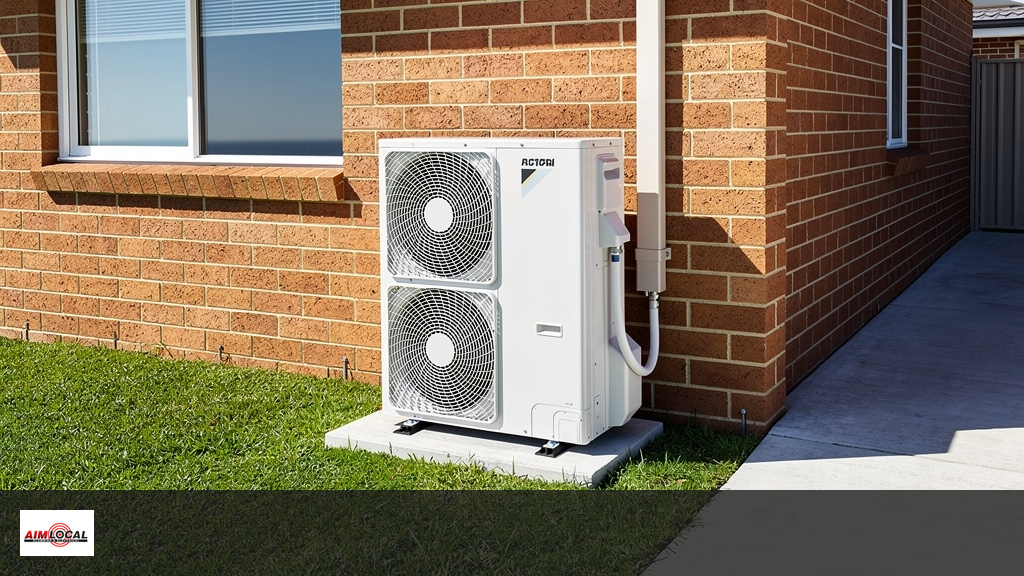
Unlike solar hot water, heat pumps do not require roof-mounted panels or north-facing orientation. The compressor unit sits on a concrete pad beside the house, similar to an electric water heater installation but with the addition of a fan unit on top. This makes heat pumps suitable for homes where roof space is limited or shading is an issue.
How Heat Pumps Perform in Sydney’s Climate
Sydney’s average winter minimum of 8-10°C is well within the optimal operating range for modern heat pump systems. Units from Reclaim, Sanden, and Rheem perform efficiently down to 5°C, with some models rated to -10°C. Summer performance is even better, with coefficient of performance (COP) ratings reaching 4.0-5.0 when ambient temperatures sit above 20°C.
The mild Sydney climate means your heat pump will run fewer boost cycles compared to homes in Canberra or Melbourne. Most Sydney installations achieve a year-round average COP of 3.2-3.8, meaning for every 1kWh of electricity consumed, the system produces 3.2-3.8kWh of heat energy.
Heat Pump Hot Water System Cost Breakdown for Sydney Homes
Before any rebates are applied, heat pump hot water system installation in Sydney typically costs between $2,800 and $6,500. The final price depends on tank capacity, brand, installation complexity, and whether your existing plumbing and electrical connections need modification.
| Component | Cost Range (2026) | Notes |
|---|---|---|
| Heat pump unit (250L) | $2,200 – $3,800 | Most common size for 3-4 person household |
| Heat pump unit (315L) | $2,800 – $4,500 | Recommended for 5+ people or high usage |
| Standard installation labour | $800 – $1,200 | Includes plumbing and electrical connection |
| Concrete pad (if needed) | $150 – $350 | Required for ground-level mounting |
| Tempering valve | $80 – $150 | Mandatory for NSW compliance |
| Old system removal | $100 – $250 | Disposal of existing electric or gas unit |
| Electrical circuit upgrade | $200 – $500 | Only if existing circuit is inadequate |
What Affects Your Final Price
The biggest variable is whether your home needs electrical upgrades. Heat pumps draw 800W-1500W during operation, which is significantly less than a traditional electric storage heater (3.6kW-4.8kW). However, if your existing electrical switchboard is older, a dedicated circuit may be recommended.
Homes replacing a gas hot water system will need the gas line capped (typically $80-$120) and may require a new power point installed near the proposed heat pump location. The total additional cost for gas-to-heat-pump conversion is usually $300-$600 above a standard like-for-like replacement.
NSW Government Rebates and STCs That Slash Your Out-of-Pocket Cost
Two separate incentive programs combine to reduce your heat pump hot water system cost substantially. In many cases, the combined discount exceeds $2,000, bringing a quality 250L heat pump installation down to $800-$1,500 out-of-pocket.
Federal Small-Scale Technology Certificates (STCs)
Under the Federal Renewable Energy Target, qualifying heat pump systems generate STCs based on the amount of energy they are expected to displace over their lifetime. In 2026, a typical 250L heat pump in Sydney generates 24-28 STCs. At the current clearing house price of approximately $40 per STC, that represents a point-of-sale discount of $960-$1,120.
The STC value reduces each year until the scheme ends in 2030. Installing in 2026 captures more certificates than waiting until 2027 or 2028. Your installer handles the STC paperwork and applies the discount directly to your invoice.
NSW Energy Savings Scheme (ESS)
The NSW Hot Water Upgrade Incentive provides additional discounts through the Energy Savings Scheme:
- Up to $1,400 when replacing an electric storage system with a heat pump
- Up to $330 when replacing a gas water heater with a heat pump
- Minimum customer co-payment of $220 applies
Eligibility requires the home to be in NSW, the existing system to be operational (not a new build), and the replacement heat pump to meet minimum efficiency standards. There is no income test for this program.
Combined Savings Example
| Scenario | Installed Cost | STCs | NSW ESS | Out-of-Pocket |
|---|---|---|---|---|
| Replace electric storage (250L Reclaim) | $3,800 | -$1,040 | -$1,400 | $1,360 |
| Replace electric storage (250L Rheem) | $4,200 | -$1,080 | -$1,400 | $1,720 |
| Replace gas system (250L Sanden) | $4,500 | -$1,000 | -$330 | $3,170 |
| Replace electric (budget 250L) | $2,800 | -$960 | -$1,400 | $440 |
Some installer networks negotiate bulk STC agreements and pass additional savings to customers. The “$33 after rebates” figures advertised by some companies reflect maximum possible discounts applied simultaneously, which require specific system and household combinations.
Running Costs Compared: Heat Pump vs Gas vs Electric Storage
Beyond the upfront installation, running costs determine the true lifetime value of a hot water system. Heat pumps consistently deliver the lowest annual operating cost of any hot water technology available in Sydney.
| System Type | Annual Running Cost (4-person home) | CO2 Emissions (kg/year) |
|---|---|---|
| Electric storage (off-peak) | $550 – $750 | 2,400 – 3,200 |
| Gas instantaneous | $450 – $650 | 1,800 – 2,400 |
| Gas storage | $500 – $700 | 2,000 – 2,800 |
| Solar with electric boost | $200 – $350 | 800 – 1,400 |
| Heat pump | $150 – $180–$320 | 600 – 1,100 |
A household switching from electric storage to a heat pump saves $300-$500 per year on energy bills. Over the 10-15 year expected lifespan of the unit, that represents $3,000-$7,500 in cumulative savings, which far exceeds the out-of-pocket installation cost after rebates.
Pairing With Rooftop Solar
If your home has rooftop solar panels, a heat pump becomes even more economical. Programming the heat pump to run during peak solar generation (typically 10am-2pm) means the system runs on virtually free electricity. Many modern heat pump controllers include timer functions that allow you to align heating cycles with your solar export window.
For homes on time-of-use tariffs without solar, setting the heat pump to run during off-peak or shoulder periods (before 7am or after 10pm) keeps costs at their absolute minimum.
Best Heat Pump Brands for Sydney’s Climate in 2026
Not all heat pumps are created equal. The Sydney market has consolidated around several proven brands that perform reliably in our coastal and suburban conditions.
Reclaim Energy CO2 Heat Pump
Australian-designed and using CO2 as the refrigerant (R744), Reclaim units deliver exceptional efficiency with a COP of 4.5-5.0 in Sydney conditions. The 315L tank suits larger families. Price range: $3,800-$4,500 installed before rebates. The CO2 refrigerant has zero ozone depletion potential and negligible global warming potential compared to traditional R134a systems.
Sanden Eco Plus
Japanese-manufactured with a split system design (separate compressor and tank), Sanden units are known for quiet operation (37dB) and high efficiency. The stainless steel tank carries a 15-year warranty. Price range: $4,200-$5,200 installed before rebates. Ideal for installations where the compressor needs to sit away from bedroom windows.
Rheem AmbiHeat / AmbiPower
Rheem offers the widest installer network in Sydney and competitive pricing. The AmbiHeat 250L is one of the most commonly installed units due to its balance of price and performance. Price range: $3,200-$4,000 installed before rebates. Rheem’s national service network means fast warranty support if needed.
iStore 270L
Budget-friendly and widely available through major plumbing wholesalers. The iStore integrates well with solar PV systems and includes a built-in timer. Price range: $2,800-$3,400 installed before rebates. Good value for standard installations where premium features are not required.
What to Expect During Installation
A standard heat pump installation in Sydney takes 3-5 hours for a straightforward replacement. Your licensed plumber will handle the complete process from disconnection of the old unit through to commissioning and testing the new system.
Before Installation Day
Your installer will conduct a site assessment (often via photos or a brief visit) to confirm:
- Available space for the heat pump unit (minimum 300mm clearance on all sides for airflow)
- Proximity to bedrooms (heat pumps generate 38-45dB, similar to a quiet conversation)
- Existing electrical supply adequacy
- Plumbing run distances from the tank to your bathrooms and kitchen
- Whether a concrete pad is needed
Installation Day Process
- Isolate and drain the existing hot water system
- Disconnect plumbing and electrical connections
- Remove old unit (disposed of responsibly)
- Position new heat pump on prepared pad or existing slab
- Connect cold water inlet, hot water outlet, and pressure/temperature relief valve
- Install tempering valve (NSW requirement, limits delivery temperature to 50°C at taps)
- Connect electrical supply and commission the system
- Test all hot water outlets for correct temperature and flow
- Program timer settings if applicable
After installation, the system takes 2-4 hours for the initial tank heat-up. Your installer will typically leave the system running and confirm it reaches target temperature before departing. A compliance certificate covering both the plumbing and electrical work is issued within 48 hours.
Noise Considerations for Sydney Homes
Modern heat pumps operate at 37-48dB, which is quieter than a standard refrigerator compressor. However, the fan component creates airflow noise that can be noticeable at night if positioned directly outside a bedroom window. Best practice is to install the unit at least 1.5 metres from bedroom windows, ideally on the side of the house facing the street or backyard rather than a neighbour’s boundary.
NSW has specific noise regulations for residential equipment. Heat pumps must not exceed background noise levels by more than 5dB when measured at the nearest affected boundary. All major brands sold in Australia comply with these requirements when installed with correct clearances.
Frequently Asked Questions
How long does a heat pump hot water system last?
Most quality heat pump systems last 10-15 years with proper maintenance. Stainless steel tank models (like Sanden) can last longer. Annual anode inspection and five-yearly valve replacement extend system life.
Can I install a heat pump in a unit or townhouse?
Yes, provided you have an outdoor space with adequate clearance (typically a balcony, courtyard, or ground-level area of at least 1m x 1m). Strata approval may be required for common property installations. Split-system designs (Sanden) work well where the compressor needs to sit remotely from the tank.
Do heat pumps work during Sydney winter?
Absolutely. Sydney’s winter minimum temperatures of 7-10°C are well within the operating range of modern heat pumps. Efficiency reduces slightly (COP drops from 4.0 to 3.0-3.5) but the system still delivers substantial savings compared to electric or gas alternatives year-round.
What happens during a power outage?
The tank retains hot water for 24-48 hours without power due to insulation. Once power returns, the heat pump resumes normal operation automatically. No manual restart is required.
Is maintenance required?
Heat pumps require minimal maintenance. Annual checks include inspecting the sacrificial anode (replaceable element that protects the tank from corrosion), cleaning the air filter on the evaporator coil, and checking the pressure/temperature relief valve operates correctly. Most hot water service providers offer maintenance packages.
Can I get a heat pump if I currently have gas?
Yes. Gas-to-heat-pump conversions are increasingly common as gas prices rise. The gas line is capped off and a new electrical connection is established. The NSW ESS rebate for gas replacement is lower ($330 vs $1,400 for electric replacement), but the ongoing energy savings still make the switch worthwhile within 3-4 years.
What size heat pump do I need?
As a guide: 160-200L for 1-2 people, 250L for 3-4 people, 315L for 5+ people. Homes with high hot water usage (multiple bathrooms used simultaneously, spa baths) should size up. Your installer will calculate the correct size based on your household’s specific usage patterns.
For water pressure issues, please use aim local contact us.
Ready to Switch to a Heat Pump Hot Water System?
AIM LOCAL’s licensed plumbers install heat pump systems across Sydney, the Central Coast and Newcastle. We handle all rebate paperwork so you pay the lowest possible price.
Get Your Free QuoteThis guide was last updated on 1 May 2026. Rebate amounts are subject to change. Contact our team for a personalised quote based on your current system and household size.