
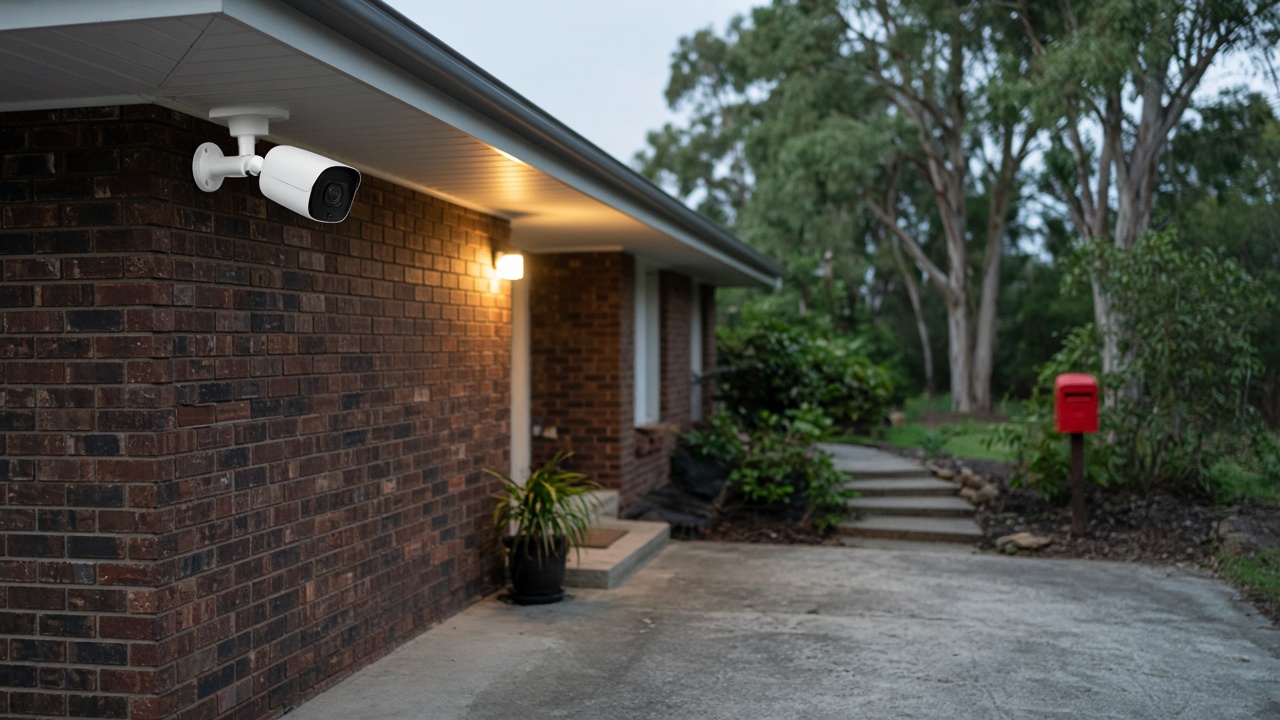
The car is packed, the esky is in the boot and the neighbours on your Kincumber street have already left for their own break. You lock the front door, check the side gate twice and drive off toward the M1, wondering how the house will look on day three with nobody home. For many families, home security cameras Central Coast installers fit before Christmas are the thing that turns that worry into a quick look at a phone.
The Central Coast empties and fills in odd ways over the holidays. Locals head north or to family in Sydney, while holiday rentals at Terrigal, Avoca Beach and Umina fill with visitors. Streets that are busy in term time go quiet for a fortnight, and a dark house with an overflowing letterbox stands out.
This guide covers how to plan a camera system that works when you are away, where cameras earn their keep, how they are powered and cabled, what NSW law says about privacy, and who is licensed to install them. Any scenario used to explain a point is labelled as an illustrative example, not a record of a named job.
Why the Christmas break is a good time to add cameras
Crime Stoppers NSW points out that homes full of presents, with owners away on holidays, make the end of the year attractive to burglars. Its holiday home safety advice lists security cameras alongside good lighting, quality locks and alarms as things that make a home less appealing to opportunistic thieves.
Cameras do not replace locks. What they add is visibility. You can see that a delivery was left on the porch, that the side gate blew open in a southerly, or that the person walking up the driveway was the neighbour feeding the cat.
Timing matters too. Electricians and installers get busy in December as everyone tries to finish jobs before the shutdown. Booking in November gives you time to test the system for a few weeks before you rely on it, so you learn which alerts are useful and which are just a palm frond moving in the wind.
There is also a practical Central Coast reason. Many homes here sit on sloping blocks with long driveways, bush at the back or a lane behind. A camera that watches the approach to the house tells you far more than a doorbell camera alone.
Choosing the right type of camera for your home
Most home systems fall into three groups. Each suits a different kind of house and a different level of fuss.
Wired cameras with a recorder
A wired system runs a cable from each camera back to a network video recorder, usually tucked in a cupboard or the garage. Many use Power over Ethernet, where one data cable carries both power and video. These systems record continuously, do not rely on batteries, and keep working when the Wi-Fi is patchy.
They suit owners who want a set-and-forget system covering several angles. The trade-off is installation work, because cables need to run through the roof space or wall cavities to each camera position.
Wi-Fi cameras plugged into power
These connect to your home network wirelessly but still need a power point or a hardwired supply nearby. They are popular for single positions such as the front door or carport. Their weak point is signal strength, which can drop through brick walls, double brick in older Gosford homes, or to a detached garage.
Battery and solar cameras
Battery cameras are quick to mount and need no cabling. They usually record short clips when they detect movement rather than recording all the time. Batteries drain faster in cold weather and with frequent alerts, and on a sunny Central Coast wall a small solar panel can help, but these are best treated as a supplement rather than the backbone of a system.
A sensible approach for many homes is a mix: wired or mains-powered cameras on the main approaches, with a battery camera for an awkward spot like a boat shed.
Where to place cameras on a typical Central Coast home
Placement decides whether footage is useful. A common mistake is mounting a camera high to look impressive, then finding it only captures the top of a cap.
Good starting points:
- The driveway and front approach. Mount at a height and angle that captures faces and number plates, not just roofs of cars.
- The front door. A doorbell camera or a small camera under the porch eave covers deliveries and visitors.
- Side passages and gates. Many break-ins start down the side of the house, out of sight of the street.
- Back doors and sliding doors. These are common entry points on homes that back onto bush or reserves.
- Garages and sheds. Bikes, tools, fishing gear and surfboards are tempting, and roller doors are often left less secure than the house.
Think about light as well. A camera facing west across a Wyong yard can be blinded by the afternoon sun, and one pointed at a bright street light at night can wash out. Pairing cameras with sensor lighting improves night footage and is a deterrent in its own right. Our lighting installation and repair service can add sensor lights in the same visit.
Coastal conditions matter. Salt air in Avoca Beach, Copacabana and The Entrance corrodes cheap brackets and fittings, so choose cameras with a suitable weather rating and stainless or coated mounts, and fit them under eaves where possible.
Power, cabling and the electrical side
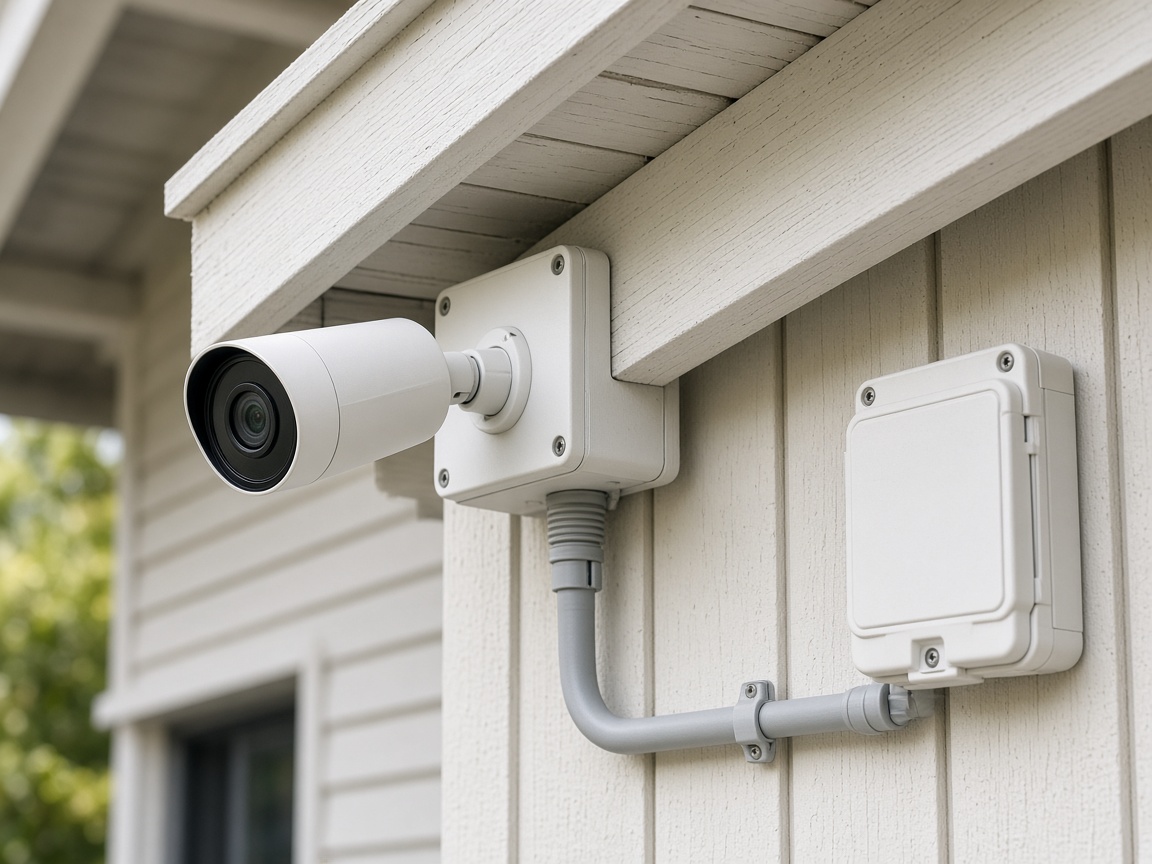
Every camera needs power, and that is where licensed electrical work comes in. A camera that plugs into an existing power point is simple. If a new power point is needed under the eave, or a hardwired supply to a recorder, that is electrical wiring work.
By law in NSW, electrical wiring work must be done by a licensed electrician, who must then lodge a Certificate of Compliance for Electrical Work. The NSW Government explains this on its electrical safety and consumer rights page. Ask for a copy of the certificate and keep it with your house records.
If you need extra outdoor outlets, see our outlet and switch installations page. For larger jobs that include a recorder, new circuits or roof-space cabling, our electrical installations team can plan the work.
Data cabling for wired cameras is a separate area. In Australia, cabling that is part of a home communications network is generally done by a registered cabler, who should give you a statement that the work complies with the wiring rules. Many installers hold both an electrical licence and cabling registration, so ask which applies to your job.
Storm season is another reason to plan the power side properly. The Central Coast sees regular summer storms, and a lightning-induced surge can damage recorders, modems and cameras together. A surge protector installation at the switchboard is a sensible companion to any system that relies on electronics staying online. Our guide to electrical safety after storms covers what to check if power goes out while you are away.
A small backup power supply for the modem and recorder is worth discussing too. It will not run the house, but it can keep cameras recording through a brief outage.
Privacy rules in NSW: what you can and cannot film
Most homeowners can put a camera on their own property. The rules start to matter when a camera looks beyond your boundary.
Legal Aid NSW says in its neighbour surveillance FAQs that you can generally put up a camera on your property, but you should consider whether it points at someone else’s property and interferes with their privacy. It also warns that recording a conversation with a neighbour without permission may be a criminal offence.
The State Library of NSW guide to entry, access and privacy explains that recording audio without consent is an offence under the Surveillance Devices Act 2007, though that section does not extend to recording images. It also notes that planning approval may be required for CCTV in some cases, so check with Central Coast Council if you are unsure. Strata owners should check their by-laws before mounting anything on common property.
A practical approach:
- Aim cameras at your own driveway, doors and yard, not into a neighbour’s windows or backyard.
- Use the privacy masking feature many cameras offer to black out parts of the frame.
- Turn off audio recording on outdoor cameras unless you are confident it is lawful in your situation.
- Talk to neighbours before installation. Most people are happy when they know a camera is watching your side gate, not their pool.
This is general information, not legal advice. If you are in a dispute with a neighbour, get advice before installing cameras.
Who can install security cameras in NSW?
This is the part many people miss. In NSW, installing and maintaining security equipment as a business is a licensed security activity, separate from electrical licensing.
Service NSW lists the Class 2C Security Equipment Specialist licence among the security operative licences people working in the security industry must hold. Anyone paid to install cameras at your home should hold the right class of security licence, and the business should hold a master licence.
So a typical professional install can involve up to three credentials:
- A security licence for the camera installation itself.
- An electrical licence for any new power points or hardwired supply.
- Cabling registration for data cabling.
You can look up NSW licences on the Verify NSW licence register. Ask for licence numbers on the quote and check them before work starts. It takes a few minutes and protects you if something goes wrong.
If you are fitting a plug-in or battery camera yourself, keep it simple. Do not open power points, run cables through the switchboard or extend wiring. Anything beyond plugging into an existing outlet is a job for a licensed electrician.
Setting cameras up so they work while you are away
A camera system is only as good as its settings. Before you leave, spend an evening on these:
- Change default passwords on the recorder and app, and turn on two-step login if offered.
- Update firmware on cameras and the recorder.
- Check storage. Make sure the recorder or cloud plan keeps enough days of footage to cover your trip plus a few days.
- Tune motion zones so trees, roads and neighbours’ yards do not trigger constant alerts.
- Test remote viewing from mobile data, not just home Wi-Fi, so you know it works from a campsite or a relative’s place.
- Share access with a trusted neighbour or family member who can check on the house if you are out of range.
Illustrative example: a family in Bateau Bay sets up two driveway cameras and a doorbell camera in early December. In the first week they get dozens of alerts a day from a jacaranda swaying near the gate. After narrowing the motion zone to the driveway itself, alerts drop to deliveries and visitors, and by Christmas they trust what the app tells them.
Simple extras that make cameras more effective
Cameras work best as part of a layered setup. While you are planning, consider:
- Sensor lighting at entry points, so cameras capture clear footage and visitors are lit up.
- Timers on indoor lamps so the house looks lived in at night.
- Smart plugs for a radio or lamp, controlled from your phone.
- Working smoke alarms, especially if the house will be empty. Our smoke alarm compliance guide explains NSW requirements.
- Mail and bins. Ask a neighbour to collect mail and put bins out and back in.
Avoid posting holiday photos in real time on public social media. Share them when you are home.
What affects the cost of a camera system
Prices vary widely, so be wary of any figure quoted without seeing the house. The main cost drivers are:
- The number of cameras and the type (wired, Wi-Fi or battery).
- Whether new power points or circuits are needed.
- Cable runs, roof-space access and wall construction. Double brick, tiled roofs with low pitch and two-storey homes take longer.
- The recorder, storage size and any cloud subscription.
- Weather-rated mounts and corrosion-resistant fittings for coastal homes.
Ask for a written quote that lists each camera position, the equipment brand and model, storage, any electrical work, and licence numbers. A good installer will walk the property with you and explain what each camera will see.
Planning your Central Coast camera system
Start with a short list of the places you would most like to see from your phone while you are away, then work back to the cameras, power and cabling that make that possible. Keep cameras pointed at your own property, switch off outdoor audio unless you are sure it is lawful, and check every licence on the quote. Give yourself a few weeks before Christmas to test alerts and remote viewing.
AIM LOCAL electricians work across the Central Coast, including Terrigal and Umina Beach. If your camera plan needs new outdoor power points, a supply for a recorder, sensor lighting or surge protection, request a quote and we will help you get the electrical side sorted before the holidays.
Frequently Asked Questions
Do I need a licence to install my own security camera in NSW?
Plugging a camera into an existing power point or mounting a battery camera on your own home is generally fine. Anyone installing security cameras as a paid job needs a NSW security licence, and any new power points or hardwired supply must be done by a licensed electrician.
Can my security camera film my neighbour’s yard?
You can generally put a camera on your own property, but avoid pointing it at areas where neighbours expect privacy, such as windows or an enclosed backyard. Use privacy masking and talk to your neighbours. Get legal advice if there is a dispute.
Is it legal to record audio on a home security camera in NSW?
Recording a private conversation without consent can be an offence under the Surveillance Devices Act 2007. The safest choice for outdoor cameras is to switch audio recording off unless you are confident it is lawful in your situation.
Are wired or wireless cameras better for a holiday home?
Wired cameras with a recorder record continuously and do not rely on batteries, which suits homes left empty for a few weeks. Wi-Fi and battery cameras are quicker to fit but depend on signal strength and battery life.
Do security cameras work during a power outage?
Most will stop when the power goes out unless the recorder and modem are on a backup power supply. Battery cameras may keep recording but cannot send alerts without internet. Surge protection helps protect equipment during summer storms.
How far ahead should I book an installation before Christmas?
Booking in November gives time for installation and a few weeks of testing before you leave. Installers and electricians get busy in December as jobs are finished before the shutdown.
What should a camera installation quote include?
A good quote lists each camera position, the brand and model, storage size, any cloud subscription, electrical work such as new power points, and the installer’s licence numbers. Check licences on the Verify NSW register before work starts.