
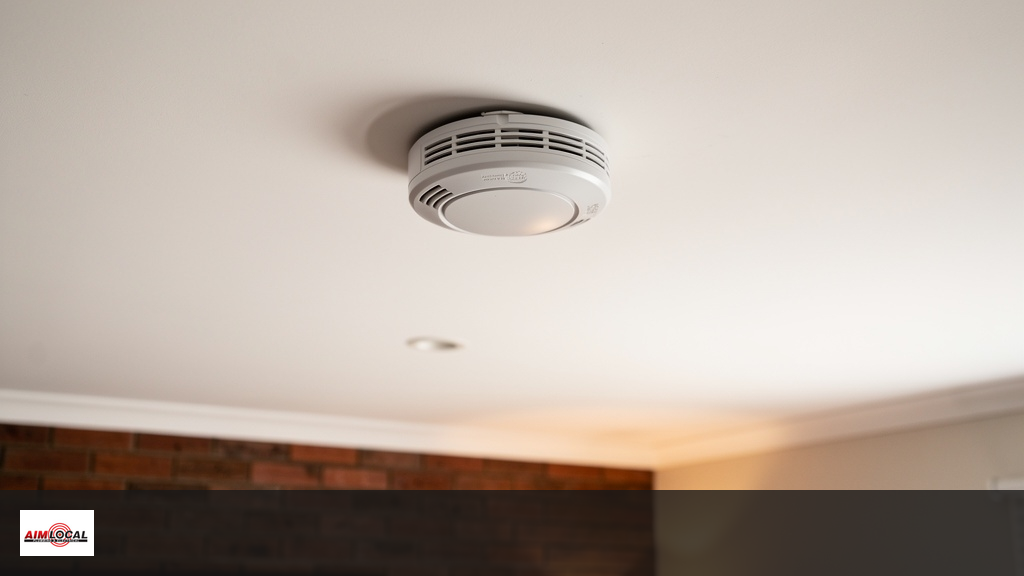
Everything Sydney Homeowners Need to Know About Smoke Alarm Laws
Smoke alarm compliance nsw is not optional — under the Environmental Planning and Assessment (Development Certification and Fire Safety) Regulation 2021 and the Residential Tenancies Act 2010, every home in New South Wales must have working smoke alarms installed in specific locations. Whether you own your home or rent it out, getting this wrong can expose you to serious legal and financial risk.
This guide covers exactly what the NSW smoke alarm laws require, who is responsible for what, the key compliance deadlines already in effect, and what it will cost you to get sorted.
- What Does NSW Law Require for Smoke Alarms?
- Are Ionisation Smoke Alarms Still Legal in NSW?
- What Are the Smoke Alarm Responsibilities for Landlords in NSW?
- What Do Owner-Occupiers Need to Do?
- How Much Does Smoke Alarm Compliance Cost in NSW?
- Where Must Smoke Alarms Be Installed?
- Frequently Asked Questions
What Does NSW Law Require for Smoke Alarms?
NSW law requires photoelectric smoke alarms to be installed in all residential properties. Ionisation-type alarms are no longer acceptable for new installations and must be replaced when they reach end of life (10 years from manufacture date).
The NSW Fair Trading guidelines and the Environmental Planning and Assessment Regulation 2021 work together to set these requirements. The key rule: all smoke alarms in NSW residential properties must be photoelectric (AS 3786-2014 compliant) and must be replaced at or before 10 years from the date of manufacture.
Here is a summary of the current NSW compliance dates:
| Property Type | Compliance Date | Requirement |
|---|---|---|
| Rental properties (existing) | 23 March 2020 | Photoelectric alarms required on every storey and in all bedrooms |
| New dwellings / major renovations | Ongoing (Building Code) | Interconnected photoelectric alarms required by BCA |
| Owner-occupied homes | Replace at 10-year mark | Must replace ionisation with photoelectric when alarm expires |
| All NSW homes | Ongoing | Working battery backup required; test every 6 months |
Are Ionisation Smoke Alarms Still Legal in NSW?
Ionisation smoke alarms cannot be installed as new or replacement units in NSW residential properties. If you have existing ionisation alarms that are still within their 10-year life, they may remain in place temporarily, but they must be replaced with photoelectric alarms when they expire.
Photoelectric alarms are superior at detecting slow, smouldering fires, which are the most common type in residential settings. Ionisation alarms respond faster to fast-flaming fires but are more prone to nuisance trips from cooking. NSW adopted the photoelectric standard specifically because the evidence shows photoelectric alarms save more lives in typical home fire scenarios.
Key difference at a glance:
- Photoelectric: Detects smoke particles using a light beam. Better for slow, smouldering fires. AS 3786-2014 compliant. Required for all NSW homes.
- Ionisation: Detects combustion products using a radioactive element. Faster on fast-flaming fires. No longer permitted for new installs in NSW.
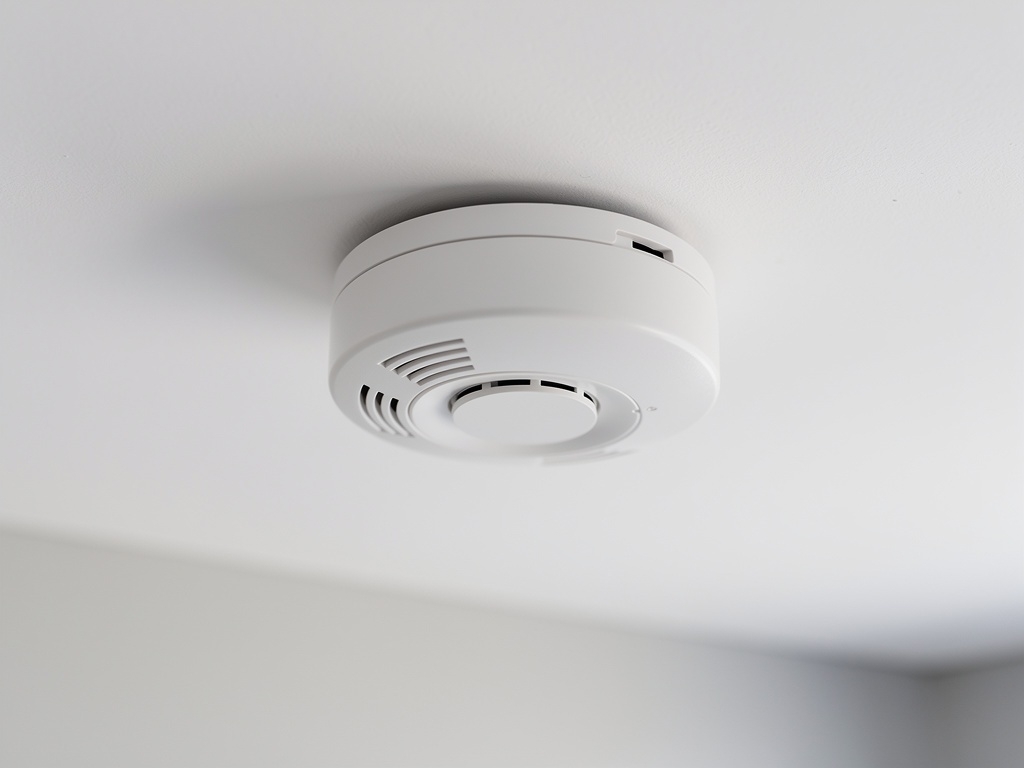
If you are unsure what type of alarm you have, check the label on the side of the unit. It will indicate “photoelectric” or “ionisation”. If the label is not legible, or if the alarm is more than 10 years old, replace it immediately.
What Are the Smoke Alarm Responsibilities for Landlords in NSW?
Landlords in NSW are legally required to install photoelectric smoke alarms on every storey of a rental property and in every bedroom, in every hallway connecting bedrooms to the rest of the home, and in any part of the home a person would pass through to exit. This requirement came into effect for all existing rental properties on 23 March 2020.
The landlord’s obligations do not end at installation. Under the Residential Tenancies Act 2010 and the accompanying regulations, landlords must:
- Ensure alarms are in working order at the start of each tenancy
- Replace alarms that reach their 10-year expiry date
- Arrange professional testing if an alarm is reported faulty
- Not charge the tenant for the cost of replacing a faulty or expired alarm
- Keep a record of alarm installation and maintenance
Tenants, in turn, are responsible for replacing batteries (for battery-powered alarms) and notifying the landlord promptly if an alarm is not working.
If a landlord fails to comply with smoke alarm requirements, they face penalties under the Residential Tenancies Act. This is not a minor compliance matter — fines can reach into the thousands of dollars, and insurers may also dispute claims arising from a fire in a property that was not compliant at the time.
The team at AIM LOCAL Electrical Services can carry out a full smoke alarm compliance inspection for Sydney rental properties, confirming correct alarm type, placement, and interconnection where required.
What Do Owner-Occupiers Need to Do?
Owner-occupiers have somewhat more flexibility than landlords when it comes to replacement timelines, but the underlying standard is the same: photoelectric alarms, correctly placed. The most important rule is that you must replace any smoke alarm at or before its 10-year manufacture date, and the replacement must be a photoelectric model.
Practical checklist for owner-occupiers in NSW:
- Locate all smoke alarms in the home and check the manufacture date on the unit
- Replace any alarm that is 10+ years old with a photoelectric model
- Install alarms on every storey of the home if not already present
- Install an alarm inside or immediately outside every bedroom
- Test every alarm every six months and replace batteries annually (9V or 10-year sealed battery units)
- Do not remove or tamper with alarms, even temporarily for renovations
If you are renovating or extending your home, a building approval may trigger a requirement to upgrade to interconnected smoke alarms throughout the property, not just in the renovated area. Speak to a licensed electrician before starting work.
We also recommend reading our guide on landlord repair responsibilities in NSW if you are transitioning a property from owner-occupied to rental — the compliance bar rises significantly.
How Much Does Smoke Alarm Compliance Cost in NSW?
Costs vary depending on alarm type, whether the home requires interconnection wiring, and the number of alarms needed. Here are current market benchmarks for the Sydney area:
| Item | Type | Cost Range (AUD) | Notes |
|---|---|---|---|
| Photoelectric alarm (battery) | Standalone | $30 – $80 per unit | DIY install, no electrician required |
| 10-year sealed battery alarm | Standalone | $60 – $150 per unit | Recommended — eliminates battery replacement |
| Hardwired photoelectric alarm | Mains + battery backup | $80 – $200 per unit + labour | Must be installed by a licensed electrician |
| Installation (battery alarm) | Labour | $60 – $120 per alarm | Includes placement check for compliance |
| Installation (hardwired, existing circuit) | Labour | $120 – $250 per alarm | Higher cost for hardwired interconnection |
| Full compliance inspection + report | Service | $150 – $300 | Recommended for rental properties |
| Ionisation alarm (old stock) | Non-compliant for NSW | Do not install | Not permitted for new or replacement installation |
Service fees vary between providers. Always confirm the callout fee before booking.
For a typical Sydney three-bedroom house with alarms on two storeys, a full photoelectric compliance upgrade using hardwired interconnected alarms typically costs between $600 and $1,200 all-in, including supply and installation by a licensed electrician.
Where Must Smoke Alarms Be Installed?
NSW regulations are specific about placement. For Class 1a buildings (detached houses, semi-detached, terrace homes, townhouses, row houses, villas), smoke alarms must be installed:
- On every storey of the dwelling
- In every bedroom
- In every corridor or hallway between a bedroom and the rest of the home; if there is no corridor, on the ceiling near the bedroom door
- In any other part of the building a person would pass through to exit (e.g. living rooms or stairwells)
Alarms should be mounted on ceilings where possible, at least 300mm from any wall or light fitting. If ceiling mounting is not practical, they may be installed on a wall between 300mm and 500mm from the ceiling. Avoid placing alarms near cooking areas, bathrooms with shower steam, or air conditioning vents, as these can trigger nuisance alarms.
If your home has an attached garage, an alarm inside the garage is not required, but an alarm in the room immediately adjoining the garage is strongly recommended.
Our licensed electricians service the whole of Sydney and the Central Coast, including rapid response for rental compliance certificates. See our full guide on electrical compliance for granny flats in Sydney for related requirements.
Need a Smoke Alarm Compliance Certificate?
Our licensed Sydney electricians inspect, install, and certify photoelectric smoke alarms for rental properties and owner-occupiers across NSW. Fast response, fixed pricing, compliance guaranteed.
Get Your Free QuoteFrequently Asked Questions About Smoke Alarm Compliance in NSW
Do I need a licensed electrician to install smoke alarms in NSW?
Battery-powered smoke alarms can legally be installed by the homeowner without an electrician. However, hardwired smoke alarms (those connected to your mains power supply) must be installed by a licensed electrician. For rental properties, many agents recommend using a licensed electrician for all installs to ensure compliance documentation is available.
What happens if I don’t comply with NSW smoke alarm laws as a landlord?
Non-compliant landlords can face fines under the Residential Tenancies Act 2010, and property insurers may refuse or reduce claims following a fire if the property was not compliant. In serious cases, a landlord could face civil liability. Compliance is not simply best practice — it is a legal obligation.
How often should smoke alarms be tested in NSW?
NSW guidance recommends testing smoke alarms every six months. Press the test button and hold it for a few seconds — the alarm should sound. If it does not sound, check the battery first. If a new battery does not fix the problem, replace the alarm unit. Also replace the alarm if it is more than 10 years old from its manufacture date.
Can tenants remove or disconnect smoke alarms in NSW?
No. Tenants are legally prohibited from removing, disconnecting, or interfering with smoke alarms. This includes covering them to avoid nuisance trips during cooking. Tenants are responsible for replacing batteries in battery-operated alarms and must notify the landlord in writing if an alarm is not working.
Are wireless interconnected smoke alarms compliant in NSW?
Yes. Wireless (radio-frequency) interconnected alarms are accepted in NSW provided they are photoelectric and AS 3786-2014 compliant. Wireless interconnection is a practical option for older homes where running new wiring between alarms would be costly, as all interconnected alarms will sound together even without hardwired connections.
What is the smoke alarm rule for homes built before 1997?
Homes built before 1997 are not automatically required to have hardwired interconnected alarms (that requirement applies to new dwellings under the Building Code of Australia). However, they must still have photoelectric alarms installed on every storey and in or near every bedroom, either battery-powered or hardwired. When the home is sold or rented out, compliance with current placement requirements is mandatory.
Does my granny flat or secondary dwelling need its own smoke alarms?
Yes. A granny flat or secondary dwelling is treated as a separate Class 1a building under NSW planning rules and must have its own compliant smoke alarm installation, completely separate from the main dwelling. See our detailed guide on granny flat electrical requirements in Sydney.