
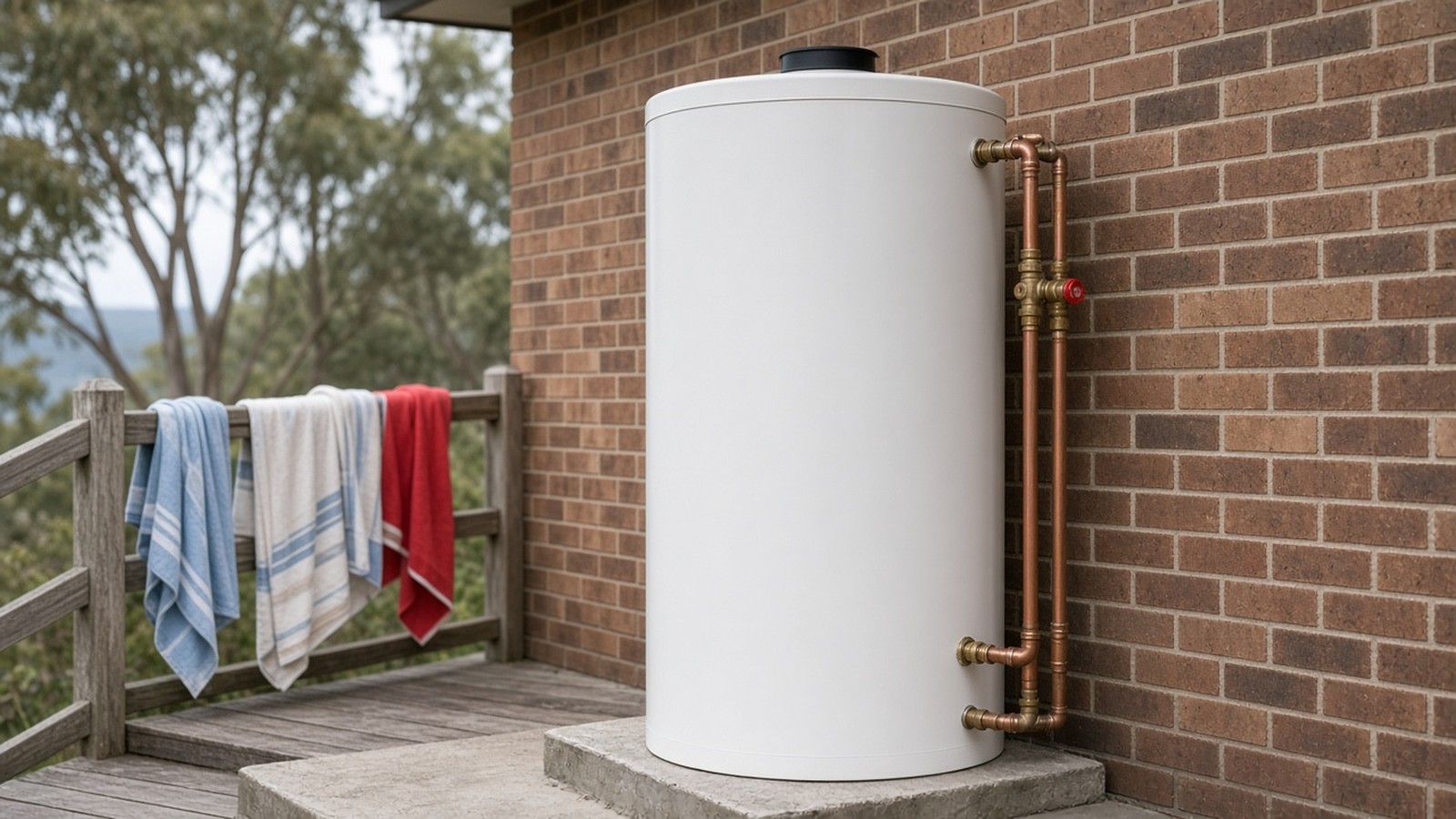
The cousins drove up the M1 on Christmas Eve, the spare rooms in your Kincumber house are full, and the beach towels are already draped over the deck rail. By the time the fourth person heads for the shower after a swim at Avoca, the water runs warm, then lukewarm, then cold. Calls about running out of hot water Central Coast plumbers take over the holidays often start exactly like this, on the busiest day of the year.
The good news is that a cold shower on Boxing Day is not always a broken heater. Often the system is doing exactly what it was built to do, just for a smaller household than the one now sleeping under your roof. This guide explains why it happens, how off-peak tariffs and recent Ausgrid changes play a part, the warning signs of a real fault, and what you can do before the guests arrive. Any scenario used to explain a point is labelled as an illustrative example, not a record of a named job.
Why hot water runs out when the house fills up
Every storage hot water system has two limits. The first is how much hot water the tank holds. The second is how quickly it can heat a fresh tank of cold water once the hot water has been used, which plumbers call the recovery rate. When a household is the size the system was chosen for, those two limits rarely show. When the number of people doubles for a week, both show up at once.
Showers are the biggest user. A shower blends hot water from the tank with cold water at the mixer, so a long shower can draw a surprising share of a tank. Add a dishwasher run after lunch, a load of sandy beach towels in the washing machine and a few people washing hands for dinner, and the tank empties faster than it refills.
Illustrative example: a family that normally showers two people in the morning and two at night now has eight people, most of whom want a shower between 5pm and 7pm after the beach. The tank may have been full at lunchtime, but those back-to-back showers drain it in an hour. If the heater is on a limited off-peak supply, it may not get the power it needs to reheat until much later.
Your hot water repairs and servicing technician can confirm your system’s type, size and age in a few minutes, and that decides most answers in this guide.
Off-peak, controlled load and the Central Coast factor
Many electric hot water systems on the Coast are wired to a controlled load. This is a separate circuit that only receives power at set times, in exchange for a cheaper rate. Energy Made Easy explains that in New South Wales these tariffs are usually called Controlled load 1 or Controlled load 2 on your bill.
Ausgrid, the network for the Central Coast, says its controlled load tariffs come in two types:
- Controlled Load 1, suited to larger electric tanks of about 250 to 630 litres, is usually connected for at least six hours in any 24-hour period.
- Controlled Load 2, suited to smaller tanks of about 100 to 250 litres, is usually connected for at least sixteen hours, including at least four hours between 7am and 5pm.
Ausgrid changed Controlled Load 1 switching times in July 2024 for customers with a smart meter, so more heating happens during the day when rooftop solar makes power cheaper.
There is a newer change as well. On its hot water faults page, Ausgrid notes that from mid-July 2026 it began changing the controlled load hot water system in parts of Sydney and the Central Coast. It now sends one signal a day to turn the heater on and no longer sends a signal to turn it off, so the tank’s own thermostat manages heating. The same page lists extra showers, guests staying over and more laundry than usual as simple reasons hot water runs out, and says a controlled load system may take longer to reheat after heavy use.
The practical point is simple. If your tank is on a controlled load and you have a full house, running out is more likely than in a home where the heater has power all day. Check your bill for a controlled load line, or call Ausgrid on 13 13 88 if you think the relay at the meter is not switching on at all.
How each type of system behaves with extra people
Not every heater runs out in the same way, so knowing yours helps you plan around its limits.
Electric storage
An electric storage heater works like a large kettle, heating water with an element inside the tank. These units are simple and reliable but slow to recover, especially on a controlled load. Our electric water heater services cover element, thermostat and wiring faults that make this worse.
Gas storage
Gas storage tanks recover much faster than electric ones because the burner puts in heat quickly. They can still run out with back-to-back showers, but they usually bounce back within an hour or so. A pilot that keeps going out or a burner that struggles is a fault, not a demand problem, and needs a licensed gasfitter through our gas water heater services.
Continuous flow gas
Continuous flow units heat water as it passes through, so they do not run out in the usual sense. Their limit is flow rate. Run two showers, the kitchen tap and the washing machine together and the unit may not keep the water hot at every outlet. Spreading out use usually fixes it.
Heat pump
YourHome, the Australian Government’s guide to sustainable homes, notes that many heat pump hot water systems include a boost element for very cold weather or periods of high hot water use. That boost helps over Christmas, but running it often adds to the power bill.
Solar with a booster
Solar hot water relies on a gas or electric booster on cloudy days or when demand is higher than the sun can supply. A run of grey, stormy summer days with a full house is exactly when a faulty booster shows up.
Signs it is a fault and not just a full house
Running out once with eight people home is normal. These signs point to a problem that needs a technician:
- The water runs out much faster than it used to, even with the usual number of people.
- The water is never properly hot, only warm, even first thing in the morning.
- You hear rumbling or popping from the tank, which can mean sediment build-up.
- Water drips constantly from the relief valve drain, not just a little while the heater is running.
- The safety switch trips when an electric heater turns on.
- There is rust-coloured water from the hot taps, or water pooling at the base of the tank.
YourHome also explains that glass-lined storage tanks have a sacrificial anode that needs replacing every few years to slow corrosion. An anode that has never been checked on a tank more than a few years old is worth looking at before it shortens the tank’s life. A hot water heater maintenance visit covers the anode, valves and thermostat in one trip.
Temperature settings: do not just turn it up
When the hot water keeps running out, it is tempting to turn the thermostat up. Be careful. YourHome advises setting a storage heater’s thermostat to at least 60°C to stop the growth of bacteria such as Legionella, but not higher, because hotter water uses more energy.
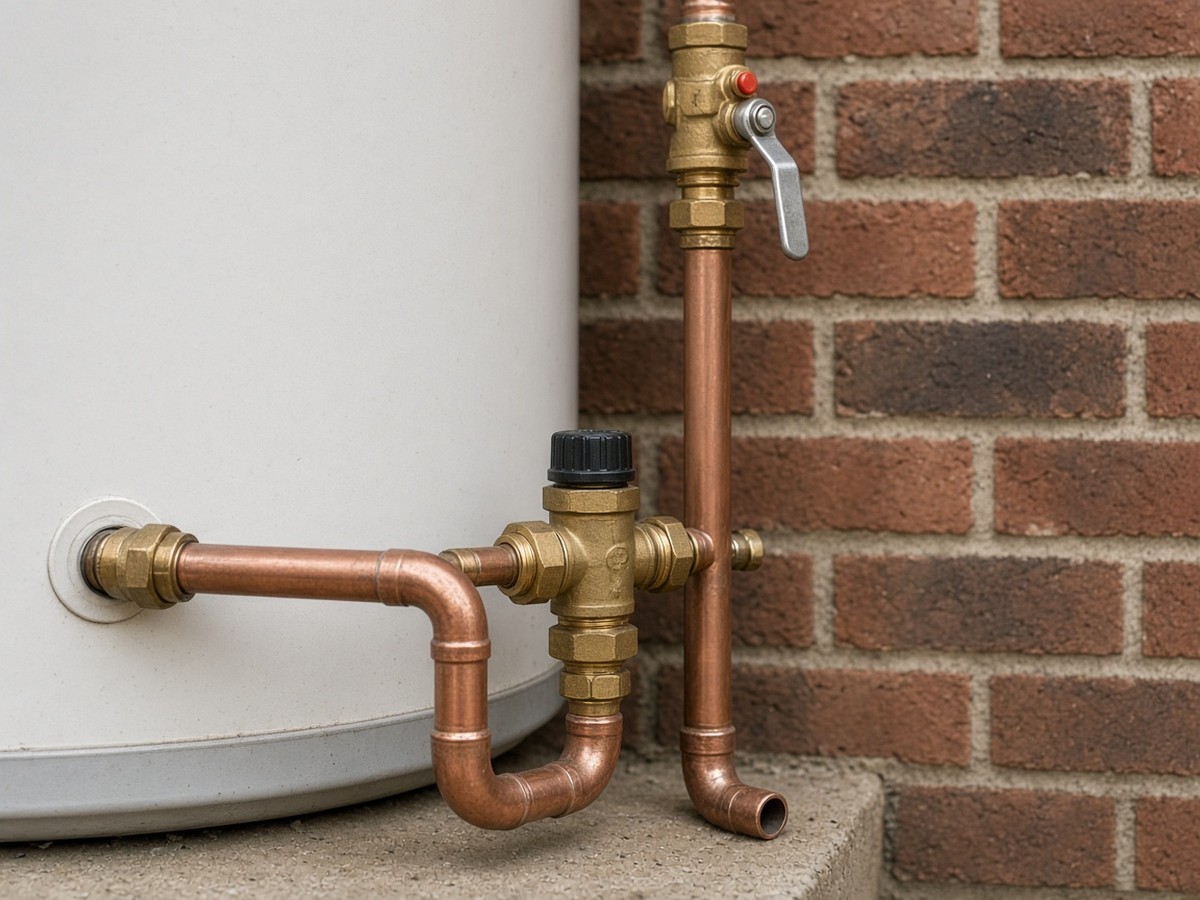
Building Commission NSW explains the rules for water at the tap in its advisory note on temperature requirements for heated water installations. In homes, water at fixtures used for personal hygiene, such as showers, baths and basins, must be delivered at no more than 50°C. A tempering valve or similar device is how most homes meet that limit.
That matters when young children or older relatives visit. If someone has fiddled with the tempering valve to make the shower hotter, the scald risk goes up. Adjusting temperature control devices is a job for a licensed plumber, not a quick twist with a spanner.
Simple ways to stretch your hot water over Christmas
You do not need a new system to get through a busy week. A few habits make a big difference:
- Spread the showers out. A morning group and an evening group give the tank time to recover between rushes.
- Keep showers short. Four or five minutes per person goes much further than ten.
- Run the washing machine on cold. Modern detergents clean well in cold water, and sandy towels do not need hot water.
- Run the dishwasher after the evening showers, or in the middle of the day if your heater reheats in daylight hours.
- Use the outdoor shower or garden hose to rinse sand off before people come inside.
- Fix dripping hot taps before guests arrive. A slow drip wastes hot water all day.
- Check whether your system has a boost switch, and learn how to use it safely before you need it.
Illustrative example: a Terrigal household with a 250-litre electric tank on a controlled load and six guests could split showers into two groups, wash towels on cold and save the dishwasher for the next morning. The tank does not change, but the timing means fewer people end up with a cold rinse.
Repair, boost or upgrade?
If the system is in good condition and only struggles when the house is full, changing habits may be enough. If it is undersized for how you live now, or keeps failing, it is time to talk about options.
When a repair makes sense
Faulty elements, thermostats, tempering valves and relief valves are common repairs. They are usually far cheaper than replacement on a tank that is not too old. Electrical faults on electric heaters must be fixed by a licensed electrician, and gas work by a licensed gasfitter.
When an upgrade makes sense
If your household has grown, you now host family every summer, or you added a granny flat that shares the heater, a bigger or faster system may be the answer. Options include a larger tank, moving a small tank off a restrictive controlled load, a gas continuous flow unit, or a heat pump. If you are weighing up a heat pump, read our guide to heat pump hot water rebates in NSW before you decide.
When a tank is old, leaking or rusting at the base, replacement is usually the sensible choice. Our hot water heater replacement team can size a new system for the way your household actually uses water, including the busy weeks.
Check who you hire
Hot water work involves plumbing, electrical and sometimes gas. Before anyone starts, check their licence on Verify NSW, the NSW Government register. A licensed tradesperson will also install the right temperature control device and give you the paperwork for the job.
Holiday rentals and granny flats on the Coast
Holiday rentals are part of life in Terrigal, Avoca Beach, Umina and The Entrance. If you rent out a house or a granny flat over summer, hot water is one of the first things guests complain about. A system that suits a couple who live there most of the year may not cope with a group of eight booked for a week.
A quick check before the season helps: confirm the tank size and age, test the relief and tempering valves, and check how the heater is powered. Our local hot water repairs in Terrigal page explains how we work in the beachside suburbs.
What to do if it fails completely
If the hot water stops entirely during the holidays, start with a few safe checks:
- For electric systems, check the switchboard for a tripped hot water circuit or safety switch. If it trips again straight away, leave it off and call an electrician.
- For gas systems, check the gas supply is on and other gas appliances work.
- For controlled load systems, wait until the next heating window, then call Ausgrid if there is still no heat at all.
- Look for water leaking from the tank or pipes. If you see a leak, turn off the cold water supply to the heater.
If none of that helps, book our emergency hot water heater repair service so your household is not left with cold showers for days.
Get your hot water ready before the guests arrive
A full house is part of a Central Coast summer, and cold showers do not have to be. Know your system, understand how off-peak supply affects it, spread out the busy times and fix small faults early. If the tank is old or too small for the way you live now, plan the upgrade before the December rush rather than after it fails.
AIM LOCAL services, repairs and replaces hot water systems across the Central Coast. Book a check in late November or early December and you will go into the holidays knowing your hot water can keep up. Request a quote online and we will be in touch.
Frequently Asked Questions
Why does my hot water run out when we have guests?
Most storage systems are sized for the usual household. Extra showers, laundry and dishes in a short time empty the tank faster than it can reheat, especially if the heater is on a controlled load that only receives power at set times.
How long does a hot water tank take to reheat?
It depends on the type and size. Gas storage systems usually recover much faster than electric ones. An electric tank on a controlled load may not fully reheat until its next supply window, which can be several hours away.
Can I just turn up the thermostat to get more hot water?
Storage heaters should be set to at least 60°C to control bacteria, but not higher, as that wastes energy. Water at showers and basins in homes must be delivered at no more than 50°C, so changes to temperature control devices should be made by a licensed plumber.
How do I know if my hot water is on off-peak?
Check your electricity bill for a controlled load line, often called Controlled load 1 or Controlled load 2 in NSW. Your retailer can also confirm which tariff your hot water uses.
Is it a fault if my hot water runs out faster than it used to?
It can be. A failing element or thermostat, sediment build-up or a worn tempering valve can all reduce how much hot water you get. If the change is sudden and the household size has not changed, book an inspection.
Does a continuous flow system run out of hot water?
Continuous flow units heat water as it is used, so they do not run out like a tank. They can struggle to keep water hot when several outlets run at once, so spreading out showers and appliance use helps.
When should I upgrade my hot water system?
Consider an upgrade if the tank is old, leaking or rusting, if your household has grown, or if you regularly host family or rent out the property. A plumber can size a system for your busiest weeks, not just an average day.